텍스트 → 이미지캐릭터스타일 가이드
달리는 토끼 · 뒤따르는 귀의 곡선
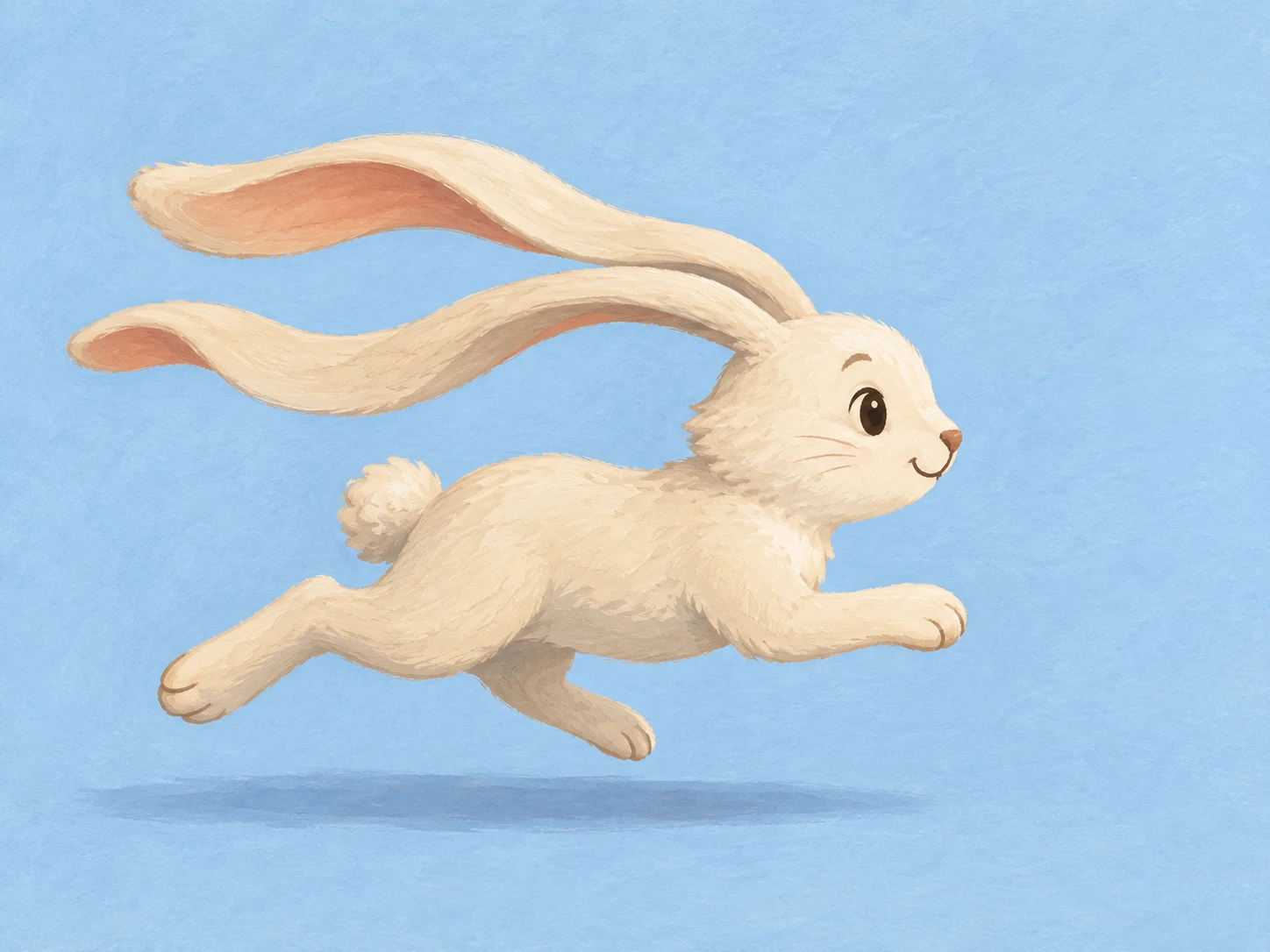
화면 오른쪽으로 달리는 토끼의 귀를 왼쪽으로 휘게 하여, 몸보다 늦게 따라오는 부속물의 움직임을 보여준다.
달리는 토끼 · 뒤따르는 귀의 곡선
- 형태·선
- 토끼를 둥근 머리, 아담한 타원형 몸통, 끝으로 갈수록 가늘어지는 단순한 팔다리로 구성한다. 각 귀는 이어진 유연한 형태로 그린다. 뿌리는 정수리에서 먼저 올라가고, 중간은 화면 왼쪽으로 휘며, 끝은 뿌리보다 더 왼쪽에 놓인다. 두 귀의 곡선을 조금 다르게 하여 늦게 따라오는 움직임이 잘 보이게 한다.
- 색·명암
- 몸에는 따뜻한 크림색, 귀 안쪽에는 차분한 복숭아색, 작은 얼굴 요소에는 짙은 갈색을 쓴다. 화면 오른쪽 위에서 빛을 주어 이마와 앞쪽 가슴에 부드럽고 밝은 면을 놓고, 배 아래와 뒤로 휜 귀 아래에는 절제된 따뜻한 회색 그림자를 넣는다.
- 질감·재질
- 불투명한 무광 과슈로 넓고 부드럽게 불균일한 붓칠과 은은한 종이 결을 표현한다. 귀 표면은 굽힘이 잘 읽히도록 매끈하게 유지한다. 볼과 꼬리 가장자리에 짧은 붓질을 몇 개만 넣어 털을 암시하고, 긴 귀의 윤곽은 끊지 않는다.
- 구도
- 몸통을 화면 오른쪽으로 기울이고, 앞발 하나를 앞으로 뻗으며, 뒷다리 하나는 화면 왼쪽으로 뻗어 공중에 뜬 달리기 자세를 만든다. 두 귀의 실루엣 사이에는 배경이 보이는 틈을 둔다. 단순한 연한 파란색 배경과 토끼 아래의 부드러운 바닥 그림자 하나를 사용하여, 뒤따르는 귀가 움직임을 가장 분명하게 보여주게 한다.
우선순위
붙어 있는 귀 뿌리가 앞서고 휘어진 귀 끝이 화면 왼쪽으로 뒤따르는 관계를 분명하게 만든다.
피할 표현과 결과 확인
곧고 뻣뻣한 귀, 머리에서 떨어진 귀 형태, 곡선을 가리는 속도선을 피한다.
두 귀가 머리에 분명하게 붙어 있고, 토끼가 달리는 화면 오른쪽의 반대 방향으로 뒤따르는지 확인한다.
이 예시의 실제 생성 프롬프트
SUBJECT
One original cream-colored rabbit character running toward image-right, with two long flexible ears trailing toward image-left. Its head leads the torso, and both ears remain visibly attached to the crown.

COMPOSITION
Show the complete rabbit in a clean side view at eye level, occupying the middle of a horizontal frame. Leave generous open space ahead on image-right and enough space on image-left to include both ear tips.

STYLE GUIDE
1. Shape & line
Build the rabbit from a rounded head, compact oval torso, and simple tapered limbs. Draw each ear as a continuous flexible shape: its root initially rises from the crown, its middle bends toward image-left, and its tip hangs farther left than its root. Give the two ears slightly different curves so their delayed movement reads clearly.

2. Color & light
Use warm cream for the body, muted peach inside the ears, and dark brown for the small facial features. Light from upper image-right, placing soft pale highlights on the forehead and leading chest and a restrained warm-gray shadow beneath the belly and trailing ear curves.

3. Texture & material
Render opaque matte gouache with broad, softly uneven brush fills and a faint paper grain. Keep the ear surfaces smooth enough that their bends remain readable; suggest fur only with a few short strokes along the cheek and tail, without breaking the long ear contours.

4. Composition
Lean the torso toward image-right, extend one forepaw forward, and stretch one hind leg toward image-left in a suspended running stride. Separate the two ear silhouettes with a visible background gap. Use a plain pale-blue background and one soft ground shadow below the rabbit, keeping the trailing ears as the clearest cue to movement.

PRIORITY
Preserve the requested identity, count, action, composition and output settings. Apply the style rules within those constraints; a style reference must not replace the subject or layout. Within the style: Make the attached ear roots lead and the curved tips visibly trail toward image-left.

AVOID
Avoid rigid straight ears, detached ear shapes, and motion streaks that obscure the curves.

OUTPUT
One 4:3 character illustration in matte gouache, with no lettering, captions, logos, or watermark.

SELF-CHECK
Check that both ears attach clearly and trail opposite the rabbit's image-right running direction.
모델명은 이미지 출처 정보 기준입니다. 같은 프롬프트를 사용해도 결과는 달라질 수 있습니다.