텍스트 → 이미지화풍스타일 가이드
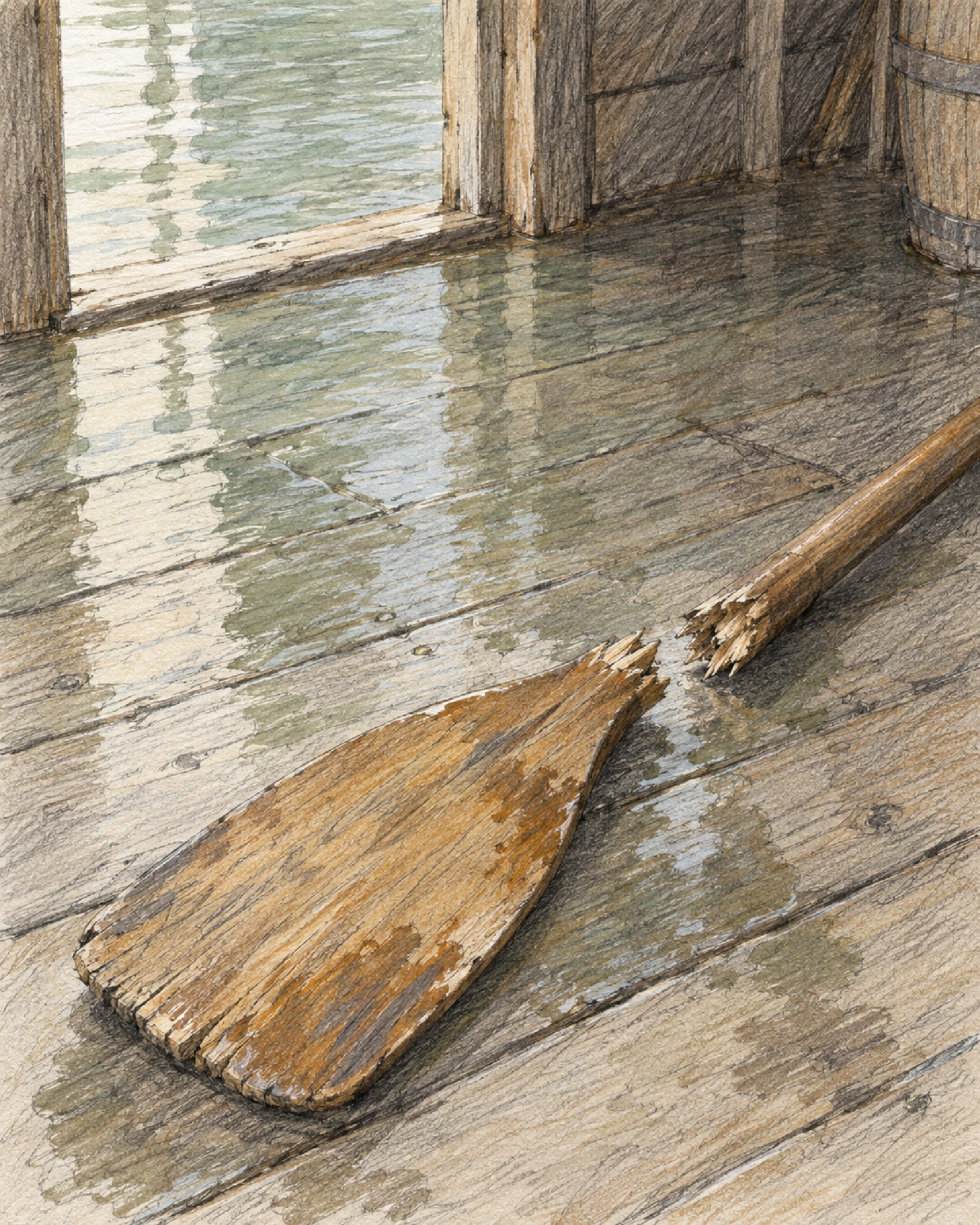
물가의 부러진 노
물이 스민 보트 창고의 부러진 노를 거친 흑연선과 색연필로 그린다. 갈라진 나무 주변에 드로잉을 집중하고 넓은 여백으로 고요한 순간을 만든다.
이 이미지로 조합하기물가의 부러진 노
- 형태 언어
- 형태를 넓은 덩어리와 구조를 탐색하는 소수의 선으로 줄인다. 작은 형태는 일관된 스케치북 표현 안에서 불균일하게 남겨 둔다.
- 윤곽선
- 압력이 변하는 흑연 윤곽선을 쓰고, 때때로 겹친 탐색선, 끊어진 구간과 무딘 미완의 끝을 남긴다.
- 붓질·입자
- 빠른 흑연 해칭과 느슨한 색연필 획을 결합한다. 획의 길이와 방향을 자연스럽게 바꾸며 종이의 결을 드러낸다.
- 표면 표현
- 성긴 연필 층과 흩어진 심 옆면 문지르기로 명암을 쌓는다. 명암의 경계는 드문 획과 드러난 종이로 풀어지게 한다.
우선순위
거친 흑연 자국과 색연필 자국의 차이를 눈에 보이게 유지한다.
피할 표현과 결과 확인
이 예시의 실제 생성 프롬프트
MODULE OWNERSHIP
subject: Subject count, type, stable proportions and landmarks, resting face geometry, hair shape, physical materials, garment construction and permanent marks. No emotion, movement, color assignment or rendering recipe.
expression: Facial soft-tissue displacement and pupil direction, muscle coordination, regional intensity, asymmetry and onset/peak/release. No head/body pose, stable appearance, skin color or rendering.
gesture: Head/neck/body/limb orientation, joint movement, support, contact and pose-caused occlusion using existing anatomy. No eye/pupil movement, emotion, identity, props inventory or camera.
props: Prop count, type, construction, physical material and scale relative to the subject. Holding/contact belongs to gesture, position to composition, color to palette.
scene: Environment elements, terrain, backdrop/floor presence and structural detail. No canvas positions, camera, lighting, assigned colors or render texture.
camera: Projection, focal-length impression, camera elevation/yaw/roll, viewing distance and crop. No actor pose, world placement, lighting or canvas aspect ratio.
composition: Normalized 0-100% canvas positions, scale in frame, depth/overlap, focal hierarchy and margins. No joint pose, camera projection, rendering, subject/prop inventory or emotion.
palette: Color anchors, hue/saturation/value ranges, colors assigned to parts and approximate color coverage. No illumination direction, shading algorithm, physical material or layout.
lighting: Light-source direction/softness/intensity, ambient illumination, physical shadow direction/length and highlight position. Absence of directional illumination is allowed. No shading technique, palette or material changes.
style: Reusable form abstraction, contour weight/taper/edge quality, medium and mark scale/density/direction, surface rendering and tonal transition technique. No fixed subject proportions, anatomy, identity, expression, pose, palette, light-source direction, camera or layout.
output: Image count, aspect ratio, size, file/alpha requirements and global lettering/logo/watermark restrictions. No background scenery, crop, style, identity or pose.

SUBJECT
inventory: One original wooden rowing oar, broken into two separate pieces; no people or animals.
geometry: A broad tapering blade joins a slender round shaft; the two broken ends retain recognizable splintered profiles.
resting-face: No facial geometry applies.
appearance: Unpainted solid wood with worn blade edges, exposed end grain and damp patches; individual chips may vary.

PRIORITY


AVOID


CHECK


PROPS
inventory: No separate props.
construction: No prop construction applies.

PRIORITY


AVOID


CHECK


SCENE
inventory: A timber boathouse with shallow floodwater, floorboards, a wooden threshold and an open doorway.
structure: Floorboard joints remain visible beneath the water; the doorway has a plain frame and an uninterrupted sill.

PRIORITY


AVOID


CHECK


CAMERA
projection: Natural perspective with a normal-lens impression and modest foreshortening.
viewpoint: An elevated oblique view looks down across the floor from inside the boathouse.
crop: A medium-close view includes both oar pieces and ample floor; only a fragment of the doorway enters the crop.

PRIORITY


AVOID


CHECK


COMPOSITION
placement: Gather the broken pieces in the lower-right half, with their separated ends forming the primary focal point.
depth: The blade is the broad foreground mass; floorboard lines and the doorway provide a quieter receding layer.
spacing: Leave the upper-left broadly spacious and the gap between fragments open; allow unequal margins around the cluster.

PRIORITY


AVOID


CHECK


PALETTE
colors: Warm ivory, graphite gray, rusty amber and muted celadon; keep most colors low in saturation.
assignment: Ivory anchors the ground, amber belongs to the oar, gray to the floor and celadon to the water.
balance: Ivory dominates; amber forms the concentrated color mass, with celadon appearing in restrained passages.

PRIORITY


AVOID


CHECK


LIGHTING
sources: Broad, soft daylight enters from the left through the doorway, with gentle ambient illumination.
shadows: Faint, soft shadows extend to the right of the wood and remain short near the floor.
highlights: Small highlights catch left-facing wet edges; the water carries a broad, subdued reflection of the doorway.

PRIORITY


AVOID


CHECK


STYLE GUIDE
form-language: Reduce forms to broad masses and a few searching structural lines; let minor shapes remain uneven within a coherent sketchbook language.
contour: Use pressure-changing graphite contours with occasional doubled searches, broken stretches and blunt, unfinished terminals.
mark-making: Combine brisk graphite hatching with loose colored-pencil strokes; vary stroke length and direction naturally, retaining visible paper tooth.
surface-rendering: Build tone through porous pencil layers and scattered side-of-lead rubs; let transitions dissolve into sparse marks and exposed paper.

PRIORITY
Keep rough graphite and colored-pencil marks visibly distinct.

AVOID


CHECK


OUTPUT
format: One finished image, portrait 4:5, 1600 × 2000 pixels, opaque PNG.
restrictions: No lettering, logos or watermarks.

PRIORITY


AVOID


CHECK


FINAL INTEGRATION
subject + style: Structural recognition and freely varied drawing marks should reinforce each other without fixing every incidental chip.
모델명은 이미지 출처 정보 기준입니다. 같은 프롬프트를 사용해도 결과는 달라질 수 있습니다.