텍스트 → 이미지캐릭터스타일 가이드
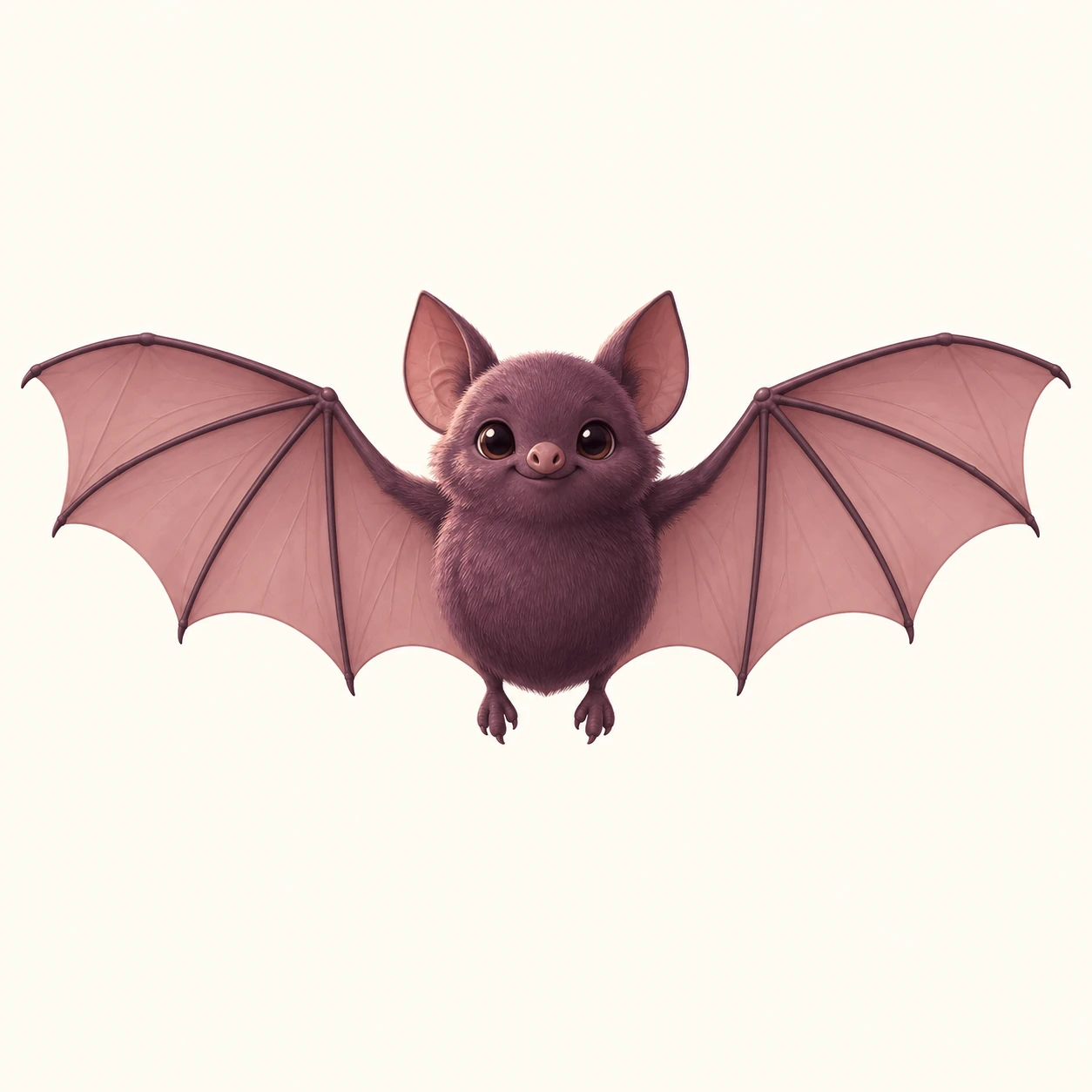
작은 박쥐 친구 · 당겨진 날개막
긴 날개 손가락 사이에 오목하게 당겨진 막을 그려, 펼친 박쥐 날개의 구조를 보여 주는 캐릭터 브리프.
작은 박쥐 친구 · 당겨진 날개막
- 형태·선
- 각 날개의 위쪽 윤곽은 완만하게 볼록하게 그리고, 손목에서 바깥쪽과 아래쪽 가장자리로 뻗는 길고 가는 손가락 지지대를 여러 개 그린다. 이웃한 손가락 끝 사이의 날개막 아래 가장자리는 손목 쪽으로 얕고 오목하게 당겨, 둥근 깃털 덩어리 대신 이어진 물결 모양 실루엣을 만든다.
- 색·명암
- 몸에는 차분한 자두색, 날개막에는 탁한 장밋빛을 쓰고 손가락 지지대는 조금 더 어둡게 하여 뻗는 경로가 읽히게 한다. 화면 왼쪽 위에서 부드러운 빛을 비추어 몸의 왼쪽 위 곡면과 날개 지지대에 절제된 밝은 부분을 두고, 배의 오른쪽 아래에는 넓고 은은한 그림자를 넣는다.
- 질감·재질
- 몸은 짧고 보드라운 털로 표현하되 볼과 배에만 부드러운 털 뭉치를 조금 넣는다. 날개막은 매끈하고 얇아 보이게 유지하고, 손가락 끝에서 안쪽으로 퍼지는 희미한 당김 주름을 드문드문 더하며 넓은 막 면은 대체로 평평하고 끊김 없이 남긴다.
- 구도
- 펼친 날개가 화면에서 가장 넓은 부분이 되도록 배치하고, 양쪽 손목은 어깨 옆 같은 높이에 두며 날개 아래의 오목한 곡선과 늘어진 발 사이에는 분명한 간격을 남긴다. 따뜻한 상아색 단색 배경을 쓰고 날개막을 가리는 소품을 두지 않아, 손가락과 막의 연결 및 안쪽으로 휘는 가장자리가 한눈에 읽히게 한다.
우선순위
보이는 손가락 지지대와 팽팽하게 당겨진 오목한 날개막 구간을 우선한다.
피할 표현과 결과 확인
깃털 날개, 부풀어 오른 날개막 면, 느슨하게 늘어진 천 주름은 피한다.
아래 가장자리의 각 오목한 곡선이 보이는 두 손가락 끝을 잇고, 양쪽 날개가 몸에 명확히 연결되는지 확인한다.
이 예시의 실제 생성 프롬프트
SUBJECT
One original little bat character with a round plum-colored body, small pointed ears, a gentle smile, and two fully spread wings. Elongated wing fingers support continuous membranes attached to the sides of its body; two small feet hang beneath its belly.

COMPOSITION
Use a straight-on full-body view with the bat centered, its left wing extending toward image-left and its right wing toward image-right. Keep both wing tips and the entire lower wing edges visible, with generous pale background around the silhouette.

STYLE GUIDE
1. Shape & line
Draw each wing with a gently convex upper outline and several long, slender finger supports radiating from its wrist toward the outer and lower edges. Between neighboring finger tips, pull the lower membrane edge inward toward the wrist in a shallow concave arc, creating a connected scalloped silhouette rather than rounded feather lobes.

2. Color & light
Use muted plum for the body and dusty rose for the membranes, keeping the finger supports slightly darker so their paths remain readable. Place soft light at image-upper-left, with restrained highlights on the upper-left body curve and wing supports and a broad, gentle shadow along the lower-right belly.

3. Texture & material
Render the body as short velvety fur with only a few soft tufts at the cheeks and belly. Keep the wing membranes smooth and thin-looking, adding sparse faint tension creases that fan inward from finger tips; let the broad membrane panels stay mostly flat and uninterrupted.

4. Composition
Arrange the spread wings as the widest part of the image, with their wrists level beside the shoulders and their lower scallops clearly separated from the hanging feet. Use a plain warm ivory background and place no props across the membranes, so the finger-to-membrane connections and inward-curving edges can be read at a glance.

PRIORITY
Preserve the requested identity, count, action, composition and output settings. Apply the style rules within those constraints; a style reference must not replace the subject or layout. Within the style: Prioritize visible finger supports and taut concave membrane spans.

AVOID
Avoid feathered wings, inflated membrane panels, and loose hanging fabric folds.

OUTPUT
Create one square character illustration with no lettering, captions, logos, or watermark.

SELF-CHECK
Check that each lower-edge concavity joins two visible finger tips and that both wings connect clearly to the body.
모델명은 이미지 출처 정보 기준입니다. 같은 프롬프트를 사용해도 결과는 달라질 수 있습니다.