텍스트 → 이미지제품 사진스타일 가이드
연못 표본 곁의 휴대용 현미경
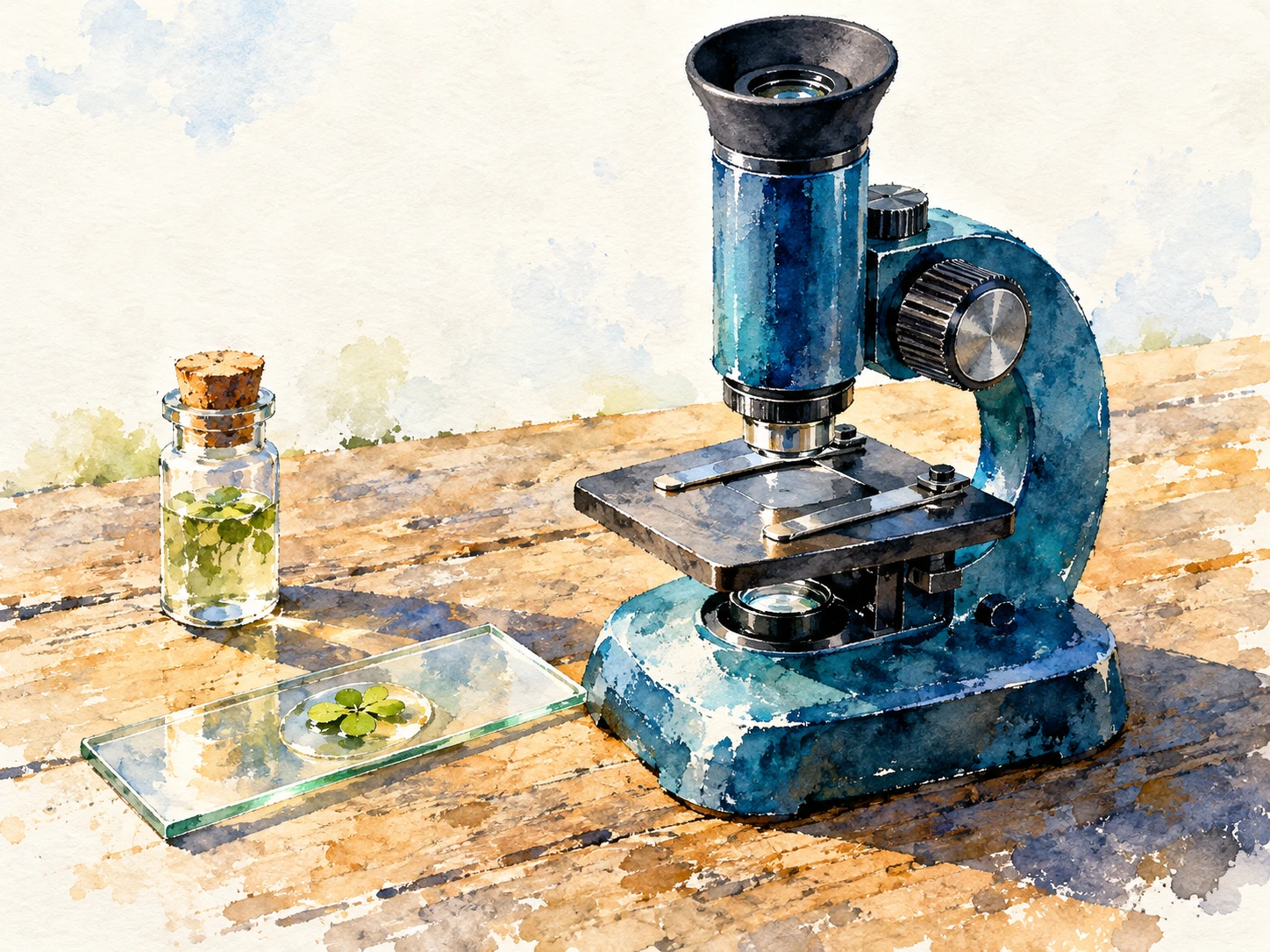
작은 연못 표본과 휴대용 현미경을 넉넉한 여백 속에 배치한 수채 제품 일러스트레이션. 번지는 물감과 끊어진 가장자리가 관찰 도구의 정밀한 형태를 감싼다.
이 이미지로 조합하기연못 표본 곁의 휴대용 현미경
- 형태 언어
- 형태를 넓게 맞물리는 덩어리로 줄이고 기능을 알리는 지점 몇 곳을 남긴다. 작은 세부는 일관되게 변주해도 된다.
- 윤곽선
- 또렷한 붓 가장자리, 마르게 끊긴 테두리, 맨 종이로 스며들어 사라지는 경계를 번갈아 쓴다.
- 붓질·입자
- 불규칙한 역번짐이 있는 넓고 젖은 붓질을 쓰고, 작은 부품에는 가느다란 마른 붓 자국을 드문드문 더한다.
- 표면 표현
- 물감이 고이는 부분과 열린 번짐을 지닌 투명 수채 층을 쌓고, 명암이 바뀌는 곳에도 종이 여백을 남긴다.
우선순위
표현적인 수채 번짐과 끊어진 가장자리로 매체의 성격을 분명히 드러낸다.
피할 표현과 결과 확인
이 예시의 실제 생성 프롬프트
MODULE OWNERSHIP
subject: Subject count, type, stable proportions and landmarks, resting face geometry, hair shape, physical materials, garment construction and permanent marks. No emotion, movement, color assignment or rendering recipe.
expression: Facial soft-tissue displacement and pupil direction, muscle coordination, regional intensity, asymmetry and onset/peak/release. No head/body pose, stable appearance, skin color or rendering.
gesture: Head/neck/body/limb orientation, joint movement, support, contact and pose-caused occlusion using existing anatomy. No eye/pupil movement, emotion, identity, props inventory or camera.
props: Prop count, type, construction, physical material and scale relative to the subject. Holding/contact belongs to gesture, position to composition, color to palette.
scene: Environment elements, terrain, backdrop/floor presence and structural detail. No canvas positions, camera, lighting, assigned colors or render texture.
camera: Projection, focal-length impression, camera elevation/yaw/roll, viewing distance and crop. No actor pose, world placement, lighting or canvas aspect ratio.
composition: Normalized 0-100% canvas positions, scale in frame, depth/overlap, focal hierarchy and margins. No joint pose, camera projection, rendering, subject/prop inventory or emotion.
palette: Color anchors, hue/saturation/value ranges, colors assigned to parts and approximate color coverage. No illumination direction, shading algorithm, physical material or layout.
lighting: Light-source direction/softness/intensity, ambient illumination, physical shadow direction/length and highlight position. Absence of directional illumination is allowed. No shading technique, palette or material changes.
style: Reusable form abstraction, contour weight/taper/edge quality, medium and mark scale/density/direction, surface rendering and tonal transition technique. No fixed subject proportions, anatomy, identity, expression, pose, palette, light-source direction, camera or layout.
output: Image count, aspect ratio, size, file/alpha requirements and global lettering/logo/watermark restrictions. No background scenery, crop, style, identity or pose.

SUBJECT
inventory: One original compact field microscope; no human or animal subjects.
geometry: A short optical tube rises from an open C-shaped arm above a broad stage and a low, rounded base.
resting-face: No facial anatomy applies.
appearance: Coated aluminum housing, rubber eyecup, glass optics and a prominent machined focus wheel.

PRIORITY


AVOID


CHECK


PROPS
inventory: One glass specimen slide with a duckweed sample and one stoppered vial, each small beside the microscope.
construction: The slide carries a shallow water drop; the narrow glass vial has a simple cork stopper.

PRIORITY


AVOID


CHECK


SCENE
inventory: A bare outdoor observation bench with an open, featureless backdrop.
structure: A single bench edge establishes the working surface; no surrounding architecture is needed.

PRIORITY


AVOID


CHECK


CAMERA
projection: Natural perspective with a restrained normal-lens impression.
viewpoint: An elevated three-quarter view reveals the eyecup opening, stage and base together.
crop: A close tabletop view includes the entire microscope and both accessories.

PRIORITY


AVOID


CHECK


COMPOSITION
placement: The microscope anchors the right half; the slide extends toward the lower left, with the vial farther left.
depth: The slide overlaps the base slightly; the vial sits behind it, creating a shallow sequence of planes.
spacing: Keep the upper left spacious; the microscope leads, followed by the small sample.

PRIORITY


AVOID


CHECK


PALETTE
colors: Petrol blue, moss green, diluted ochre and warm paper white, with a little deep indigo.
assignment: Use petrol blue for the housing, moss for duckweed, ochre for the bench and indigo for small dark fittings. Keep the sample bright in value.
balance: Paper white dominates; blue forms the main color mass and green supplies a concentrated accent.

PRIORITY


AVOID


CHECK


LIGHTING
sources: Broad, soft daylight arrives from the upper left with gentle ambient fill.
shadows: Short shadows fall toward the lower right, remaining soft around the bench contact points.
highlights: Small highlights gather along the upper glass rims and the left shoulder of the optical tube.

PRIORITY


AVOID


CHECK


STYLE GUIDE
form-language: Reduce forms to broad interlocking masses, retaining a few functional landmarks; minor details may vary coherently.
contour: Let edges alternate between crisp brush cuts, dry broken rims and passages that dissolve into bare paper.
mark-making: Use broad wet strokes with irregular backruns, interrupted by a few narrow dry-brush marks at small fittings.
surface-rendering: Build transparent watercolor layers with pooling pigment and open blooms; preserve paper gaps through tonal transitions.

PRIORITY
Make expressive watercolor blooms and broken edges visibly define the medium.

AVOID


CHECK


OUTPUT
format: One finished image.
restrictions: One landscape 4:3 image, 2400 × 1800 pixels, opaque PNG; no lettering, logos or watermarks.

PRIORITY


AVOID


CHECK


FINAL INTEGRATION
subject + style: Keep functional landmarks readable while allowing the surrounding edges to participate in the watercolor treatment.
모델명은 이미지 출처 정보 기준입니다. 같은 프롬프트를 사용해도 결과는 달라질 수 있습니다.