이미지 편집캘리그라피스타일 가이드
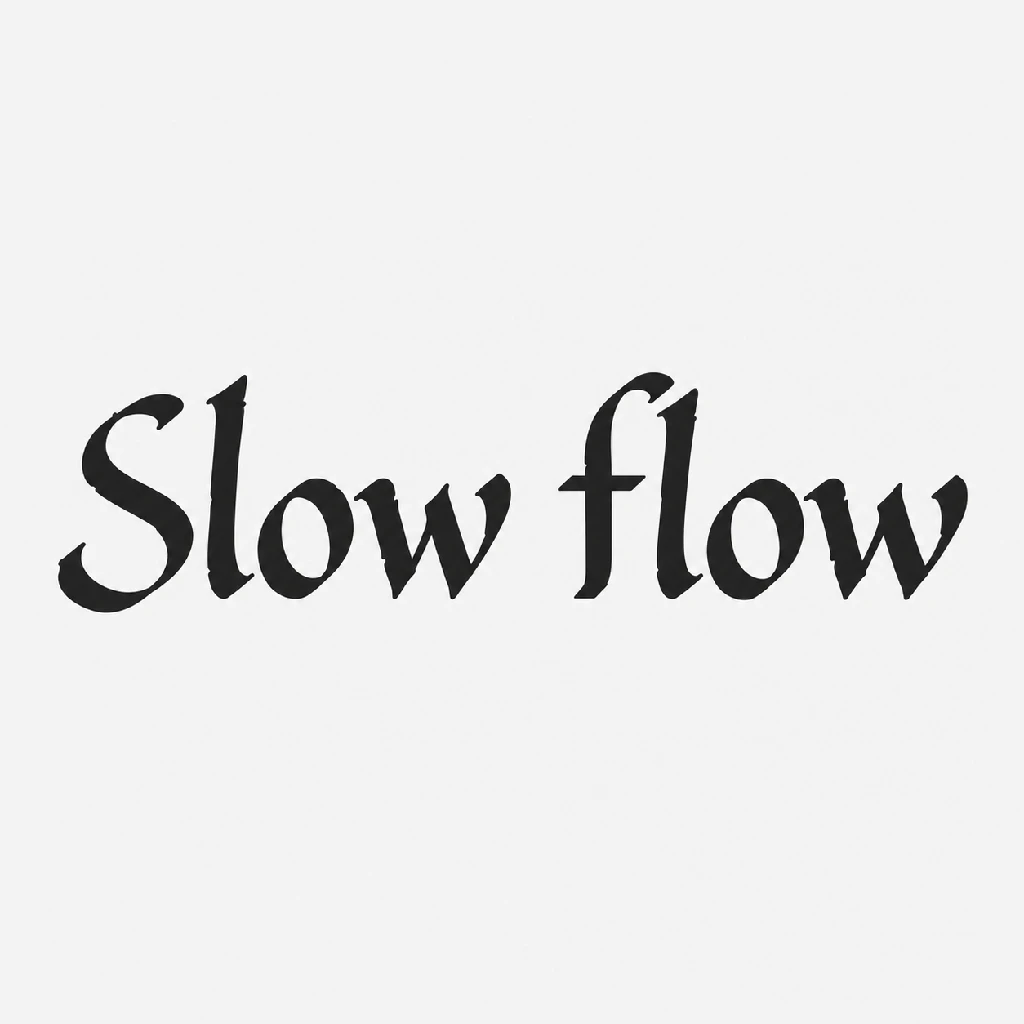
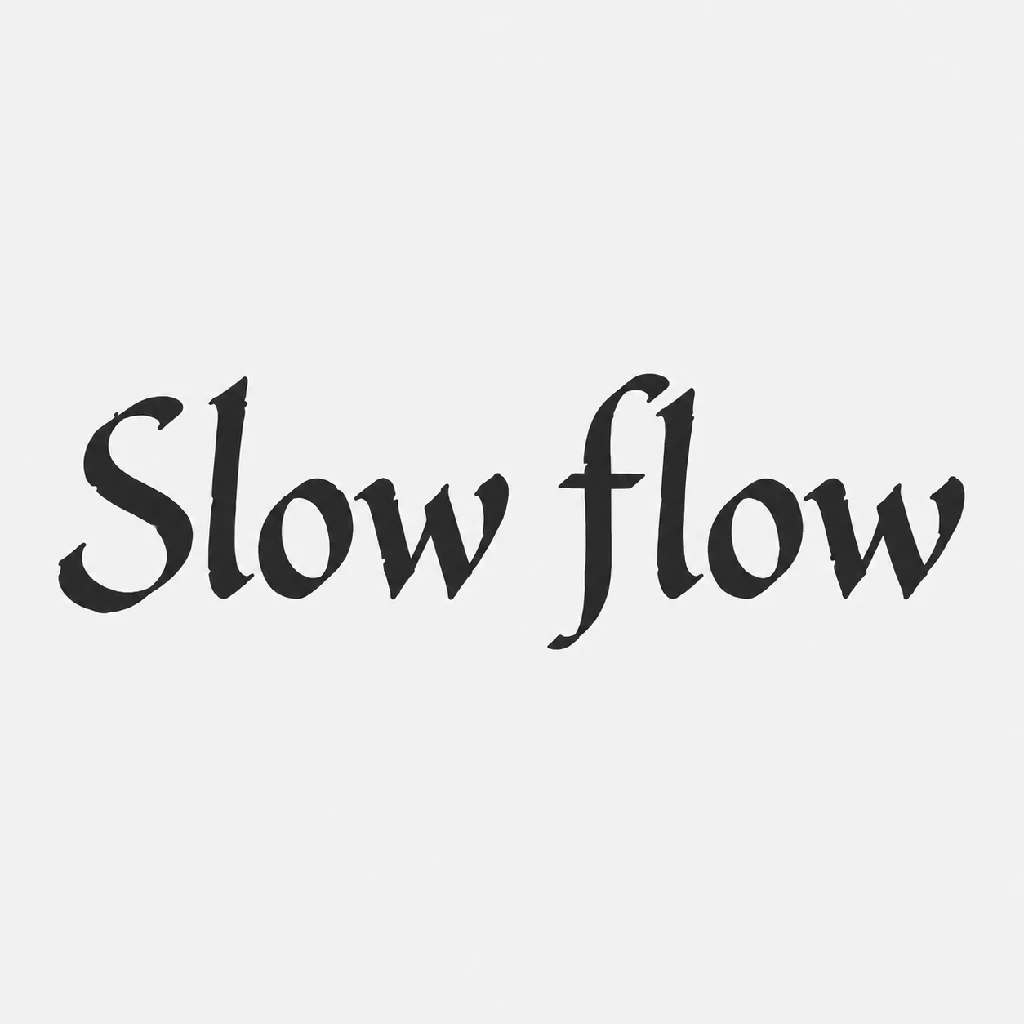
느린 흐름 · 회전날 룰링펜 글씨
룰링펜의 날 회전으로 생기는 넓은 굽이와 가는 연결부, 오목하게 잘린 끝을 읽기 쉬운 영문 글씨에 적용한다.
이 이미지로 조합하기느린 흐름 · 회전날 룰링펜 글씨
- 형태 언어
- 날로 이끄는 캘리그래피 추상화를 쓴다. U는 돌출부와 분리 표식을 제외한 주요 몸체 높이 중앙값이다. 분기와 열린 공간을 유지하며 긴 볼록 곡선과 짧은 각진 전환을 짝짓는다. 전환 끝은 0.03–0.05U 범위로 둥글린다. 0.03U보다 작은 부수 세부는 생략한다. 좁은 통로는 읽히게 유지하고 장식 연장은 추가하지 않는다.
- 윤곽선
- U는 돌출부와 분리 표식을 제외한 주요 몸체 높이 중앙값이다. 획 띠 자체가 윤곽이며 가는 구간 폭은 0.04–0.07U, 굽이의 넓은 부분은 0.20–0.28U이다. 경로 길이 0.15–0.25U에 걸쳐 넓어지고 한쪽 경계가 반대쪽보다 볼록하다. 넓은 끝에는 깊이 0.04–0.07U의 오목한 절단을 두며 가는 끝은 길이 0.10–0.18U에 걸쳐 가늘어진다. 이음은 연속적이고 별도 윤곽선은 없다.
- 붓질·입자
- 내부가 빈틈없이 이어진 룰링펜 잉크 띠를 쓴다. U는 돌출부와 분리 표식을 제외한 주요 몸체 높이 중앙값이다. 날 회전으로 굽이에서 넓어지며 위아래 진행 방향과는 무관하다. 각 볼록한 굽이 경계에 불규칙한 파임 1–3개를 두고 각각 깊이 0.02–0.04U, 경계를 따른 길이 0.04–0.08U로 한다. 가는 구간과 안쪽 열린 공간은 깨끗하게 유지하며 튄 잉크, 해칭과 내부 붓결 틈은 없다.
- 표면 표현
- 침착과 비채움의 평면 내부 명도 상태 정확히 두 개를 쓴다. U는 돌출부와 분리 표식을 제외한 주요 몸체 높이 중앙값이다. 내부는 균일하고 매끈한 경계 보간은 각 경계에 수직으로 잰 U의 0.5–1% 폭에 한정한다. 오목한 끝과 경계 파임의 모양을 흐리지 않고 유지한다. 입자, 내부 그라데이션, 번짐 테두리, 반투명 겹침과 입체 요철은 없다.
우선순위
날 회전의 비대칭 굽이와 눈에 보이는 오목한 넓은 끝을 유지한다.
피할 표현과 결과 확인
규칙적인 굵은 하강획 반복, 고정 각도 쐐기와 마른 내부 틈을 피한다.
굽이의 양쪽 경계가 비대칭이며 내부가 채워지고 끝이 오목하게 잘려 있다.
이 예시의 실제 생성 프롬프트
MODULE OWNERSHIP
subject: Subject count, type, stable proportions and landmarks, resting face geometry, hair shape, physical materials, garment construction and permanent marks. No emotion, movement, color assignment or rendering recipe.
expression: Facial soft-tissue displacement and pupil direction, muscle coordination, regional intensity, asymmetry and onset/peak/release. No head/body pose, stable appearance, skin color or rendering.
gesture: Head/neck/body/limb orientation, joint movement, support, contact and pose-caused occlusion using existing anatomy. No eye/pupil movement, emotion, identity, props inventory or camera.
props: Prop count, type, construction, physical material and scale relative to the subject. Holding/contact belongs to gesture, position to composition, color to palette.
scene: Environment elements, terrain, backdrop/floor presence and structural detail. No canvas positions, camera, lighting, assigned colors or render texture.
camera: Projection, focal-length impression, camera elevation/yaw/roll, viewing distance and crop. No actor pose, world placement, lighting or canvas aspect ratio.
composition: Normalized 0-100% canvas positions, scale in frame, depth/overlap, focal hierarchy and margins. No joint pose, camera projection, rendering, subject/prop inventory or emotion.
palette: Color anchors, hue/saturation/value ranges, colors assigned to parts and approximate color coverage. No illumination direction, shading algorithm, physical material or layout.
lighting: Light-source direction/softness/intensity, ambient illumination, physical shadow direction/length and highlight position. Absence of directional illumination is allowed. No shading technique, palette or material changes.
style: Reusable form abstraction, contour weight/taper/edge quality, medium and mark scale/density/direction, surface rendering and tonal transition technique. No fixed subject proportions, anatomy, identity, expression, pose, palette, light-source direction, camera or layout.
output: Image count, aspect ratio, size, file/alpha requirements and global lettering/logo/watermark restrictions. No background scenery, crop, style, identity or pose.

SUBJECT
inventory: Include exactly one English lettering study containing eight letters in reading order S, l, o, w, f, l, o, w and one word space. Preserve case and both occurrences of l, o and w; include no detached dots, ligatures, substitute glyphs or pictorial subjects.
geometry: Read "Slow flow" exactly. H is lowercase body height from body bottom to body top, excluding ascenders. Both o and w bodies are H high; both l stems and the f ascender reach 1.6–1.8H. S is 1.45–1.65H high. No glyph has a descender; retain f's hooked top and single crossbar.
geometry: Let H be lowercase body height. Measure full glyph widths between their outermost lateral edges: S is 0.8–1.0H, o is 0.75–0.90H, w is 1.15–1.35H, l is 0.30–0.45H and f is 0.55–0.70H. Repeated glyphs retain the same ranges; l has one stem and a short hooked foot, without an enclosed loop.
geometry: With H as lowercase body height, each o encloses one oval counter 0.25–0.40H wide and 0.40–0.60H high. Each w has two distinct valleys with openings 0.12–0.22H wide. S retains two opposing open bowls with entrances 0.15–0.25H wide. Keep glyphs structurally separate and all openings unbridged.
geometry: For f, use H as lowercase body height and measure upward from its body-bottom baseline. End its stem and entire lower terminal 0–0.03H above that baseline, with no ink extending below it. Use an ascender-only stem without a lower hook or descending tail; preserve the hooked top and single crossbar.
appearance: The written forms consist of a thin deposited ink film, without built-up layers, embossed relief, carved cavities or attached components. They have no permanent identifying marks beyond their required glyph structures.

PRIORITY
Preserve exact glyph identity, paired counters and distinct open valleys.
Keep f's complete lower terminal at its body baseline without a descending tail.

AVOID
Avoid substituted glyphs, added loops and bridged openings.
Avoid an f descender or a leftward lower hook beneath its body baseline.

CHECK
Eight correctly cased letters retain two enclosed counters and separate glyph structures.
No part of f extends below its body baseline; its top hook and single crossbar remain.

PROPS
inventory: The prop inventory is empty: include exactly zero accessories, tools, containers or supplementary objects. There is no separate writing instrument or demonstration equipment.
construction: With zero props, there is no prop construction target. Include no separate backing plate, removable mounting hardware, detached supporting stand or removable supplementary attachment.

PRIORITY
Keep the supplementary object inventory empty.

AVOID
Avoid mounting hardware and demonstration accessories.

CHECK
No separate accessory or support object is present.

SCENE
inventory: Include one plain illustrated backdrop field and no floor. Exclude buildings, terrain, furniture, vegetation, decorative motifs, lighting fixtures and environmental objects; the backdrop is the complete environment inventory.
structure: The backdrop is one uninterrupted plane without a horizon, architectural divisions, surface joints or repeated elements. It has no represented depth or structural relief and introduces no additional boundaries.

PRIORITY
Maintain one structurally uninterrupted backdrop.

AVOID
Avoid floor divisions and environmental decoration.

CHECK
The backdrop contains no horizon or structural subdivisions.

CAMERA
projection: Use orthographic projection of the planar illustration, explicitly without focal-length perspective or depth-dependent magnification. Preserve the existing geometry without lens distortion, converging lines or apparent thickness.
viewpoint: View perpendicular to the upright writing plane, with yaw and elevation offsets of 0°±2° from its normal. Set roll to 0°±2° relative to the plane's upright vertical. Viewing distance does not change scale under orthographic projection.
crop: Show the complete written forms, including every terminal, enclosed counter and detached component. Cut through none of their outer boundaries; no reverse side or thickness edge is visible in this perpendicular view.

PRIORITY
Keep every complete written form available for inspection.

AVOID
Avoid oblique distortion and clipped stroke terminals.

CHECK
All outer boundaries and enclosed counters remain visible.

COMPOSITION
placement: Use top-left normalized coordinates. Center the existing lettering group at (50%,50%)±5 percentage points. Its full width targets 80% of canvas width, allowed 70–90%; derive its height by uniform scaling. The backdrop covers x=0–100%, y=0–100%.
depth: Use one borderless panel with the existing lettering as the sole focal layer over the backdrop. Openings expose the backdrop. Preserve intrinsic connections and self-overlap, but introduce no independently placed obstruction or additional foreground layer.
spacing: Arrange one line on a horizontal body baseline parallel to the canvas x-axis. Let H be median body height: intraword gaps are 0.08–0.18H and the word gap is 0.5–0.7H, measured between nearest letter bounds. Keep all bounds inside x=5–95%, y=5–95%; uniform-scale containment overrides nominal fill. Derive margins from these bounds.

PRIORITY
Prioritize complete containment and readable word spacing.

AVOID
Avoid stretched forms, staggered baselines and decorative borders.

CHECK
One contained line has visibly wider word gaps than intraword gaps.

PALETTE
colors: Use two achromatic anchors, #262626 and #F2F2F2. Permit derived mixtures between them with equal red, green and blue values in the closed range 38–242. Introduce no chromatic hue family or third independent anchor.
assignment: Assign every deposited stroke and any coincident contour to #262626. Assign the backdrop, enclosed openings and gaps between forms to #F2F2F2. Boundary mixtures inherit these two roles; no visible region receives an independent accent color.
balance: Coverage follows the actual deposited and unfilled region areas and totals 100%. Mixtures inherit their contributing roles rather than forming a third region class. Preserve both anchor roles without separately colored accents or regional tint shifts.

PRIORITY
Preserve the two assigned achromatic color roles.

AVOID
Avoid colored accents and independently tinted regions.

CHECK
Every region and boundary mixture inherits one of the two anchor roles.

LIGHTING
sources: Use deliberately unlit flat artwork with zero physical light sources. Illumination has no directional or depth variation; no key light, fill light or ambient intensity gradient is represented.
shadows: Directional cast shadows and contact shadows are absent. No region receives a physical shadow offset, reach or penumbra, and no detached shadow shape suggests elevation above a support surface.
highlights: Physical highlights are absent across the entire motif and backdrop. Include no specular point, reflective streak, rim illumination or luminous hotspot; no region gains brightness from a represented light source.

PRIORITY
Keep physical illumination uniformly absent.

AVOID
Avoid cast shadows, rim light and reflective hotspots.

CHECK
No directional shadow or physical highlight is visible.

STYLE GUIDE
form-language: Use blade-led calligraphic abstraction. U is median main-body height excluding extensions and detached marks. Retain branches and openings; pair long convex sweeps with compact angular turns, rounding turn tips within 0.03–0.05U. Omit incidental features smaller than 0.03U. Keep narrow passages legible and add no ornamental extensions.
contour: U is median main-body height excluding extensions and detached marks. Stroke bands supply their own contours: narrow runs are 0.04–0.07U wide and curved swells 0.20–0.28U. Widen over 0.15–0.25U of path, with one edge more convex than its opposite. Broad terminals have concave scoops 0.04–0.07U deep; narrow exits taper over 0.10–0.18U. Joins remain continuous; add no separate outline.
mark-making: Use ruling-pen ink ribbons with solid, unbroken interiors. U is median main-body height excluding extensions and detached marks. Blade rolling creates swells at bends, independent of upward or downward travel. Along each convex swell, place 1–3 irregular edge nicks, each 0.02–0.04U deep and 0.04–0.08U long along the edge. Keep narrow runs and inner openings clean; omit spatter, hatching and interior bristle channels.
surface-rendering: Use exactly two flat interior tonal states, deposited and unfilled. U is median main-body height excluding extensions and detached marks. Interiors are uniform; smooth boundary interpolation occupies 0.5–1% U measured perpendicular to each edge. Preserve scooped ends and edge nicks without softening their shapes. Grain, interior gradients, bleed halos, translucent overlaps and modeled relief are absent.

PRIORITY
Preserve blade-rolled asymmetric swells and visibly scooped broad terminals.

AVOID
Avoid regular thick-downstroke cycles, fixed-angle wedges and dry interior channels.

CHECK
Curved swells have uneven opposing edges, solid interiors and concave terminal cuts.

OUTPUT
format: Deliver exactly one raster image as a PNG file, 1024×1024 pixels with a 1:1 aspect ratio. Use an opaque image with no alpha channel or transparent pixels; provide no additional image variants.
restrictions: Permit primary lettering; prohibit all additional text, signatures, seals, logos and watermarks. Exclude interface controls, metadata labels and embedded reference sheets.

PRIORITY
Deliver one opaque PNG at the specified dimensions.

AVOID
Avoid additional text, seals and extra image variants.

CHECK
One 1024×1024 opaque PNG permits primary lettering and excludes additional text and watermarks.

FINAL INTEGRATION
subject + output: For the final image, the sole permitted primary lettering is "Slow flow". This exact phrase is the complete text whitelist; all additional text remains prohibited.
subject + composition + style: Edit the failed image: retain readable glyphs, open counters and valleys, one centered line and blade-rolled swells. Replace f's descending stem and lower hook with its baseline-bounded terminal; retain the prescribed terminal scoops, taper lengths and edge nicks.
style + palette: Correct faint variation in the field and strokes to the prescribed two uniform interior states. Retain the assigned achromatic anchors; confine their mixtures to the prescribed boundary transitions.
모델명은 이미지 출처 정보 기준입니다. 같은 프롬프트를 사용해도 결과는 달라질 수 있습니다.