Text to imageIllustrationStyle guide
One Cylinder · Core Shadow and Reflected Light
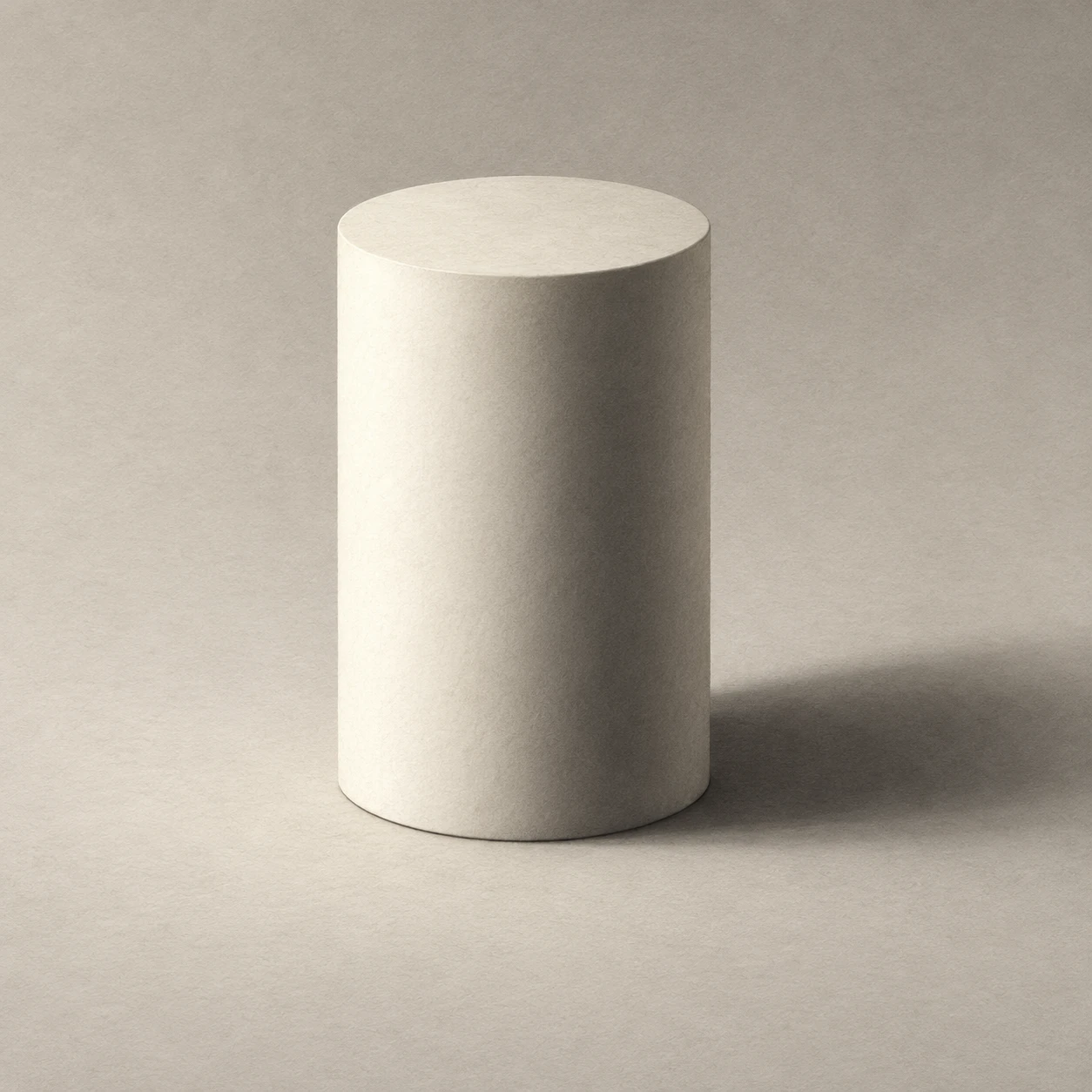
An illustration explaining rounded volume by separating a matte cylinder’s dark core shadow from subtle light reflected by the ground.
One Cylinder · Core Shadow and Reflected Light
- Shape & line
- Build the cylinder with straight vertical sides and a shallow elliptical top; use restrained contour lines, and describe the curved body primarily through broad tonal transitions.
- Color & light
- Place the main light above image-left so the left-facing body is bright and the top is light. Let the body darken into a soft vertical core-shadow band on image-right, then lift the value slightly toward the far-right silhouette with ground-reflected light; keep this reflected strip darker than the directly lit body.
- Texture & material
- Render the surface as matte with smooth, softly brushed shading and faint paper grain. Keep the reflected-light strip diffuse and subdued, and deepen the narrow contact shadow where the cylinder meets the ground.
- Composition
- Keep the full cylinder and its ground contact visible. Extend its cast shadow across the ground toward image-right, with a firm edge near the base and a softer edge farther away; use a quiet background so the bright side, core shadow, and reflected-light strip remain easy to compare.
Priority
Prioritize the visible separation between the core shadow and the weaker reflected light.
What to avoid & what to check
Avoid a bright rim, glossy highlights, or equally dark shading across the entire shadow side.
Check that the image-right reflected strip stays darker than the lit side and lighter than the core shadow.
Exact prompt for this example
SUBJECT
One upright, solid, matte ivory cylinder resting on a pale warm-gray ground plane, with its closed top visible and its base touching the ground.

COMPOSITION
Use a slightly elevated three-quarter view in a square frame. Center the cylinder with generous breathing room and leave space on image-right for its cast shadow.

STYLE GUIDE
1. Shape & line
Build the cylinder with straight vertical sides and a shallow elliptical top; use restrained contour lines, and describe the curved body primarily through broad tonal transitions.

2. Color & light
Place the main light above image-left so the left-facing body is bright and the top is light. Let the body darken into a soft vertical core-shadow band on image-right, then lift the value slightly toward the far-right silhouette with ground-reflected light; keep this reflected strip darker than the directly lit body.

3. Texture & material
Render the surface as matte with smooth, softly brushed shading and faint paper grain. Keep the reflected-light strip diffuse and subdued, and deepen the narrow contact shadow where the cylinder meets the ground.

4. Composition
Keep the full cylinder and its ground contact visible. Extend its cast shadow across the ground toward image-right, with a firm edge near the base and a softer edge farther away; use a quiet background so the bright side, core shadow, and reflected-light strip remain easy to compare.

PRIORITY
Preserve the requested identity, count, action, composition and output settings. Apply the style rules within those constraints; a style reference must not replace the subject or layout. Within the style: Prioritize the visible separation between the core shadow and the weaker reflected light.

AVOID
Avoid a bright rim, glossy highlights, or equally dark shading across the entire shadow side.

OUTPUT
Create one square illustration with no text, labels, arrows, border, or watermark.

SELF-CHECK
Check that the image-right reflected strip stays darker than the lit side and lighter than the core shadow.
Model information comes from image provenance. The same prompt may produce a different result.