Text to imageLandscapeStyle guide
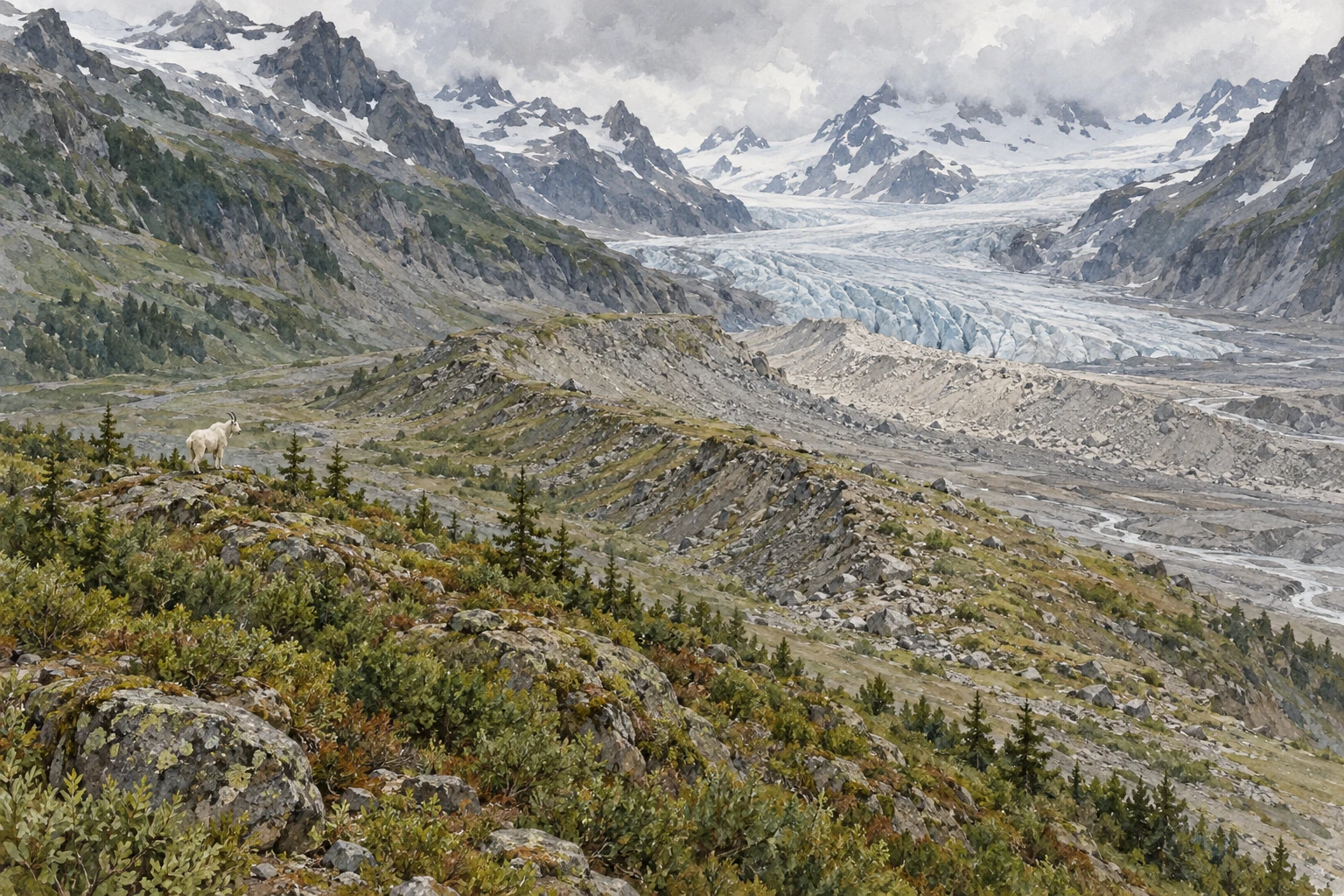
Retreating Glacier · Moraine Time Bands
Show a glacier’s retreat through successive moraine ridges and changing vegetation.
Remix this referenceRetreating Glacier · Moraine Time Bands
- Shape & line
- Vary ridge sharpness, stone size and plant density progressively with apparent terrain age, avoiding mechanically identical contours.
- Color & light
- Use overcast mountain light and natural restrained earth and ice colors, separating old vegetated ground from fresh pale rubble.
- Texture & material
- Preserve watercolor granulation and transparent pigment variation so rocks and soil feel observed, not rendered as a diagram.
- Composition
- Guide the eye through three irregular nested curves toward distant ice, without parallel stripes; keep the single scale animal tiny.
Priority
Preserve the distinctive construction and medium first, readable spatial hierarchy second, subtle surface details third.
What to avoid & what to check
Avoid extra subjects, inconsistent repeated geometry, hidden key details, crowded overlaps, unwanted text and watermarks.
Check each style rule against the finished image: visible shape construction, color and light, material treatment, and composition. Preserve the exact subject count and scene requirements.
Exact prompt for this example
SUBJECT
Paint a wide alpine valley after a glacier has retreated. In the near foreground, place an old rounded moraine ridge supporting low shrubs and small conifers. Beyond it, show a younger, sharper ridge with sparse grass, then a fresh pale rubble ridge almost bare of plants beside the distant ice tongue. Arrange the three ridges as nested curves that guide the eye toward the glacier without turning into perfectly parallel stripes. Let stone size, edge sharpness, soil color, and plant density change gradually with apparent age. Use overcast mountain light and natural watercolor granulation so the terrain feels observed rather than diagrammatic. Include a tiny mountain goat on the oldest ridge for scale. No lettering, logos, or watermarks.

COMPOSITION
Wide alpine valley with three irregular nested moraine ridges leading to a distant ice tongue: oldest rounded vegetated ridge in front, sharper sparsely grassy middle ridge, bare pale rubble near ice. One tiny goat stands on oldest ridge.

STYLE GUIDE
1. Shape & line
Vary ridge sharpness, stone size and plant density progressively with apparent terrain age, avoiding mechanically identical contours.

2. Color & light
Use overcast mountain light and natural restrained earth and ice colors, separating old vegetated ground from fresh pale rubble.

3. Texture & material
Preserve watercolor granulation and transparent pigment variation so rocks and soil feel observed, not rendered as a diagram.

4. Composition
Guide the eye through three irregular nested curves toward distant ice, without parallel stripes; keep the single scale animal tiny.

PRIORITY
Preserve the requested identity, count, action, composition and output settings. Apply the style rules within those constraints; a style reference must not replace the subject or layout. Within the style: Preserve the distinctive construction and medium first, readable spatial hierarchy second, subtle surface details third.

AVOID
Avoid extra subjects, inconsistent repeated geometry, hidden key details, crowded overlaps, unwanted text and watermarks.

OUTPUT
One finished landscape image, aspect ratio 3:2. No lettering, captions, dimensions, unrelated logos, watermark, border or interface.

SELF-CHECK
Check each style rule against the finished image: visible shape construction, color and light, material treatment, and composition. Preserve the exact subject count and scene requirements.
Model information comes from image provenance. The same prompt may produce a different result.