Text to imageArt stylesStyle guide
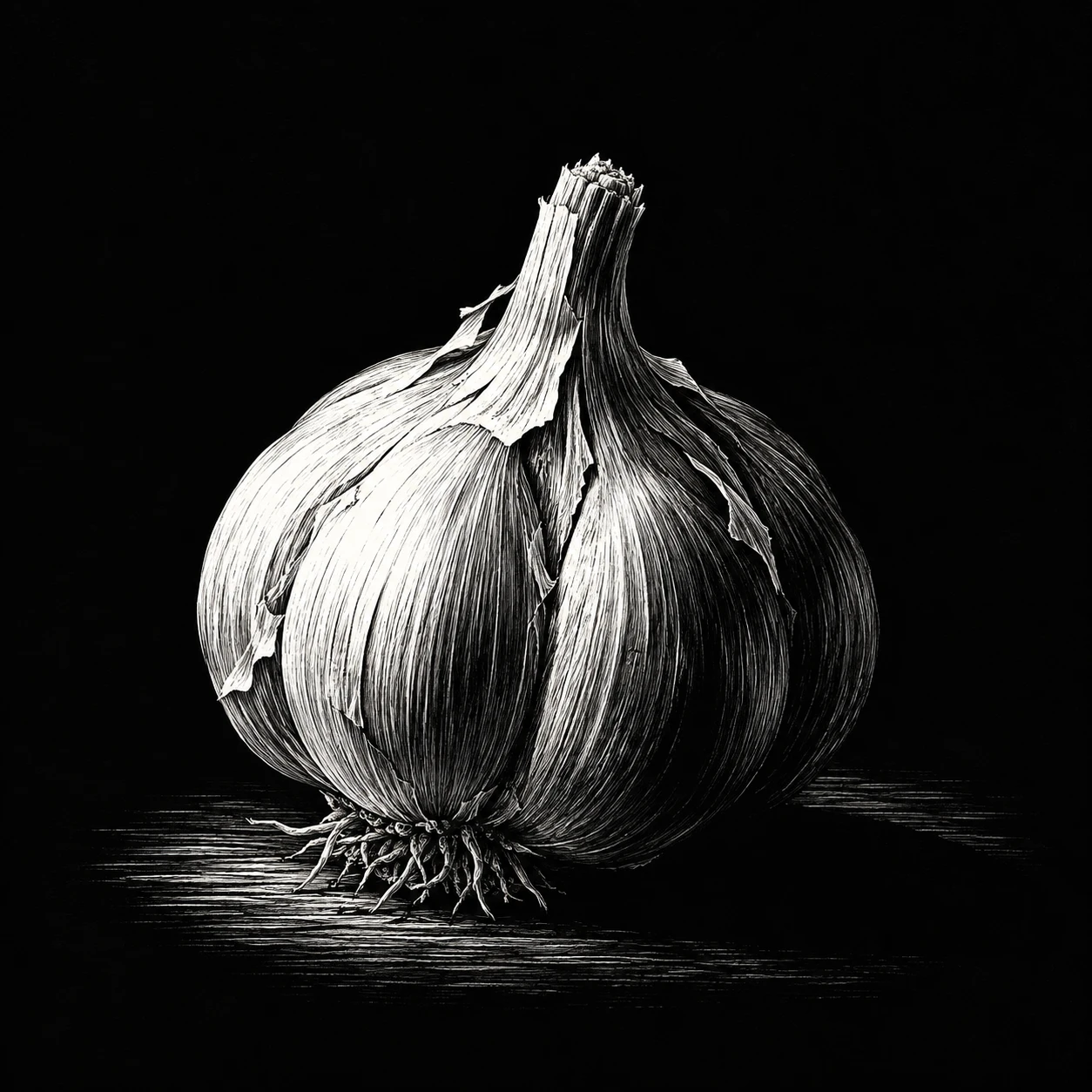
One Garlic Bulb · Scratchboard Reverse Drawing
A scratchboard reference using the density and direction of white scratched marks to describe rounded garlic cloves and thin papery skin.
One Garlic Bulb · Scratchboard Reverse Drawing
- Shape & line
- Build the bulb from rounded, overlapping clove lobes, using curved white scratches that follow each lobe from stem toward base. Leave narrow black grooves between lobes, and interrupt the outer contour on the shadow side instead of enclosing the bulb with a uniform white outline.
- Color & light
- Keep the palette strictly black and white. Set the light at image upper left: cluster broad white scratches on the upper-left lobes, thin and separate the marks across the middle, and retain large black areas on the lower-right lobes. Leave a dark cast shadow extending from the bulb toward image lower right.
- Texture & material
- Make the marks look cut through a matte black coating into white board, with crisp edges and occasional uneven widths. Describe papery skin with a few long split scratches and lifted white slivers; use short wiry cuts for the roots. Create intermediate tones through mark spacing, keeping the black gaps visible.
- Composition
- Let the bulb occupy roughly half the frame width and keep generous uninterrupted black space around it. Add only a sparse patch of horizontal white ground scratches beneath the root contact, breaking that patch around the lower-right cast shadow so the bulb feels supported without turning the background into a textured field.
Priority
Prioritize white marks emerging from black and clearly rounded clove groups.
What to avoid & what to check
Avoid smooth gray gradients, glowing outlines, and uniform scratch density.
Check that the upper-left light reads through denser white cuts and that the roots meet the ground beside the lower-right shadow.
Exact prompt for this example
SUBJECT
Show exactly one intact garlic bulb with a short dried stem and a small root tuft. Its cloves remain enclosed by papery skin, with shallow grooves revealing their grouped forms.

COMPOSITION
Use a square frame and a slightly elevated three-quarter view. Place the bulb just below center, with its stem rising into open black space and its root tuft visibly touching a simple ground plane.

STYLE GUIDE
1. Shape & line
Build the bulb from rounded, overlapping clove lobes, using curved white scratches that follow each lobe from stem toward base. Leave narrow black grooves between lobes, and interrupt the outer contour on the shadow side instead of enclosing the bulb with a uniform white outline.

2. Color & light
Keep the palette strictly black and white. Set the light at image upper left: cluster broad white scratches on the upper-left lobes, thin and separate the marks across the middle, and retain large black areas on the lower-right lobes. Leave a dark cast shadow extending from the bulb toward image lower right.

3. Texture & material
Make the marks look cut through a matte black coating into white board, with crisp edges and occasional uneven widths. Describe papery skin with a few long split scratches and lifted white slivers; use short wiry cuts for the roots. Create intermediate tones through mark spacing, keeping the black gaps visible.

4. Composition
Let the bulb occupy roughly half the frame width and keep generous uninterrupted black space around it. Add only a sparse patch of horizontal white ground scratches beneath the root contact, breaking that patch around the lower-right cast shadow so the bulb feels supported without turning the background into a textured field.

PRIORITY
Preserve the requested identity, count, action, composition and output settings. Apply the style rules within those constraints; a style reference must not replace the subject or layout. Within the style: Prioritize white marks emerging from black and clearly rounded clove groups.

AVOID
Avoid smooth gray gradients, glowing outlines, and uniform scratch density.

OUTPUT
Create one square scratchboard illustration with no lettering, captions, border, or watermark.

SELF-CHECK
Check that the upper-left light reads through denser white cuts and that the roots meet the ground beside the lower-right shadow.
Model information comes from image provenance. The same prompt may produce a different result.