Text to imageCharacterStyle guide
Wet Puppy · Directional Fur Clumping
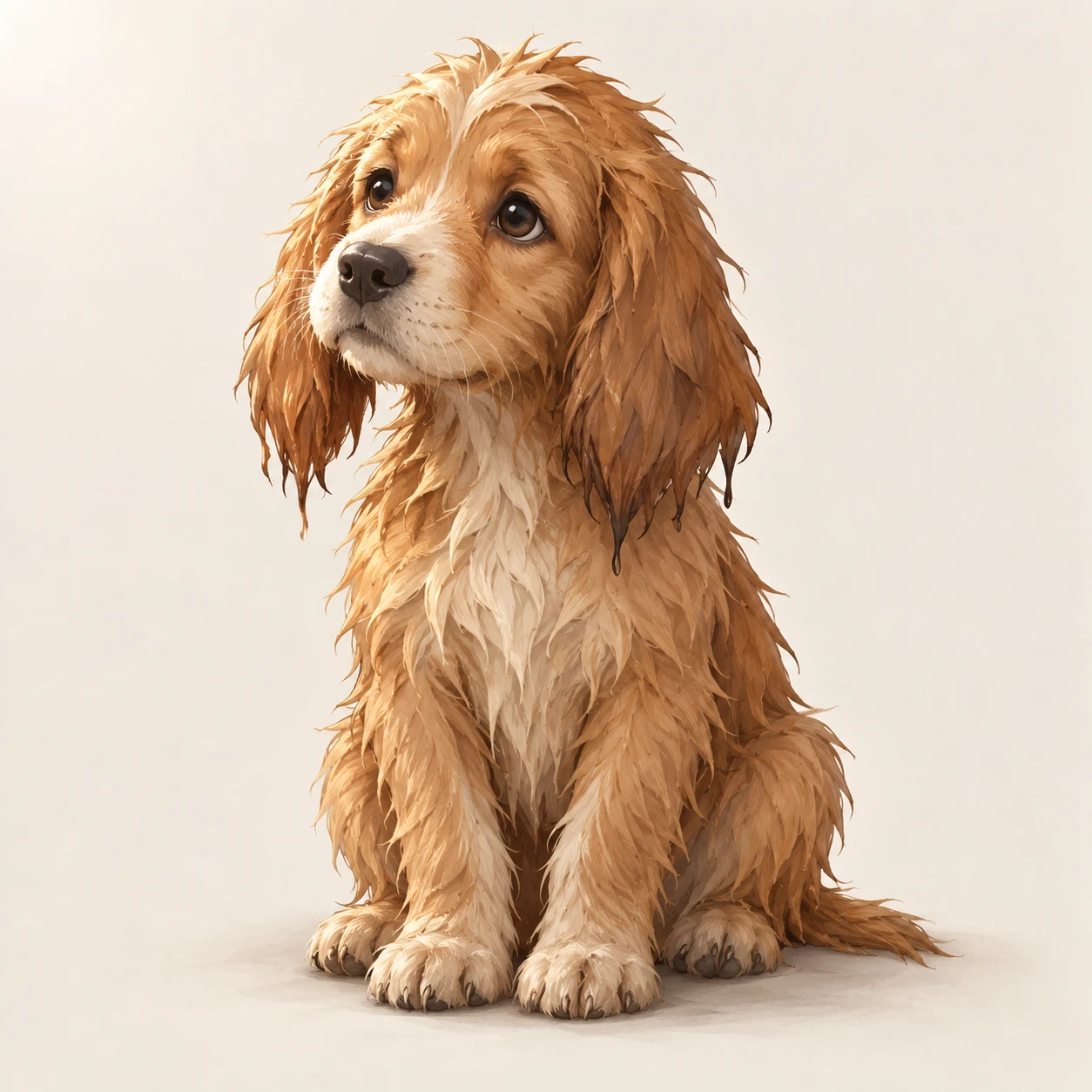
A character reference showing how wet fur gathers with gravity and body curvature to convey a small puppy’s dampness and volume.
Wet Puppy · Directional Fur Clumping
- Shape & line
- Build the head and torso from rounded masses, then interrupt their contours with a few tapered fur bundles; let the ears hang as broad soft shapes ending in narrow wet tips, while keeping the eyes and muzzle unobstructed.
- Color & light
- Use warm ochre fur with a cream muzzle and chest; place a broad soft light at image-upper-left, making the image-left surfaces lighter and the image-right undersides darker, with sparse pale highlights along the light-facing ridges of wet clumps.
- Texture & material
- Gather damp fur into separated locks with dark grooves between them: curve the cheek locks downward around the muzzle, draw chest locks vertically toward the paws, and pull ear locks toward their hanging tips. Keep each lock broad at its root and tapered at its end rather than outlining individual hairs.
- Composition
- Center the seated silhouette with generous space around it and keep the hanging ears separated from the chest by narrow background gaps; place a soft contact shadow directly beneath the paws and belly, leaving the fur clumps readable at thumbnail size.
Priority
Prioritize the directional grouping of wet fur over decorative detail.
What to avoid & what to check
Avoid uniformly fluffy fur, evenly spaced spikes, and glossy plastic shading.
Check that the cheek, chest, and ear locks follow distinct visible directions while preserving the puppy’s rounded volume.
Exact prompt for this example
SUBJECT
One original small, floppy-eared puppy sitting with its front paws together, freshly wet fur gathered into visible tapered clumps, and a gentle, slightly puzzled expression.

COMPOSITION
Show the entire puppy at eye level in a three-quarter view, with its muzzle pointing slightly toward image-left. Keep both hanging ears, the chest, and the front paws clearly visible against a plain pale background.

STYLE GUIDE
1. Shape & line
Build the head and torso from rounded masses, then interrupt their contours with a few tapered fur bundles; let the ears hang as broad soft shapes ending in narrow wet tips, while keeping the eyes and muzzle unobstructed.

2. Color & light
Use warm ochre fur with a cream muzzle and chest; place a broad soft light at image-upper-left, making the image-left surfaces lighter and the image-right undersides darker, with sparse pale highlights along the light-facing ridges of wet clumps.

3. Texture & material
Gather damp fur into separated locks with dark grooves between them: curve the cheek locks downward around the muzzle, draw chest locks vertically toward the paws, and pull ear locks toward their hanging tips. Keep each lock broad at its root and tapered at its end rather than outlining individual hairs.

4. Composition
Center the seated silhouette with generous space around it and keep the hanging ears separated from the chest by narrow background gaps; place a soft contact shadow directly beneath the paws and belly, leaving the fur clumps readable at thumbnail size.

PRIORITY
Preserve the requested identity, count, action, composition and output settings. Apply the style rules within those constraints; a style reference must not replace the subject or layout. Within the style: Prioritize the directional grouping of wet fur over decorative detail.

AVOID
Avoid uniformly fluffy fur, evenly spaced spikes, and glossy plastic shading.

OUTPUT
Create one square character reference image in softly shaded digital illustration, with no lettering, captions, logos, or watermark.

SELF-CHECK
Check that the cheek, chest, and ear locks follow distinct visible directions while preserving the puppy’s rounded volume.
Model information comes from image provenance. The same prompt may produce a different result.