Text to imageArt stylesStyle guide
One Garlic Bulb · Mezzotint
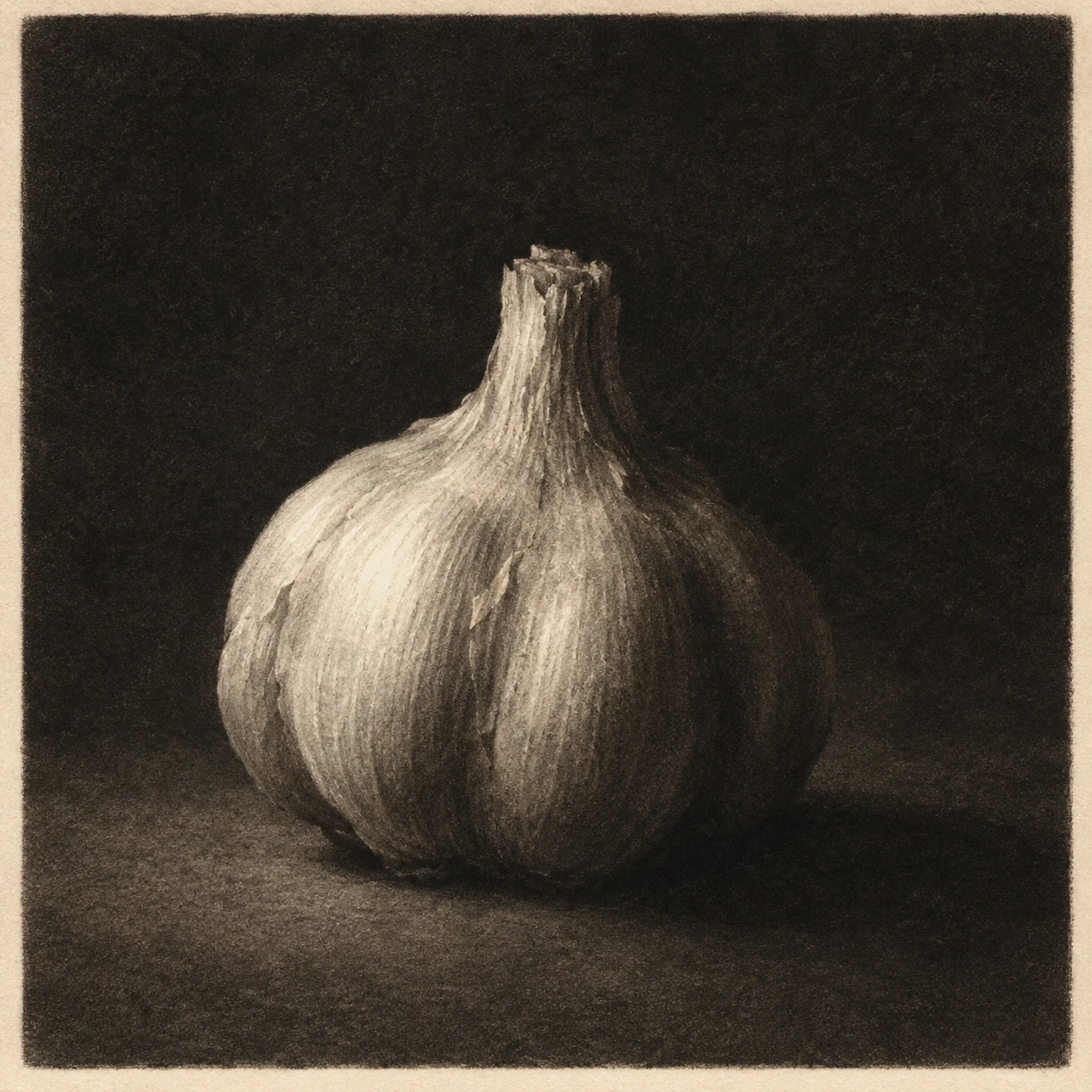
Reveal a garlic bulb’s rounded lobes and papery skin through mezzotint tones scraped out of a dark ground.
One Garlic Bulb · Mezzotint
- Shape & line
- Build the bulb from joined, swelling lobes that narrow into the dry neck. Define its silhouette and shallow clove grooves through changes of tone rather than an enclosing ink outline; keep the shadow-side grooves soft and the lit ridges distinctly rounded.
- Color & light
- Use charcoal black, gray, and the warm ivory of the paper. Place the light at image upper left: expose pale highlights on the bulb’s upper-left lobes, graduate into gray across the center, and retain deep darkness on its image-right side. Attach a dark cast shadow to the base and extend it toward image lower right.
- Texture & material
- Make the dark ground read as densely rocked mezzotint grain. Suggest scraping and burnishing by opening the grain into progressively lighter, smoother patches on the illuminated lobes; retain fine irregular grain in the middle tones and a few slender pale skin creases without turning them into crosshatching.
- Composition
- Keep the bulb as the single focal mass against a nearly black background. Let its image-right edge partially merge into that background while preserving the pale upper-left silhouette; reveal the supporting surface only as a subdued gray patch around the base and shadow, inside a narrow unprinted ivory margin.
Priority
Prioritize light emerging from a dark granular ground through visibly smoother scraped highlights.
What to avoid & what to check
Avoid outlined cartoon shapes, discrete pen dots, and glossy photographic skin.
Check that one intact bulb reads clearly and that its pale scraped lobes transition through grainy gray into the dark ground.
Exact prompt for this example
SUBJECT
One intact white garlic bulb with a short dry neck; its rounded cloves remain enclosed by a shared papery skin, with shallow grooves separating the visible lobes.

COMPOSITION
Use a square, close still-life framing with the entire bulb visible slightly below center. Show its front and image-right side, leaving generous dark space around the neck and a small visible supporting surface beneath the base.

STYLE GUIDE
1. Shape & line
Build the bulb from joined, swelling lobes that narrow into the dry neck. Define its silhouette and shallow clove grooves through changes of tone rather than an enclosing ink outline; keep the shadow-side grooves soft and the lit ridges distinctly rounded.

2. Color & light
Use charcoal black, gray, and the warm ivory of the paper. Place the light at image upper left: expose pale highlights on the bulb’s upper-left lobes, graduate into gray across the center, and retain deep darkness on its image-right side. Attach a dark cast shadow to the base and extend it toward image lower right.

3. Texture & material
Make the dark ground read as densely rocked mezzotint grain. Suggest scraping and burnishing by opening the grain into progressively lighter, smoother patches on the illuminated lobes; retain fine irregular grain in the middle tones and a few slender pale skin creases without turning them into crosshatching.

4. Composition
Keep the bulb as the single focal mass against a nearly black background. Let its image-right edge partially merge into that background while preserving the pale upper-left silhouette; reveal the supporting surface only as a subdued gray patch around the base and shadow, inside a narrow unprinted ivory margin.

PRIORITY
Preserve the requested identity, count, action, composition and output settings. Apply the style rules within those constraints; a style reference must not replace the subject or layout. Within the style: Prioritize light emerging from a dark granular ground through visibly smoother scraped highlights.

AVOID
Avoid outlined cartoon shapes, discrete pen dots, and glossy photographic skin.

OUTPUT
Create one square image of a monochrome mezzotint print on warm ivory paper, with no lettering, captions, signatures, or watermarks.

SELF-CHECK
Check that one intact bulb reads clearly and that its pale scraped lobes transition through grainy gray into the dark ground.
Model information comes from image provenance. The same prompt may produce a different result.