Text to imageCharacterStyle guide
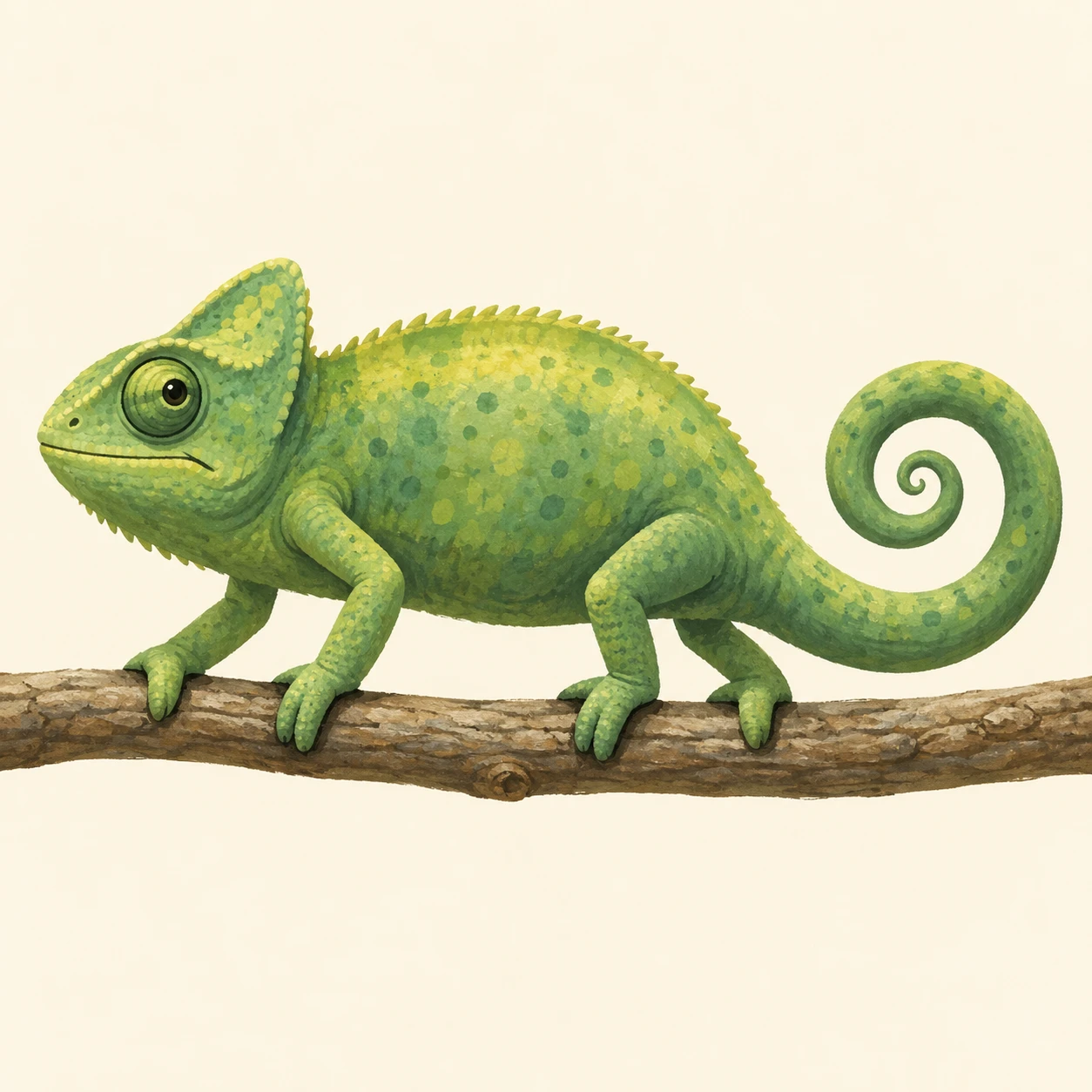
Chameleon on a Branch · Tapered Spiral Tail
Build a readable chameleon character by gradually narrowing its curled tail and keeping open space between the spiral turns.
Chameleon on a Branch · Tapered Spiral Tail
- Shape & line
- Draw the tail as one continuous silhouette that begins thick at the rump and progressively narrows toward the inner tip. Curl it inward on image-right, keeping a visible background channel between adjacent turns so the tail reads as a tapering ribbon of flesh rather than stacked rings.
- Color & light
- Use muted leaf green for the body and a lighter yellow-green along its upper surfaces. Light from image-upper-left, placing a broad darker green band beneath the belly and along the lower-facing edges of the tail; keep the eye dark enough to stand out.
- Texture & material
- Render the skin with matte gouache-like fills and a few soft, irregular speckles across the torso. Reduce speckles toward the thin tail tip, and give the branch a dry, lightly streaked surface so its woody texture differs visibly from the soft skin.
- Composition
- Keep the tail spiral above the branch in the right half without crossing the body or feet. Show each foot wrapping over the branch with a small dark contact patch underneath, and use a plain warm cream background to make the curl's open spaces immediately readable.
Priority
Prioritize the continuous taper and open spacing of the tail spiral.
What to avoid & what to check
Avoid uniform-width coils, disconnected tail rings, and texture that obscures the curl.
Check that the tail connects clearly to the rump and narrows visibly all the way to its inner tip.
Exact prompt for this example
SUBJECT
One friendly chameleon standing on one horizontal branch, with its head facing image-left and its tail extending from the rump on image-right into a single inward curl. Its four feet clasp the branch; its visible eye looks toward image-left.

COMPOSITION
Use a full-body side view in a square frame. Place the branch across the lower third, the head in the left half, and the complete tail spiral in the right half. Leave clear background inside the spiral and generous margins around the animal.

STYLE GUIDE
1. Shape & line
Draw the tail as one continuous silhouette that begins thick at the rump and progressively narrows toward the inner tip. Curl it inward on image-right, keeping a visible background channel between adjacent turns so the tail reads as a tapering ribbon of flesh rather than stacked rings.

2. Color & light
Use muted leaf green for the body and a lighter yellow-green along its upper surfaces. Light from image-upper-left, placing a broad darker green band beneath the belly and along the lower-facing edges of the tail; keep the eye dark enough to stand out.

3. Texture & material
Render the skin with matte gouache-like fills and a few soft, irregular speckles across the torso. Reduce speckles toward the thin tail tip, and give the branch a dry, lightly streaked surface so its woody texture differs visibly from the soft skin.

4. Composition
Keep the tail spiral above the branch in the right half without crossing the body or feet. Show each foot wrapping over the branch with a small dark contact patch underneath, and use a plain warm cream background to make the curl's open spaces immediately readable.

PRIORITY
Preserve the requested identity, count, action, composition and output settings. Apply the style rules within those constraints; a style reference must not replace the subject or layout. Within the style: Prioritize the continuous taper and open spacing of the tail spiral.

AVOID
Avoid uniform-width coils, disconnected tail rings, and texture that obscures the curl.

OUTPUT
Create one square character illustration with no lettering, captions, logos, or watermarks.

SELF-CHECK
Check that the tail connects clearly to the rump and narrows visibly all the way to its inner tip.
Model information comes from image provenance. The same prompt may produce a different result.