Text to imageIllustrationStyle guide
One Padlock · Negative-Space Shackle
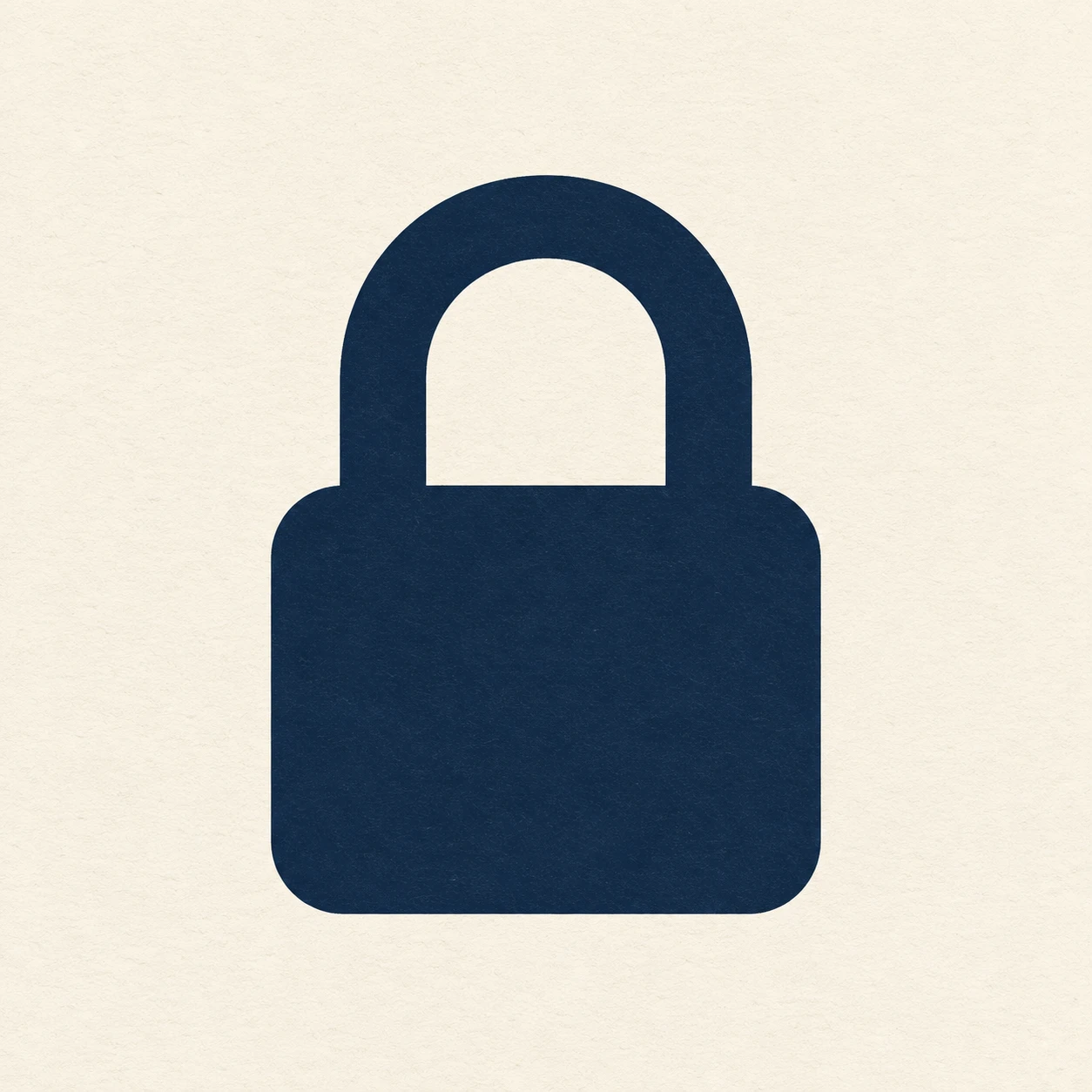
An illustration that leaves the shackle opening as background-colored negative space, making a closed padlock readable within a simple silhouette.
One Padlock · Negative-Space Shackle
- Shape & line
- Construct the body as a rounded rectangle and the shackle as a thick inverted U with even visual weight. Join both lower ends to the body, then cut a clean arch-shaped opening from the enclosed area so the negative space defines the shackle's inner contour.
- Color & light
- Fill the entire padlock silhouette with deep navy and use warm cream for both the background and the shackle opening. Keep these fills flat so the opening reads as continuous background passing through the object.
- Texture & material
- Use matte ink-like fills with a faint paper grain across the image. Keep the opening's edges crisp and its interior free of object-colored speckles so texture never closes or confuses the hole.
- Composition
- Center the shackle opening over the body and make it broad enough to remain legible at thumbnail size. Let the padlock occupy roughly the middle half of the canvas width, with uninterrupted cream space surrounding every outer edge.
Priority
Prioritize a clearly enclosed background-colored opening and a recognizable closed-padlock silhouette.
What to avoid & what to check
Avoid perspective tilt, metallic highlights and details that compete with the shackle opening.
Check that both shackle ends meet the body and the enclosed opening exactly matches the background color.
Exact prompt for this example
SUBJECT
Exactly one closed padlock with a rounded rectangular body and a thick inverted-U shackle. Both shackle ends enter the body's top edge; the opening enclosed by the shackle and the body remains visibly empty.

COMPOSITION
Show the padlock straight on, upright and centered on a plain cream field. Place the shackle above the body with its entire opening visible, and leave generous margins around the complete silhouette.

STYLE GUIDE
1. Shape & line
Construct the body as a rounded rectangle and the shackle as a thick inverted U with even visual weight. Join both lower ends to the body, then cut a clean arch-shaped opening from the enclosed area so the negative space defines the shackle's inner contour.

2. Color & light
Fill the entire padlock silhouette with deep navy and use warm cream for both the background and the shackle opening. Keep these fills flat so the opening reads as continuous background passing through the object.

3. Texture & material
Use matte ink-like fills with a faint paper grain across the image. Keep the opening's edges crisp and its interior free of object-colored speckles so texture never closes or confuses the hole.

4. Composition
Center the shackle opening over the body and make it broad enough to remain legible at thumbnail size. Let the padlock occupy roughly the middle half of the canvas width, with uninterrupted cream space surrounding every outer edge.

PRIORITY
Preserve the requested identity, count, action, composition and output settings. Apply the style rules within those constraints; a style reference must not replace the subject or layout. Within the style: Prioritize a clearly enclosed background-colored opening and a recognizable closed-padlock silhouette.

AVOID
Avoid perspective tilt, metallic highlights and details that compete with the shackle opening.

OUTPUT
One square 1:1 illustration, with no lettering, numbers, captions, logos or watermark.

SELF-CHECK
Check that both shackle ends meet the body and the enclosed opening exactly matches the background color.
Model information comes from image provenance. The same prompt may produce a different result.