Text to imageCharacterStyle guide
Little Gecko · Splayed Toe Pads
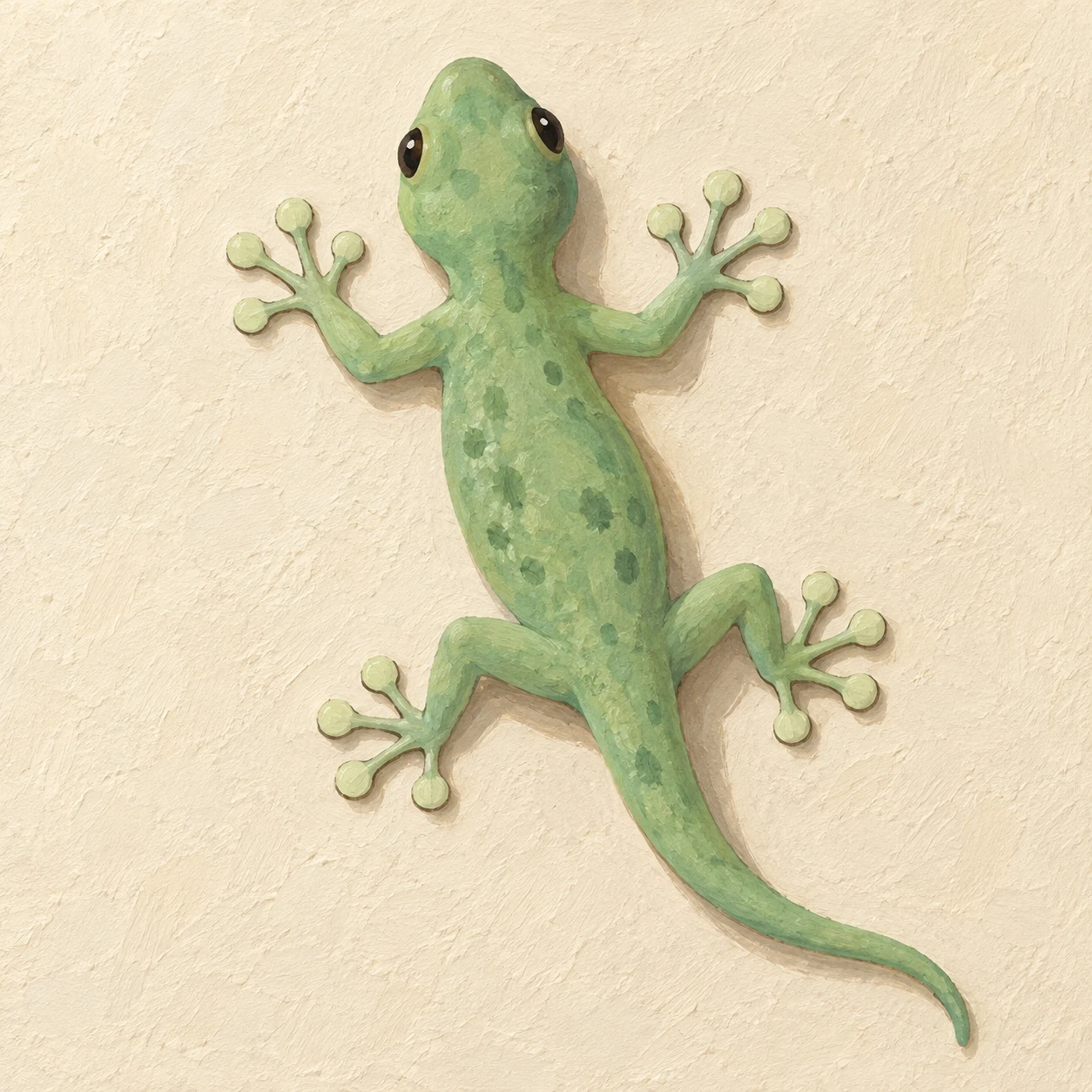
Widen slender toe tips into pads and leave gaps between them to show a little gecko planted against a wall.
Little Gecko · Splayed Toe Pads
- Shape & line
- Draw a rounded head and a softly tapered body with clean, gently irregular contours. Fan the toes outward from each foot, narrow their stems, and broaden their ends into rounded pads; leave visible wall-colored gaps between neighboring toes so each pad reads separately.
- Color & light
- Paint the gecko muted mint green against a warm cream wall, with small dark eyes and slightly lighter toe pads. Light it from the image's upper left, adding restrained shading along the body's lower-right edge and thin contact shadows immediately beside the lower-right edges of the planted pads.
- Texture & material
- Use matte, opaque gouache fills with subtle broad brush variation across the body and wall. Keep the toe pads smooth and clearly bounded, and add only a few soft darker spots on the back so surface detail does not obscure the feet.
- Composition
- Spread the two upper feet toward the upper-left and upper-right corners and the two lower feet toward the lower-left and lower-right corners. Keep the tail inside the gap between the lower-right foot and the body, without touching that foot, so all four fans of planted toe pads remain readable.
Priority
Prioritize the narrow toe stems, widened pads, and clear gaps that make the planted feet readable.
What to avoid & what to check
Avoid merging the toes into mitten shapes or lifting the pads away from the wall.
Check that all four feet show separate widened toe pads resting against the wall.
Exact prompt for this example
SUBJECT
One original little gecko character clinging to a plain wall, with a rounded head, four spread feet, and one gently curved tail. Each foot has slender toes ending in visibly wider rounded pads that rest against the same wall surface.

COMPOSITION
Show the entire gecko from directly above its back, looking straight at the wall plane. Place its head toward the upper center and its tail toward the lower right. Keep all four feet visible outside the body silhouette, with generous empty wall around the character.

STYLE GUIDE
1. Shape & line
Draw a rounded head and a softly tapered body with clean, gently irregular contours. Fan the toes outward from each foot, narrow their stems, and broaden their ends into rounded pads; leave visible wall-colored gaps between neighboring toes so each pad reads separately.

2. Color & light
Paint the gecko muted mint green against a warm cream wall, with small dark eyes and slightly lighter toe pads. Light it from the image's upper left, adding restrained shading along the body's lower-right edge and thin contact shadows immediately beside the lower-right edges of the planted pads.

3. Texture & material
Use matte, opaque gouache fills with subtle broad brush variation across the body and wall. Keep the toe pads smooth and clearly bounded, and add only a few soft darker spots on the back so surface detail does not obscure the feet.

4. Composition
Spread the two upper feet toward the upper-left and upper-right corners and the two lower feet toward the lower-left and lower-right corners. Keep the tail inside the gap between the lower-right foot and the body, without touching that foot, so all four fans of planted toe pads remain readable.

PRIORITY
Preserve the requested identity, count, action, composition and output settings. Apply the style rules within those constraints; a style reference must not replace the subject or layout. Within the style: Prioritize the narrow toe stems, widened pads, and clear gaps that make the planted feet readable.

AVOID
Avoid merging the toes into mitten shapes or lifting the pads away from the wall.

OUTPUT
Create one square image in an opaque gouache illustration medium, with no lettering, labels, logos, or watermark.

SELF-CHECK
Check that all four feet show separate widened toe pads resting against the wall.
Model information comes from image provenance. The same prompt may produce a different result.