Text to imageCharacterStyle guide
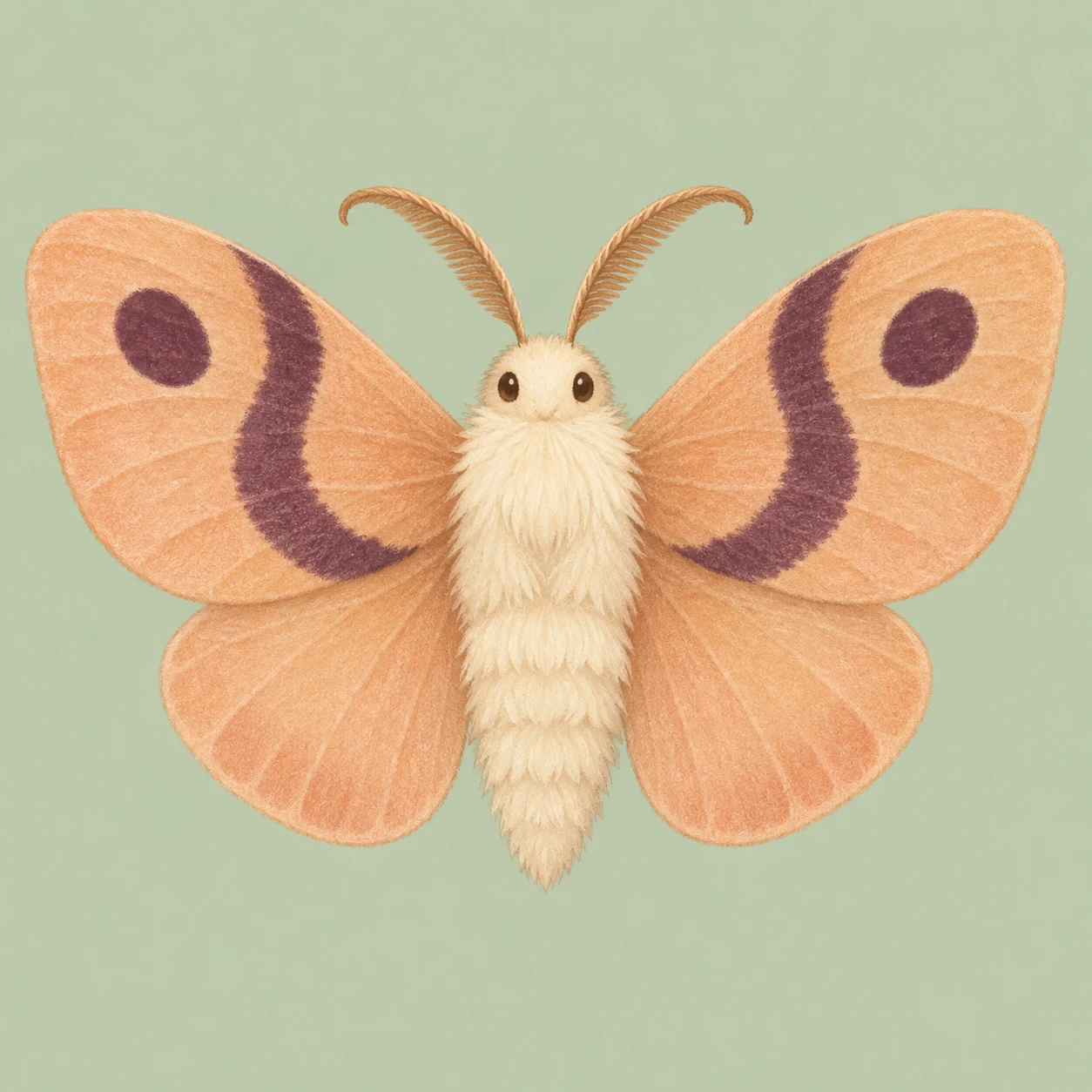
Little Moth Friend · Mirrored Wing Markings
Match the positions and curves of wing markings across the body to give a soft moth character readable bilateral symmetry.
Little Moth Friend · Mirrored Wing Markings
- Shape & line
- Build the wings from broad rounded upper lobes and smaller lower lobes, joining each pair visibly to its side of the body. Draw one curved band and one oval spot on each upper wing; reflect their shapes and positions across the body so corresponding marks sit at matching heights and distances from the center.
- Color & light
- Use muted apricot for the wings, deep plum for the paired bands and spots, and warm cream for the body. Apply gentle frontal light evenly to both sides so a darker wing does not obscure the mirrored pattern; keep the markings clearly darker than their surrounding wing surfaces.
- Texture & material
- Render the wings as matte surfaces with a light powdery grain that continues through the colored markings. Give the body a soft fuzzy edge made from short outward strokes, while keeping the borders of the mirrored bands and spots clear enough to compare at a glance.
- Composition
- Place the vertical body on the image centerline and give the left and right wing tips equal breathing room against a plain pale sage background. Keep the two upper-wing spots fully visible and separate from the bands, and tuck the small face into the central body area so it does not interrupt the paired wing design.
Priority
Make the mirrored placement of the wing markings the clearest visual feature.
What to avoid & what to check
Avoid oblique wings, mismatched markings, and lighting that hides one side.
Check that each upper-wing band and spot has a visible counterpart across the central body.
Exact prompt for this example
SUBJECT
One original friendly moth character with a small rounded head, two curved antennae, a fuzzy central body, and two pairs of spread wings. The image-left and image-right wings carry corresponding markings reflected across the body's vertical centerline.

COMPOSITION
Show the whole moth face-on, centered in a square frame, with its wings spread almost flat toward the viewer. Keep the body upright, the upper wings larger than the lower wings, and all wing tips comfortably inside the frame.

STYLE GUIDE
1. Shape & line
Build the wings from broad rounded upper lobes and smaller lower lobes, joining each pair visibly to its side of the body. Draw one curved band and one oval spot on each upper wing; reflect their shapes and positions across the body so corresponding marks sit at matching heights and distances from the center.

2. Color & light
Use muted apricot for the wings, deep plum for the paired bands and spots, and warm cream for the body. Apply gentle frontal light evenly to both sides so a darker wing does not obscure the mirrored pattern; keep the markings clearly darker than their surrounding wing surfaces.

3. Texture & material
Render the wings as matte surfaces with a light powdery grain that continues through the colored markings. Give the body a soft fuzzy edge made from short outward strokes, while keeping the borders of the mirrored bands and spots clear enough to compare at a glance.

4. Composition
Place the vertical body on the image centerline and give the left and right wing tips equal breathing room against a plain pale sage background. Keep the two upper-wing spots fully visible and separate from the bands, and tuck the small face into the central body area so it does not interrupt the paired wing design.

PRIORITY
Preserve the requested identity, count, action, composition and output settings. Apply the style rules within those constraints; a style reference must not replace the subject or layout. Within the style: Make the mirrored placement of the wing markings the clearest visual feature.

AVOID
Avoid oblique wings, mismatched markings, and lighting that hides one side.

OUTPUT
Create one square illustration with no text, lettering, labels, or watermark.

SELF-CHECK
Check that each upper-wing band and spot has a visible counterpart across the central body.
Model information comes from image provenance. The same prompt may produce a different result.