Text to imageArt stylesStyle guide
One Blue Teapot · Stencil Pochoir
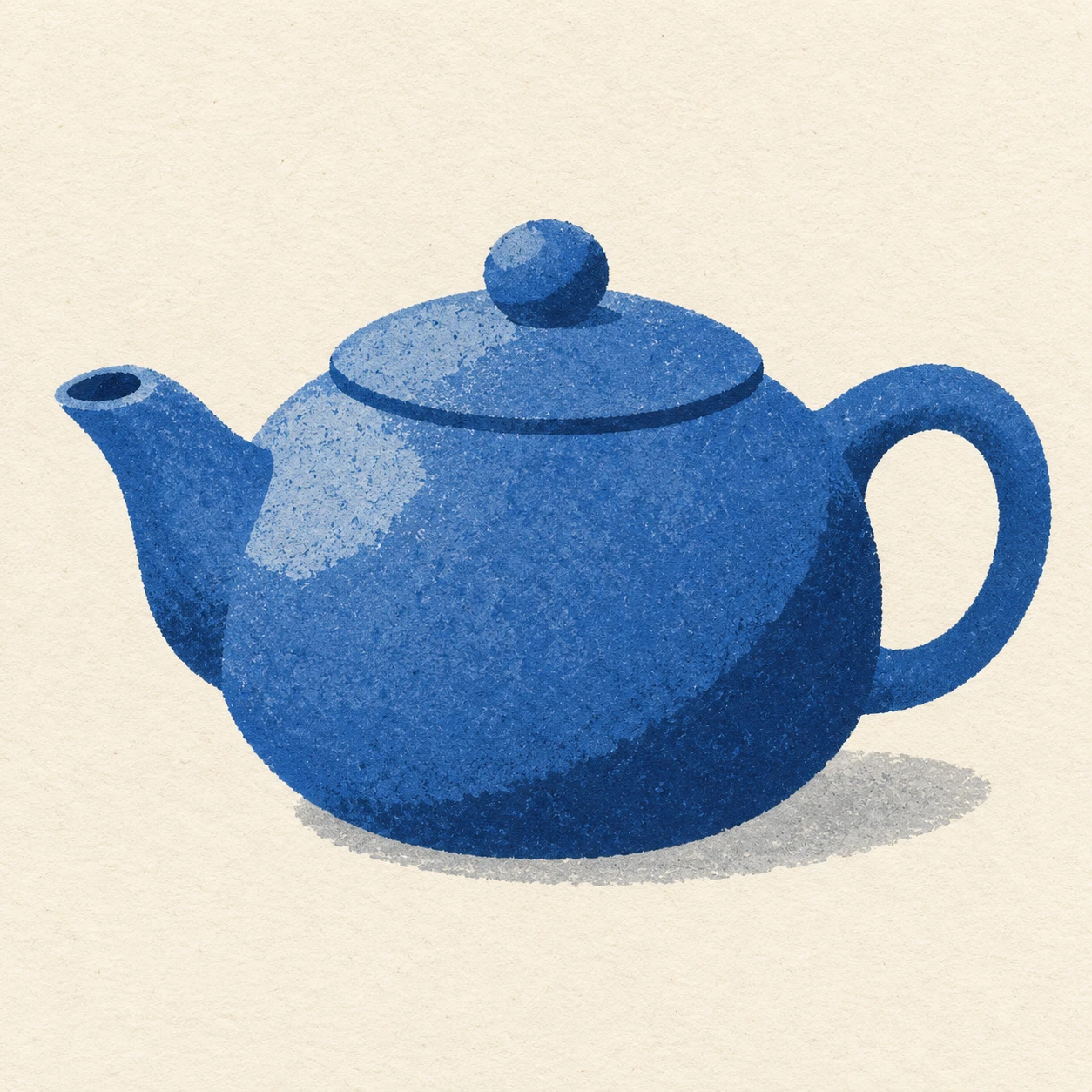
A pochoir illustration that builds a rounded teapot with crisp stencil boundaries and pounced paint grain.
One Blue Teapot · Stencil Pochoir
- Shape & line
- Construct the body, lid, spout, and handle from separate stencil-shaped silhouettes with clean cut edges; use a shallow ellipse for the lid and preserve a generous paper opening inside the handle instead of outlining every part.
- Color & light
- Lay down an opaque mid-blue base, then add a pale-blue curved patch on the image-left shoulder and a deep-blue crescent along the image-right lower body; keep these tonal shapes distinct so the rounded volume reads through a few deliberate color layers.
- Texture & material
- Give each painted area a fine, irregular grain from a brush pounced through a stencil, with slightly denser pigment near selected cut edges; retain the matte cream paper texture in untouched areas and keep the paint grain free of a regular dot grid.
- Composition
- Balance the left-pointing spout against the open handle on the right, leaving clear paper gaps around both; place a low, muted blue-gray stencil shadow directly beneath the base and extending slightly toward image-right to settle the teapot on the page.
Priority
Prioritize crisp stencil shapes and visibly pounced pigment over smooth rendered shading.
What to avoid & what to check
Avoid glossy ceramic reflections, fuzzy silhouette edges, and decorative patterns that obscure the color layers.
Check that the teapot reads immediately and that irregular paint grain remains visible inside clean stencil boundaries.
Exact prompt for this example
SUBJECT
One squat blue teapot with a fitted lid, a short spout pointing toward image-left, and a loop handle on image-right. The handle opening reveals the same cream paper as the background.

COMPOSITION
Show the entire teapot in a slightly elevated three-quarter view, centered with generous margins. Keep the lid ellipse, spout opening, and handle opening clearly readable.

STYLE GUIDE
1. Shape & line
Construct the body, lid, spout, and handle from separate stencil-shaped silhouettes with clean cut edges; use a shallow ellipse for the lid and preserve a generous paper opening inside the handle instead of outlining every part.

2. Color & light
Lay down an opaque mid-blue base, then add a pale-blue curved patch on the image-left shoulder and a deep-blue crescent along the image-right lower body; keep these tonal shapes distinct so the rounded volume reads through a few deliberate color layers.

3. Texture & material
Give each painted area a fine, irregular grain from a brush pounced through a stencil, with slightly denser pigment near selected cut edges; retain the matte cream paper texture in untouched areas and keep the paint grain free of a regular dot grid.

4. Composition
Balance the left-pointing spout against the open handle on the right, leaving clear paper gaps around both; place a low, muted blue-gray stencil shadow directly beneath the base and extending slightly toward image-right to settle the teapot on the page.

PRIORITY
Preserve the requested identity, count, action, composition and output settings. Apply the style rules within those constraints; a style reference must not replace the subject or layout. Within the style: Prioritize crisp stencil shapes and visibly pounced pigment over smooth rendered shading.

AVOID
Avoid glossy ceramic reflections, fuzzy silhouette edges, and decorative patterns that obscure the color layers.

OUTPUT
One square image, presented as a finished pochoir print on cream paper, with no lettering, captions, signatures, or watermark.

SELF-CHECK
Check that the teapot reads immediately and that irregular paint grain remains visible inside clean stencil boundaries.
Model information comes from image provenance. The same prompt may produce a different result.