Text to imageIllustrationStyle guide
Flooded Archive · Hazard-Lane Game Illustration
A game scene that distinguishes safe traversal from hazards through shape and value.
Remix this referenceFlooded Archive · Hazard-Lane Game Illustration
- Shape & line
- Use distinct simple silhouettes for solid traversable platforms and dark broken hazards.
- Color & light
- Keep safe surfaces lighter, hazards darker and background stacks quieter in value.
- Texture & material
- Render polished game-environment surfaces with restrained water and aged archive detail.
- Composition
- Preserve clear jump distances across three shelves, with chain and beam adding depth without blocking the route.
Priority
Preserve the distinctive construction and medium first, readable spatial hierarchy second, subtle surface details third.
What to avoid & what to check
Avoid extra subjects, inconsistent repeated geometry, hidden key details, crowded overlaps, unwanted text and watermarks.
Check each style rule against the finished image: visible shape construction, color and light, material treatment, and composition. Preserve the exact subject count and scene requirements.
Exact prompt for this example
SUBJECT
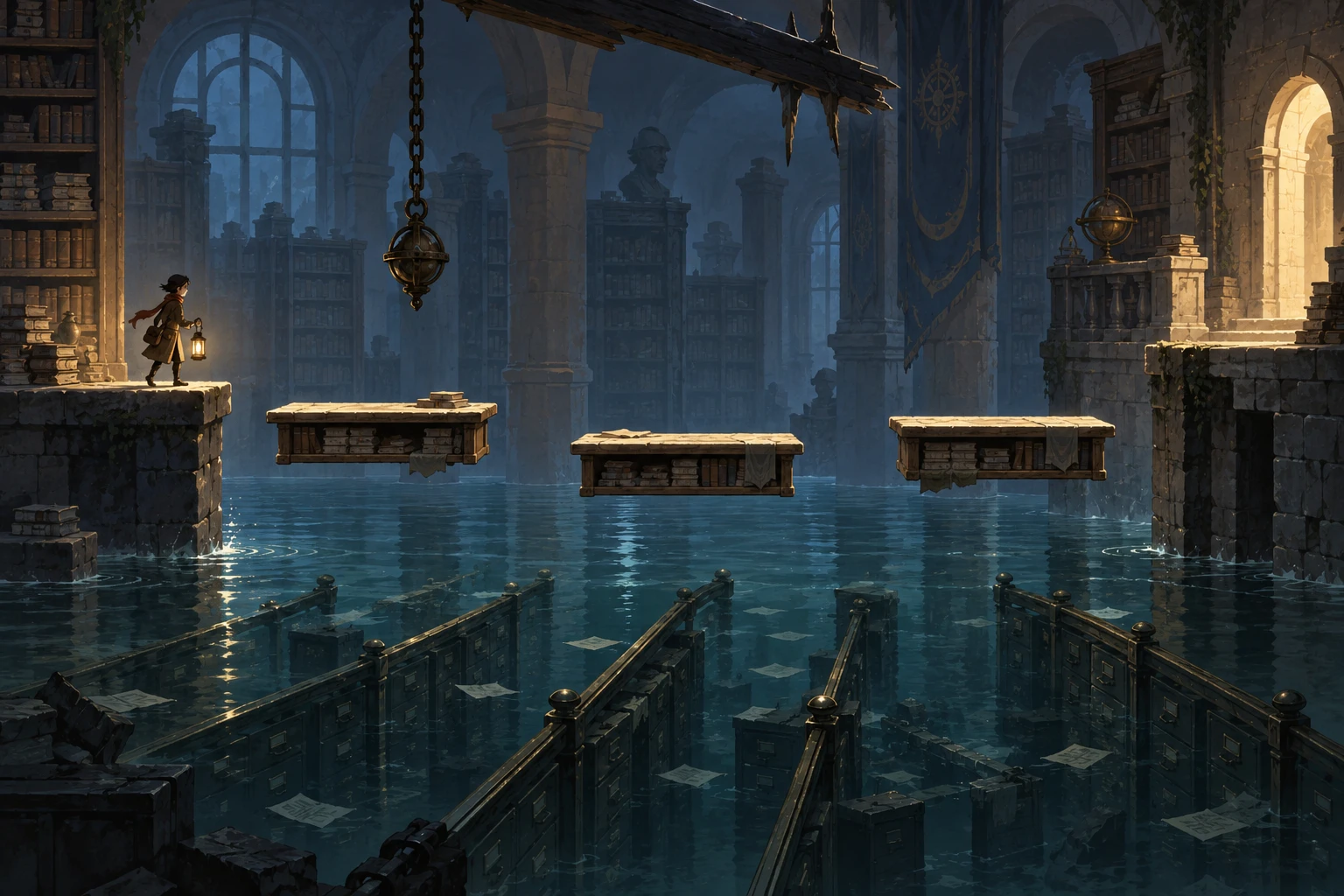
Create an original side-view game illustration of a flooded archive room. One small archivist stands on a dry stone ledge at left, preparing to cross toward a raised exit at right. Between them, three broad floating shelves form a clear sequence of safe platforms; submerged brass filing rails create a visibly dangerous lane below. A hanging chain and a broken overhead beam add depth without hiding the jump distances. Use simple, distinct silhouettes: solid light values for traversable surfaces, dark broken shapes for hazards, and quieter detail in the background stacks. The scene should remain readable at thumbnail size and contain no interface, arrows, lettering, logos, or watermarks.

COMPOSITION
Side-view flooded archive with one archivist on dry left ledge, exactly three broad floating-shelf platforms and raised right exit; dangerous submerged brass rails below.

STYLE GUIDE
1. Shape & line
Use distinct simple silhouettes for solid traversable platforms and dark broken hazards.

2. Color & light
Keep safe surfaces lighter, hazards darker and background stacks quieter in value.

3. Texture & material
Render polished game-environment surfaces with restrained water and aged archive detail.

4. Composition
Preserve clear jump distances across three shelves, with chain and beam adding depth without blocking the route.

PRIORITY
Preserve the requested identity, count, action, composition and output settings. Apply the style rules within those constraints; a style reference must not replace the subject or layout. Within the style: Preserve the distinctive construction and medium first, readable spatial hierarchy second, subtle surface details third.

AVOID
Avoid extra subjects, inconsistent repeated geometry, hidden key details, crowded overlaps, unwanted text and watermarks.

OUTPUT
One finished landscape image, aspect ratio 3:2. No lettering, captions, dimensions, unrelated logos, watermark, border or interface.

SELF-CHECK
Check each style rule against the finished image: visible shape construction, color and light, material treatment, and composition. Preserve the exact subject count and scene requirements.
Model information comes from image provenance. The same prompt may produce a different result.