Text to imageLandscapeStyle guide
Dune Corridor · Wind and Deposition
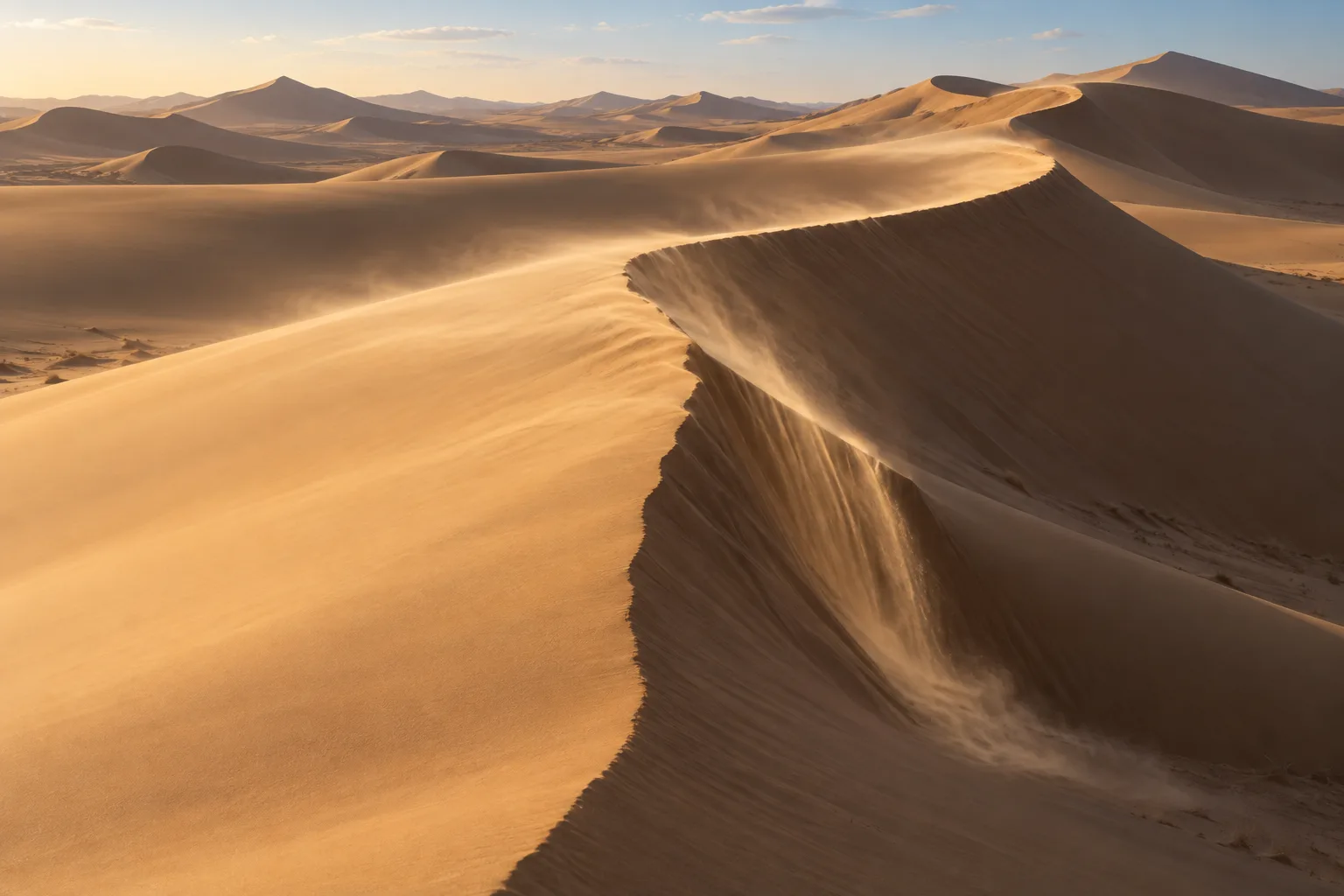
A winding dune corridor contrasting smooth windward slopes, shaded slip faces and falling sand.
Dune Corridor · Wind and Deposition
- Shape & line
- Use long smooth contours on windward slopes and a sharper broken edge at the crest; draw falling material as short directional streaks.
- Color & light
- Keep the windward plane broad and evenly lit; give the steep lee plane a single deeper value and the fresh fall a narrow light accent.
- Texture & material
- Concentrate fine grain and tiny ridges where material accumulates; leave undisturbed planes almost smooth.
- Composition
- Repeat the same slope relationship at smaller scales into the distance, while keeping one dominant crest unmistakable.
Priority
Prioritize the crest and opposing slopes, then the deposition fan, then distant repetition.
What to avoid & what to check
Avoid random ripples across every surface, identical slope angles, dramatic color effects that obscure terrain, lettering, logos, and watermarks.
Pass if the gentle approach, sharp crest, steep lee face, and fresh sand fall can each be identified without labels.
Exact prompt for this example
SUBJECT
Two opposing desert dune ridges form a winding corridor. Wind carries a thin veil of sand across the foreground crest and a distinct fan of fresh sand falls down its steep sheltered face. No people or buildings.

COMPOSITION
Wide elevated landscape view. One foreground ridge sweeps from lower left toward the center; a second ridge turns away toward upper right, leaving an S-shaped corridor between them. Show the smooth windward slope, sharp crest and steep shaded lee face as distinct planes. Distant dunes diminish beneath a narrow open sky.

STYLE GUIDE
1. Shape & line
Use long smooth contours on windward slopes and a sharper broken edge at the crest; draw falling material as short directional streaks.

2. Color & light
Keep the windward plane broad and evenly lit; give the steep lee plane a single deeper value and the fresh fall a narrow light accent.

3. Texture & material
Concentrate fine grain and tiny ridges where material accumulates; leave undisturbed planes almost smooth.

4. Composition
Repeat the same slope relationship at smaller scales into the distance, while keeping one dominant crest unmistakable.

PRIORITY
Preserve the requested identity, count, action, composition and output settings. Apply the style rules within those constraints; a style reference must not replace the subject or layout. Within the style: Prioritize the crest and opposing slopes, then the deposition fan, then distant repetition.

AVOID
Avoid random ripples across every surface, identical slope angles, dramatic color effects that obscure terrain, lettering, logos, and watermarks.

OUTPUT
One image, horizontal 3:2, with a continuous natural landscape and no border or inset.

SELF-CHECK
Pass if the gentle approach, sharp crest, steep lee face, and fresh sand fall can each be identified without labels.
Model information comes from image provenance. The same prompt may produce a different result.