Text to imageLandscapeStyle guide
Small Snowbank · Blue Skylight Shadows
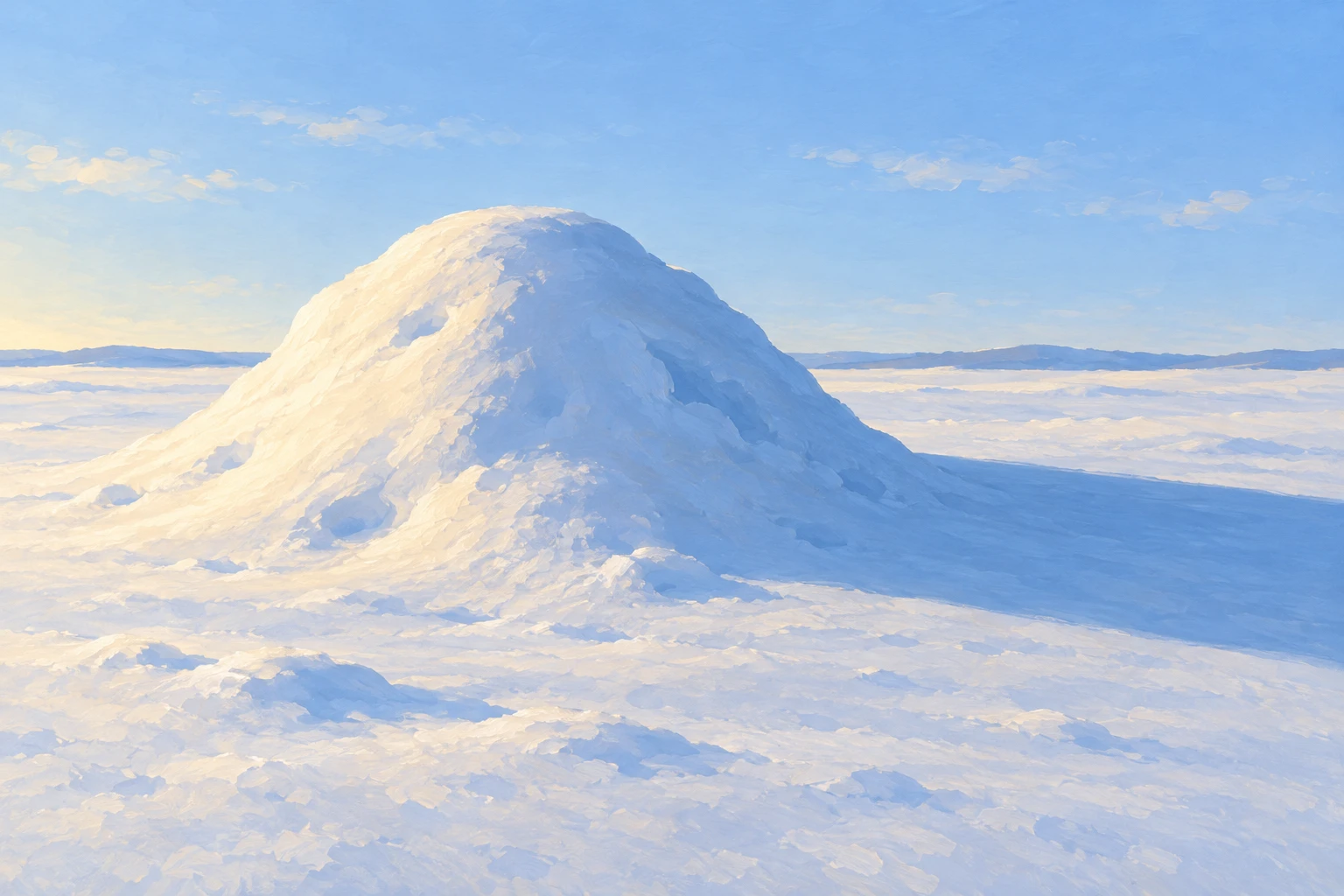
Model a small snowbank by separating warm sunlit snow from shadows colored by blue skylight.
Small Snowbank · Blue Skylight Shadows
- Shape & line
- Draw the snowbank as one broad rounded crest with an uneven, gently spreading base. Use soft painted value transitions to describe its slopes, reserving a clearer silhouette where the crest meets the sky; let the base merge gradually into the surrounding snow.
- Color & light
- Bring low sunlight from the upper image-left, tinting the left-facing snow pale cream. Turn the right-facing slope into muted sky blue and extend a connected blue cast shadow from the bank's right base across the image-right ground. Keep shaded snow luminous, with the deepest blue close to the base.
- Texture & material
- Render the snow in opaque gouache with broad matte brushwork. Add a few shallow surface dimples whose left rims catch warm light and whose right interiors hold blue shade; soften these marks away from the foreground so the snow reads as a continuous mass.
- Composition
- Let the snowbank occupy the middle third of the frame, with enough foreground to reveal the shadow lying flat on the ground. Keep the sky and distant snow simple and low in contrast, concentrating the warm–blue separation on the bank and its attached shadow.
Priority
Make the warm sunlit slope and luminous blue shaded slope explain the same rounded snowbank.
What to avoid & what to check
Avoid gray-black shadows, glowing blue outlines, and isolated shadow patches.
Check that light comes from image-left and the blue cast shadow touches the right base before extending rightward.
Exact prompt for this example
SUBJECT
One rounded snowbank rising from a continuous snow-covered clearing, with its image-left slope facing low sunlight and its image-right slope turning into shade.

COMPOSITION
Use a low three-quarter view in a horizontal frame. Place the snowbank slightly left of center, show its entire base, and leave open snow on the right for its connected cast shadow. Keep a simple pale-blue sky above a low horizon.

STYLE GUIDE
1. Shape & line
Draw the snowbank as one broad rounded crest with an uneven, gently spreading base. Use soft painted value transitions to describe its slopes, reserving a clearer silhouette where the crest meets the sky; let the base merge gradually into the surrounding snow.

2. Color & light
Bring low sunlight from the upper image-left, tinting the left-facing snow pale cream. Turn the right-facing slope into muted sky blue and extend a connected blue cast shadow from the bank's right base across the image-right ground. Keep shaded snow luminous, with the deepest blue close to the base.

3. Texture & material
Render the snow in opaque gouache with broad matte brushwork. Add a few shallow surface dimples whose left rims catch warm light and whose right interiors hold blue shade; soften these marks away from the foreground so the snow reads as a continuous mass.

4. Composition
Let the snowbank occupy the middle third of the frame, with enough foreground to reveal the shadow lying flat on the ground. Keep the sky and distant snow simple and low in contrast, concentrating the warm–blue separation on the bank and its attached shadow.

PRIORITY
Preserve the requested identity, count, action, composition and output settings. Apply the style rules within those constraints; a style reference must not replace the subject or layout. Within the style: Make the warm sunlit slope and luminous blue shaded slope explain the same rounded snowbank.

AVOID
Avoid gray-black shadows, glowing blue outlines, and isolated shadow patches.

OUTPUT
Create one landscape illustration in a 3:2 aspect ratio, with no lettering, captions, borders, or watermarks.

SELF-CHECK
Check that light comes from image-left and the blue cast shadow touches the right base before extending rightward.
Model information comes from image provenance. The same prompt may produce a different result.