Text to imageProductStyle guide
One Amber Comb · Thickness-Dependent Transmission
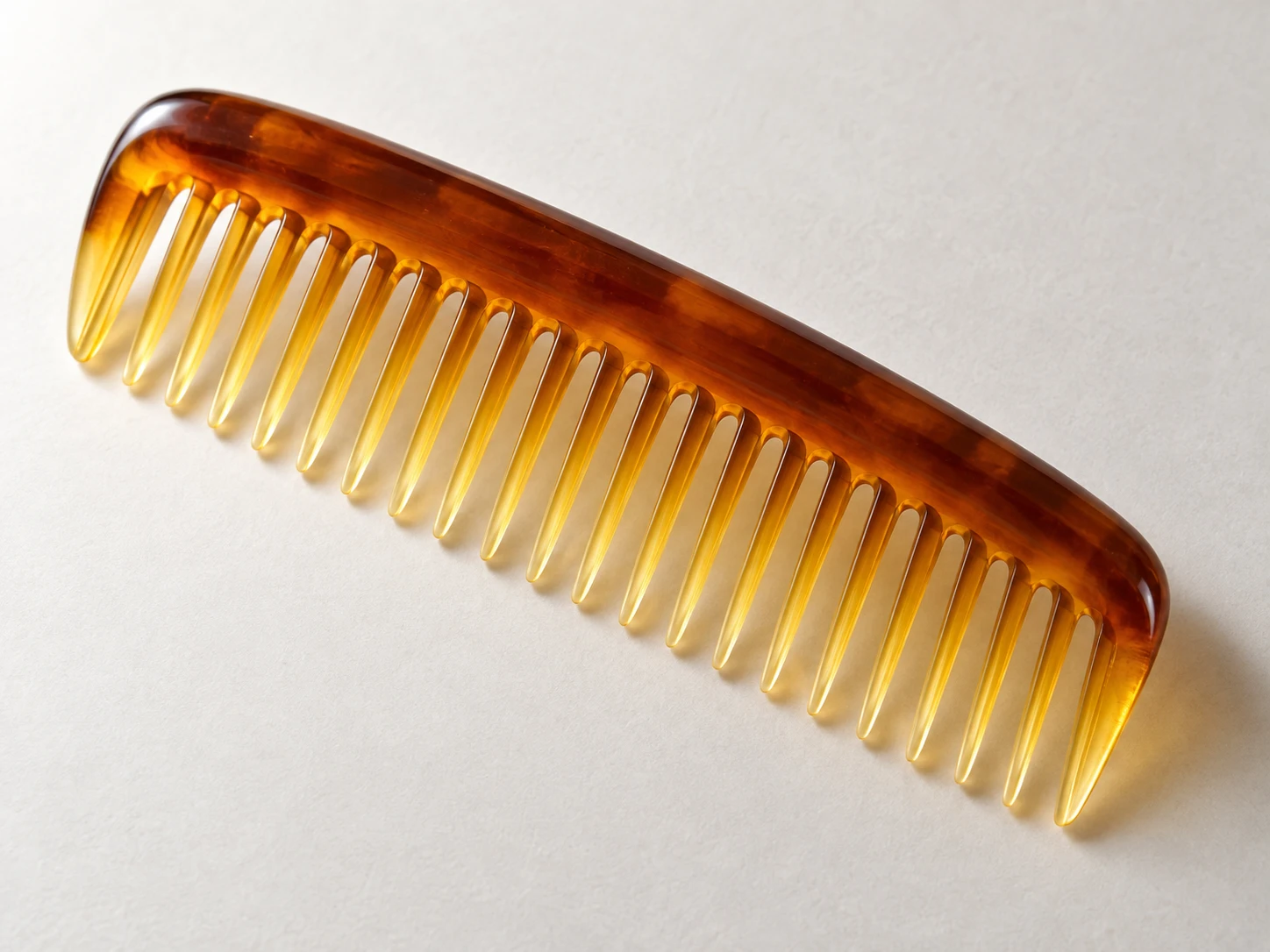
A product image that reveals material thickness through the color-density difference between a translucent comb’s thick spine and thin teeth.
One Amber Comb · Thickness-Dependent Transmission
- Shape & line
- Build the comb around a gently rounded, visibly thick spine and evenly spaced teeth that taper toward softly rounded tips. Preserve continuous joins at the tooth roots, and show a narrow side face along the spine so its greater thickness is visible.
- Color & light
- Place a broad soft light behind the comb on image-upper-left, shining through the resin toward image-lower-right. Make the thick spine a deeper amber, the thinner teeth a lighter honey yellow, and the tapered tips palest; retain this thickness-linked color progression even within illuminated areas.
- Texture & material
- Render smooth polished resin with restrained, soft surface highlights that leave the internal amber color visible. Let the pale surface remain faintly visible through thin teeth while appearing more strongly tinted beneath the thick spine; keep the material clear enough to read as translucent resin.
- Composition
- Keep the comb large enough for the spine-to-tip color change to read at a glance. Leave the spaces between teeth open against the pale ground, and place a soft amber-tinted cast shadow immediately beside the comb toward image-lower-right, grounding it without obscuring the teeth.
Priority
Prioritize the visible link between resin thickness and transmitted color density.
What to avoid & what to check
Avoid opaque plastic, uniform amber color, and white glare that conceals the transmission effect.
Check that the thick spine reads darker than the thin teeth and that every tooth remains distinct.
Exact prompt for this example
SUBJECT
One translucent amber resin hair comb with a thick rounded spine and a single row of evenly spaced, slender teeth. The spine and teeth form one continuous object; the teeth point toward image-bottom.

COMPOSITION
Show the entire comb in a slightly elevated three-quarter view, lying diagonally across a pale neutral surface from image-upper-left to image-lower-right. Keep the spine, tooth roots, tooth tips, and open gaps clearly readable with generous surrounding space.

STYLE GUIDE
1. Shape & line
Build the comb around a gently rounded, visibly thick spine and evenly spaced teeth that taper toward softly rounded tips. Preserve continuous joins at the tooth roots, and show a narrow side face along the spine so its greater thickness is visible.

2. Color & light
Place a broad soft light behind the comb on image-upper-left, shining through the resin toward image-lower-right. Make the thick spine a deeper amber, the thinner teeth a lighter honey yellow, and the tapered tips palest; retain this thickness-linked color progression even within illuminated areas.

3. Texture & material
Render smooth polished resin with restrained, soft surface highlights that leave the internal amber color visible. Let the pale surface remain faintly visible through thin teeth while appearing more strongly tinted beneath the thick spine; keep the material clear enough to read as translucent resin.

4. Composition
Keep the comb large enough for the spine-to-tip color change to read at a glance. Leave the spaces between teeth open against the pale ground, and place a soft amber-tinted cast shadow immediately beside the comb toward image-lower-right, grounding it without obscuring the teeth.

PRIORITY
Preserve the requested identity, count, action, composition and output settings. Apply the style rules within those constraints; a style reference must not replace the subject or layout. Within the style: Prioritize the visible link between resin thickness and transmitted color density.

AVOID
Avoid opaque plastic, uniform amber color, and white glare that conceals the transmission effect.

OUTPUT
Create one realistic studio product photograph in a 4:3 landscape aspect ratio, with no text, logos, captions, or watermark.

SELF-CHECK
Check that the thick spine reads darker than the thin teeth and that every tooth remains distinct.
Model information comes from image provenance. The same prompt may produce a different result.