Text to imageLandscapeStyle guide
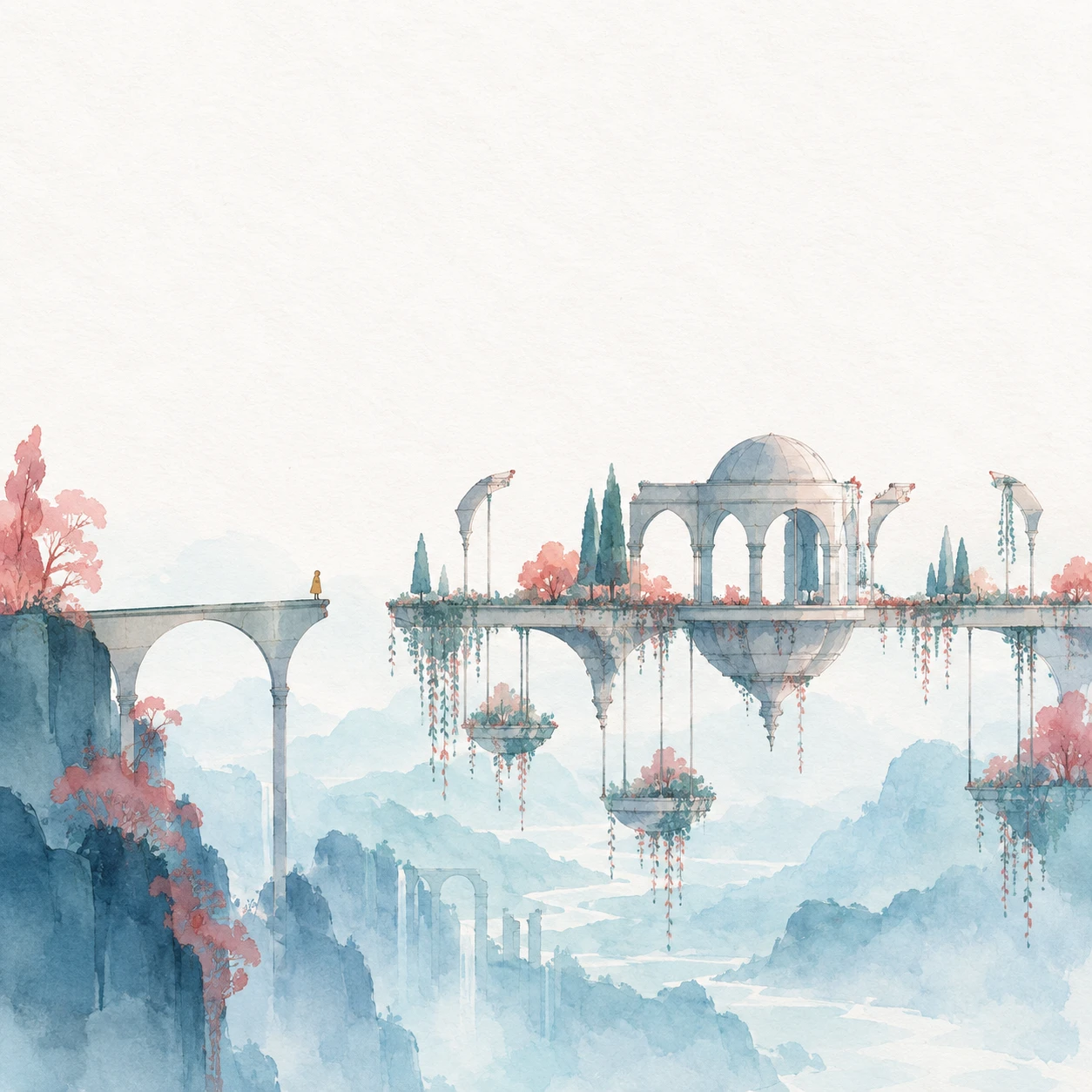
Watercolor suspended garden
Large negative space around a tiny figure, with transparent washes and delicate structures.
Remix this referenceWatercolor suspended garden
- Shape & line
- Use fine architectural lines, delicate broken arches and graceful sparse botanical silhouettes.
- Color & light
- Use translucent coral and cyan watercolor washes with vast untouched pale paper and subtle pigment blooms.
- Texture & material
- Keep visible watercolor paper, transparent overlapping washes and soft wet edges; avoid opaque 3D modeling.
- Composition
- Keep the observatory airy in the lower two thirds and one traveler extremely small within panoramic empty space.
Priority
Preserve the distinctive construction and medium first, readable spatial hierarchy second, subtle surface details third.
What to avoid & what to check
Avoid extra subjects, inconsistent repeated geometry, hidden key details, crowded overlaps, unwanted text and watermarks.
Check each style rule against the finished image: visible shape construction, color and light, material treatment, and composition. Preserve the exact subject count and scene requirements.
Exact prompt for this example
SUBJECT
Create a polished reference illustration of a suspended botanical observatory above a quiet pale-blue valley, delicate broken arches holding hanging gardens, one tiny original traveler in a mustard coat at the edge of a bridge. Use the delicate watercolor landscape language of GRIS: vast untouched pale space, soft translucent coral and cyan washes with subtle pigment blooms, fine architectural lines, graceful silhouettes and a very small human scale. A serene panoramic scene composed within a square frame, the observatory in the lower two thirds and airy sky above, no text or interface. Preserve the described medium and visual language. Square image. No watermark.

COMPOSITION
Square composition with the ENTIRE upper 40 percent left as untouched nearly white watercolor paper. No building, arch, plant or hanging structure may enter this upper band. Place ALL architecture, bridge and gardens below the 40-percent horizontal line. Use a small horizontal suspended observatory rather than tall towers; tiny mustard traveler at bridge edge. Very pale blue valley recedes below. Large airy gaps between fine arches.

STYLE GUIDE
1. Shape & line
Use fine architectural lines, delicate broken arches and graceful sparse botanical silhouettes.

2. Color & light
Use translucent coral and cyan watercolor washes with vast untouched pale paper and subtle pigment blooms.

3. Texture & material
Keep visible watercolor paper, transparent overlapping washes and soft wet edges; avoid opaque 3D modeling.

4. Composition
Keep the observatory airy in the lower two thirds and one traveler extremely small within panoramic empty space.

PRIORITY
Preserve the requested identity, count, action, composition and output settings. Apply the style rules within those constraints; a style reference must not replace the subject or layout. Within the style: Preserve the distinctive construction and medium first, readable spatial hierarchy second, subtle surface details third.

AVOID
Avoid extra subjects, inconsistent repeated geometry, hidden key details, crowded overlaps, unwanted text and watermarks.

OUTPUT
One finished square image. Fully opaque background across the entire canvas, no transparent pixels. No lettering, logo, watermark, interface or caption.

SELF-CHECK
Check each style rule against the finished image: visible shape construction, color and light, material treatment, and composition. Preserve the exact subject count and scene requirements.
Art direction
GRIS ↗- Large negative space around a tiny figure
- Transparent washes and delicate structures
- A restrained palette shaping emotional space
Model information comes from image provenance. The same prompt may produce a different result.