Text to imageLandscapeStyle guide
River Bend · Cut Bank and Point Bar
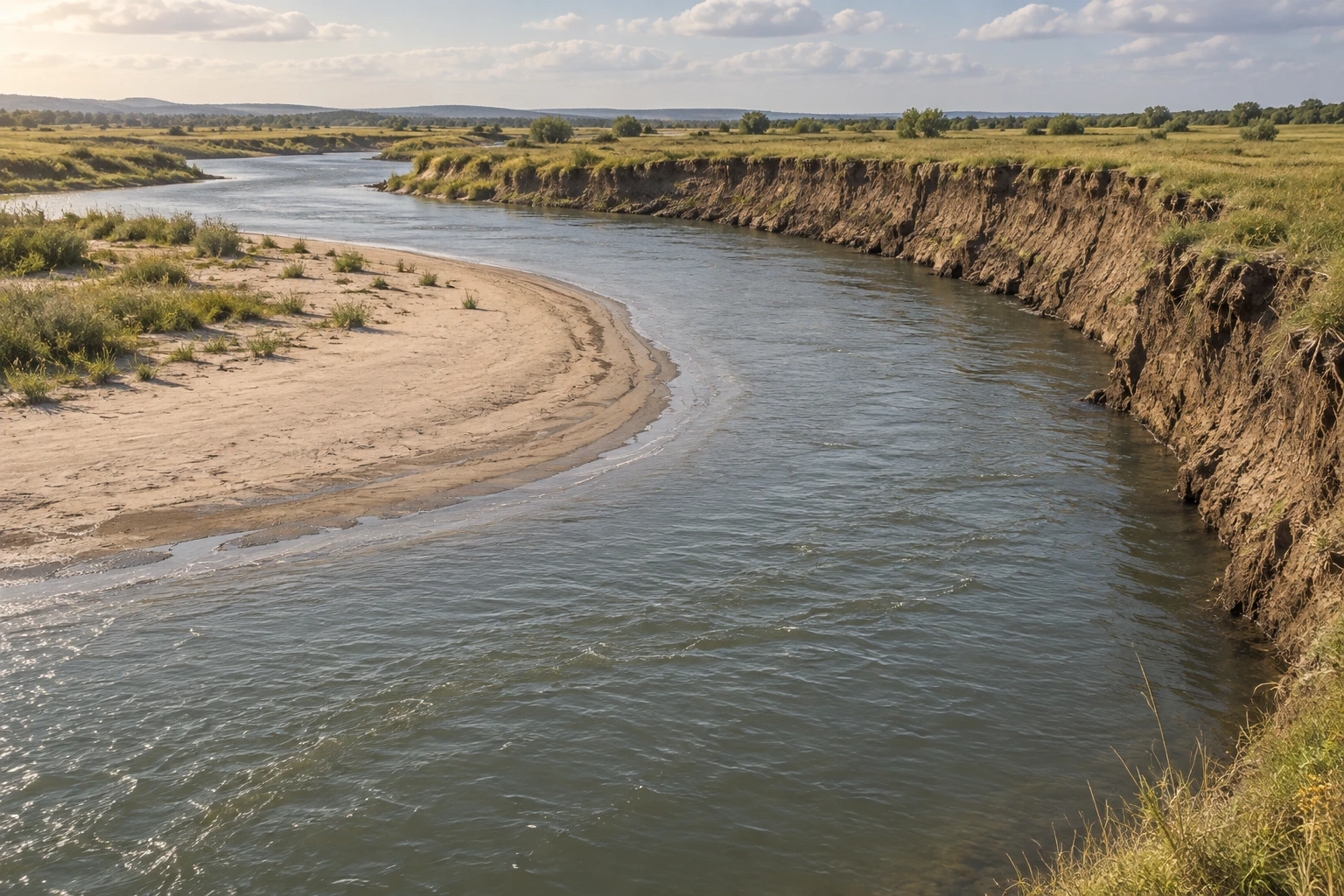
A landscape showing a river bend’s asymmetric structure through a steep outer bank and a gently sloping inner sandbar.
River Bend · Cut Bank and Point Bar
- Shape & line
- Shape the image-right outer bank as a steep, irregular earth face that meets the water abruptly; shape the image-left inner bank as a low crescent of sand extending gradually into the same bend, so the opposing shores have clearly different profiles.
- Color & light
- Use muted olive grass, warm beige sand, brown exposed earth, and gray-green water; light the scene from upper image left so the sandbar receives broad light while the steep right bank carries a darker face and a narrow shadow on the water beside its foot.
- Texture & material
- Keep the sandbar mostly smooth with a few curved damp margins following its shoreline; give the exposed right bank broken clods and sparse hanging roots, and place fine flowing ripples in the channel without turning the whole water surface into white foam.
- Composition
- Keep the left sandbar’s curved tip, the open water channel, and the facing right earth wall unobstructed in the central frame; make the channel visibly narrower in the distance and keep background vegetation low so both bank types remain readable at a glance.
Priority
Prioritize the steep outer bank and gently sloping inner sandbar as one coherent river bend.
What to avoid & what to check
Avoid matching bank profiles or a sandbar detached from the inner shore.
Check that water directly meets the right earth wall and wraps around the left sandbar’s tip.
Exact prompt for this example
SUBJECT
One broad bend in a shallow river crossing a grassy plain, with a steep exposed earth bank on the outside of the bend at image right and one crescent-shaped sandbar on the inside at image left. The water separates these visibly different banks.

COMPOSITION
Use an elevated oblique view with the river entering at lower center, curving toward image right, and receding toward upper left. Show the full inner sandbar and the facing outer bank together; keep a narrow strip of distant plain and sky above them.

STYLE GUIDE
1. Shape & line
Shape the image-right outer bank as a steep, irregular earth face that meets the water abruptly; shape the image-left inner bank as a low crescent of sand extending gradually into the same bend, so the opposing shores have clearly different profiles.

2. Color & light
Use muted olive grass, warm beige sand, brown exposed earth, and gray-green water; light the scene from upper image left so the sandbar receives broad light while the steep right bank carries a darker face and a narrow shadow on the water beside its foot.

3. Texture & material
Keep the sandbar mostly smooth with a few curved damp margins following its shoreline; give the exposed right bank broken clods and sparse hanging roots, and place fine flowing ripples in the channel without turning the whole water surface into white foam.

4. Composition
Keep the left sandbar’s curved tip, the open water channel, and the facing right earth wall unobstructed in the central frame; make the channel visibly narrower in the distance and keep background vegetation low so both bank types remain readable at a glance.

PRIORITY
Preserve the requested identity, count, action, composition and output settings. Apply the style rules within those constraints; a style reference must not replace the subject or layout. Within the style: Prioritize the steep outer bank and gently sloping inner sandbar as one coherent river bend.

AVOID
Avoid matching bank profiles or a sandbar detached from the inner shore.

OUTPUT
Create one naturalistic landscape image in a 3:2 horizontal aspect ratio, with no lettering, labels, borders, or watermark.

SELF-CHECK
Check that water directly meets the right earth wall and wraps around the left sandbar’s tip.
Model information comes from image provenance. The same prompt may produce a different result.