Text to imageArt stylesStyle guide
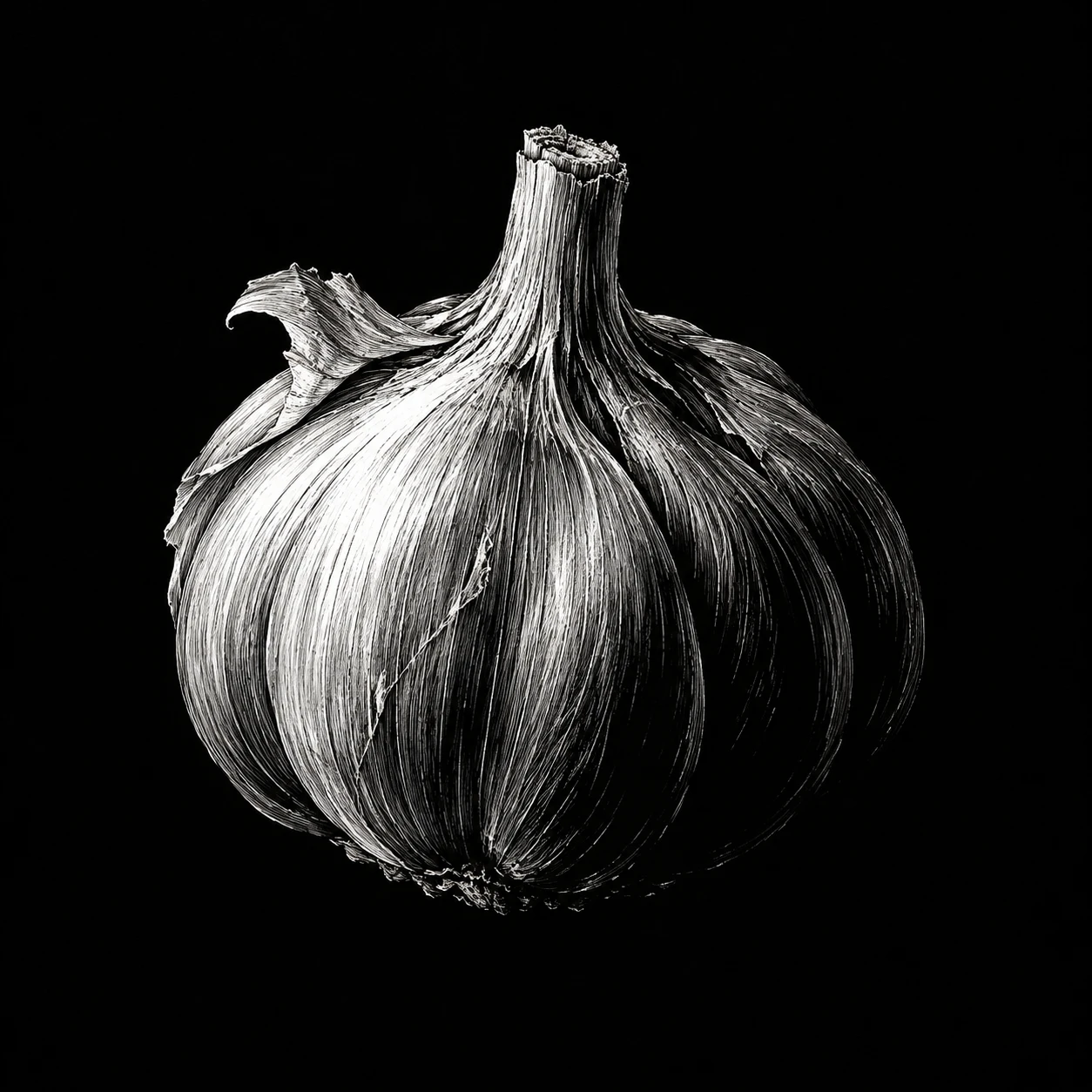
One Garlic Bulb · Scratchboard Incised Lines
A style reference using the density and direction of white lines scratched into black board to distinguish rounded garlic cloves from thin papery skin.
One Garlic Bulb · Scratchboard Incised Lines
- Shape & line
- Build the bulb with tapered white incisions that curve around each clove's swelling form and converge toward the stem. Separate adjacent cloves with retained black grooves; describe the outer silhouette with interrupted scratches rather than a continuous white outline.
- Color & light
- Keep the image strictly black and white. Place the implied light at the image's upper left: cluster white scratches across the upper-left bulges, open wider black gaps as the form turns toward the lower right, and retain a broad dark area at the bulb's lower-right base.
- Texture & material
- Make the marks read as black coating physically scraped away to expose a white layer, with crisp edges and occasional uneven stroke widths. Use long, gently bending scratches on taut skin and short broken scratches along the curled flap's creases; leave the background smooth and solid black.
- Composition
- Concentrate the clearest scratch detail around the upper-left clove and attached skin flap. Reduce marks toward the lower-right perimeter so parts of the bulb merge into the black field, while preserving enough separated contour segments to keep the whole bulb immediately recognizable.
Priority
Prioritize form-following white incisions and retained black shadow shapes.
What to avoid & what to check
Avoid gray airbrush shading, glowing outlines, and uniformly spaced decorative scratches.
Check that the garlic reads clearly and that brighter areas emerge from denser white scratches.
Exact prompt for this example
SUBJECT
Show exactly one whole garlic bulb with a short dry stem and a small attached flap of papery skin. Its enclosed cloves form a single rounded bulb; the flap curls outward from its upper-left surface without becoming a separate object.

COMPOSITION
Use a square frame and a close, slightly elevated three-quarter view. Center the bulb slightly below the midpoint, with its stem fully visible and generous uninterrupted black space around the silhouette. Let the bulb occupy roughly half to two-thirds of the image height.

STYLE GUIDE
1. Shape & line
Build the bulb with tapered white incisions that curve around each clove's swelling form and converge toward the stem. Separate adjacent cloves with retained black grooves; describe the outer silhouette with interrupted scratches rather than a continuous white outline.

2. Color & light
Keep the image strictly black and white. Place the implied light at the image's upper left: cluster white scratches across the upper-left bulges, open wider black gaps as the form turns toward the lower right, and retain a broad dark area at the bulb's lower-right base.

3. Texture & material
Make the marks read as black coating physically scraped away to expose a white layer, with crisp edges and occasional uneven stroke widths. Use long, gently bending scratches on taut skin and short broken scratches along the curled flap's creases; leave the background smooth and solid black.

4. Composition
Concentrate the clearest scratch detail around the upper-left clove and attached skin flap. Reduce marks toward the lower-right perimeter so parts of the bulb merge into the black field, while preserving enough separated contour segments to keep the whole bulb immediately recognizable.

PRIORITY
Preserve the requested identity, count, action, composition and output settings. Apply the style rules within those constraints; a style reference must not replace the subject or layout. Within the style: Prioritize form-following white incisions and retained black shadow shapes.

AVOID
Avoid gray airbrush shading, glowing outlines, and uniformly spaced decorative scratches.

OUTPUT
Create one square scratchboard-style reference image, with no lettering, labels, signature, or watermark.

SELF-CHECK
Check that the garlic reads clearly and that brighter areas emerge from denser white scratches.
Model information comes from image provenance. The same prompt may produce a different result.