Text to imageLandscapeStyle guide
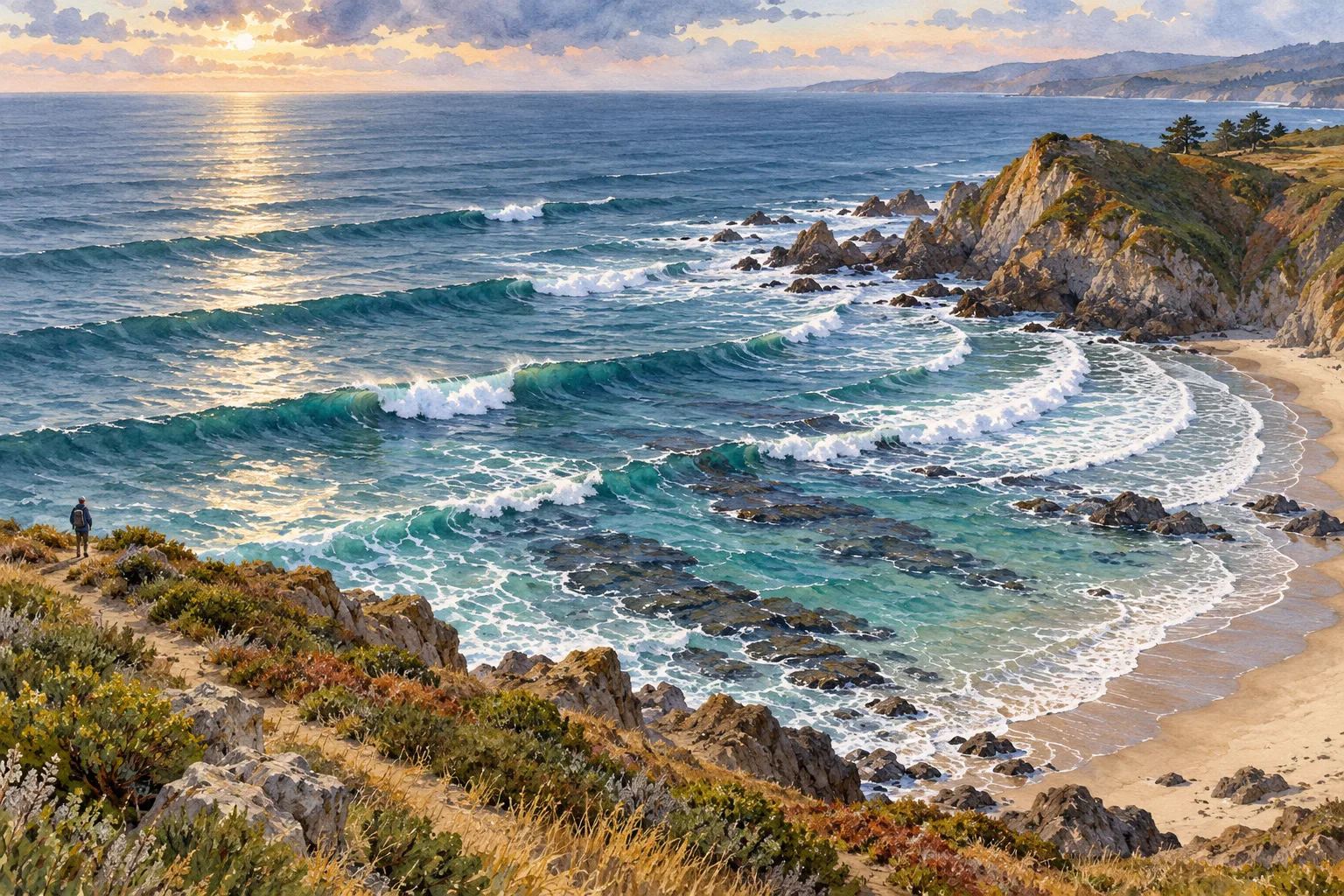
Coastal Headland · Refracting Wavefronts
Use bending wavefronts to reveal underwater depth and the shape of a headland.
Coastal Headland · Refracting Wavefronts
- 1
- Begin with broad parallel wavefronts offshore and bend them progressively around the headland.
- 2
- Compress wave spacing over shallow rock shelves and widen it in deeper water.
- 3
- Use translucent washes for water depth and restrained opaque marks for breaking foam.
- 4
- Keep the walker small enough to establish scale without competing with the wave pattern.
Priority
Preserve the four style rules when changing subject or composition.
What to avoid & what to check
Avoid unwanted lettering, logos and watermarks.
Check silhouette and composition at thumbnail size.
Build assets in this style
Shared style locked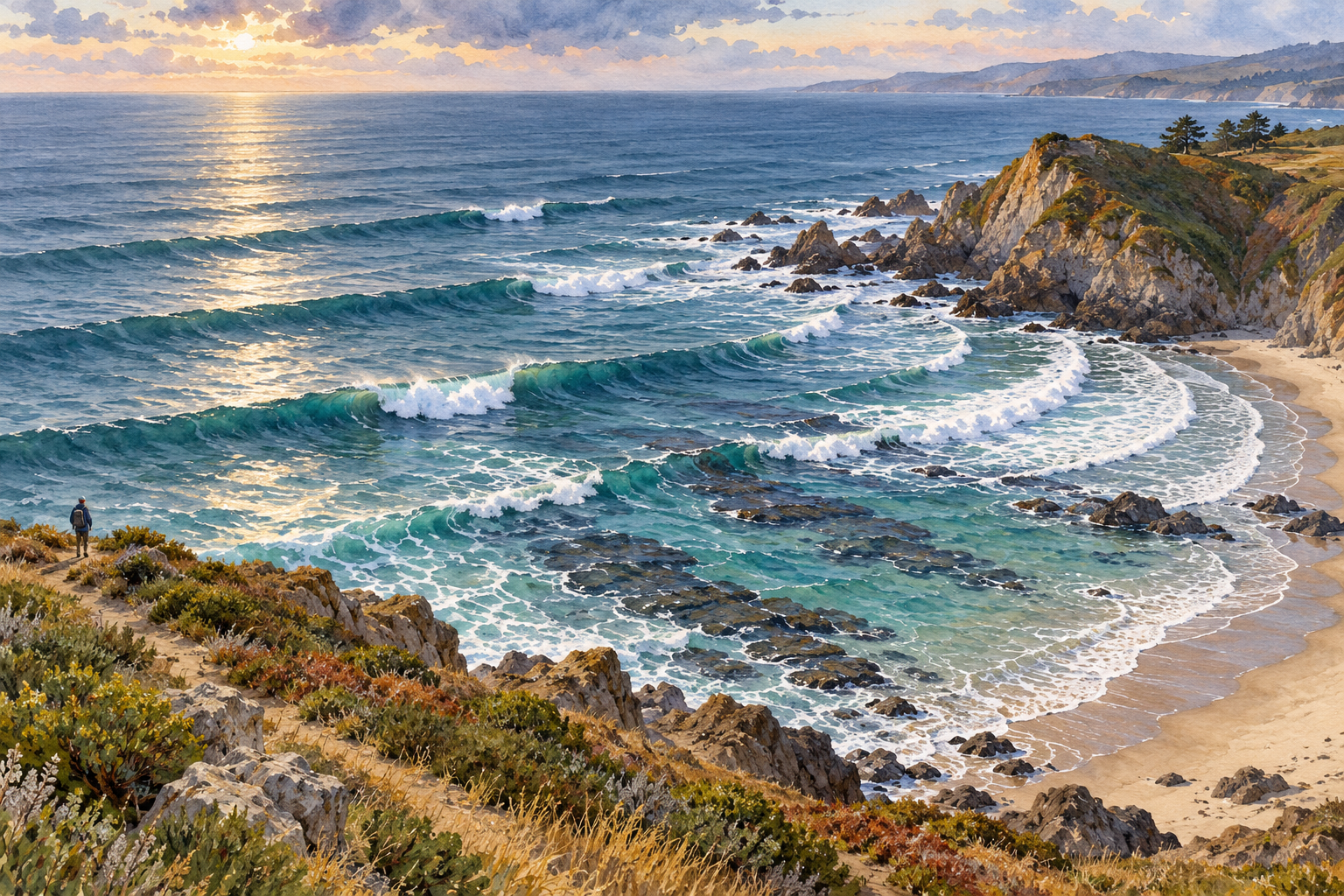
Exact prompt for this example
Exact prompt · Original
Paint an original coastal headland seen from an elevated bluff after a calm storm. Long, nearly parallel swells approach from the open sea, then curve and crowd as they enter shallow water around the headland. Let the foam lines reveal this change in direction without diagram arrows. Place dark submerged rock shelves under the clearest water and a narrow beach where the refracted waves finally meet. Use several scales of wave spacing to lead the eye from distant open water to the foreground shore. Include a tiny solitary walker on the bluff for scale, never as the focus. Render the scene in textured watercolor with selective opaque foam accents. No lettering, logos, or watermarks.
Model information comes from image provenance. The same prompt may produce a different result.