Text to imageLandscapeStyle guide
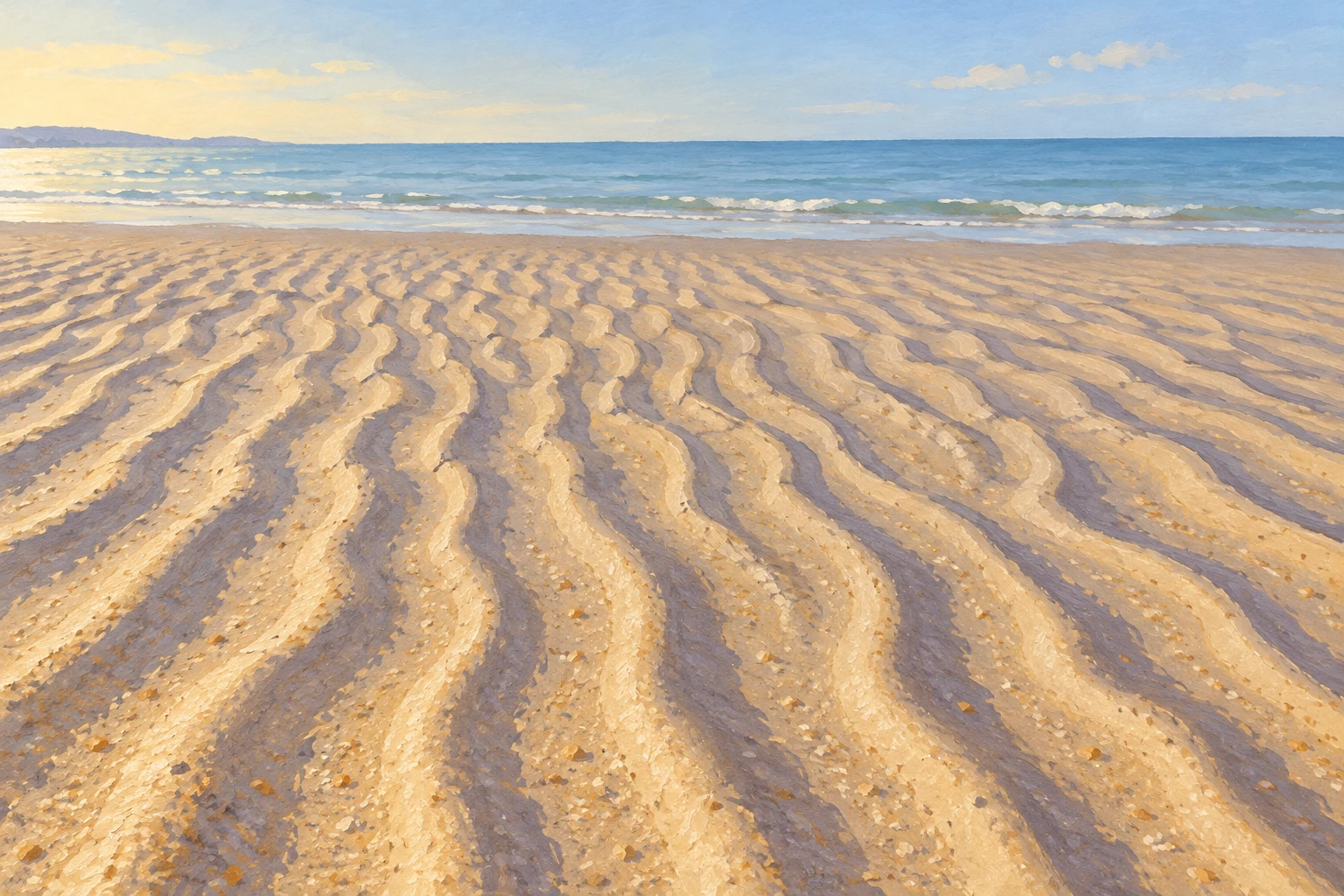
Small Beach · Grazing-Light Sand Ripples
A beach study using low light and narrow shadows to reveal shallow sand ripples.
Small Beach · Grazing-Light Sand Ripples
- Shape & line
- Build the sand surface from gently wavering, mostly parallel ridges running bottom to top; vary their lengths and let a few join or fade, using painted value edges rather than dark contour outlines to describe their shallow profiles.
- Color & light
- Place warm, low sunlight at image left: brighten each ridge's left-facing slope and place a narrow, attached muted-violet shadow immediately to its right. Keep the shadow rhythm consistent across the sand, with pale blue sea and a quiet cream-blue sky.
- Texture & material
- Apply opaque gouache in broad matte patches, then add sparse broken flecks of ochre and cream on the nearest sandy slopes. Keep this grain subordinate to the ridge shapes and reduce it toward the shoreline so the sand reads as fine, dry material.
- Composition
- Crop several foreground ridges at the bottom edge and compress their apparent widths and gaps toward the upper shoreline. Preserve an uninterrupted horizontal sea strip above them, letting the large foreground light-and-shadow pairs carry the focal emphasis.
Priority
Make the attached ridge shadows clearly reveal the shallow sand relief.
What to avoid & what to check
Avoid deep dune walls, black outlines, and glitter-like sand highlights.
Check that bright left slopes and attached right shadows remain readable as the ridges recede.
Exact prompt for this example
SUBJECT
One small stretch of dry beach with a continuous field of shallow sand ripples and one smooth shoreline beyond it. The ripple crests run roughly from image bottom toward image top, allowing light from image left to cross their raised profiles.

COMPOSITION
Use a low, slightly downward-looking view in a horizontal frame. Let rippled sand occupy the lower three quarters, with a thin strip of calm sea and clear sky above. Keep the nearest ridges large enough to read their illuminated slopes and attached shadows.

STYLE GUIDE
1. Shape & line
Build the sand surface from gently wavering, mostly parallel ridges running bottom to top; vary their lengths and let a few join or fade, using painted value edges rather than dark contour outlines to describe their shallow profiles.

2. Color & light
Place warm, low sunlight at image left: brighten each ridge's left-facing slope and place a narrow, attached muted-violet shadow immediately to its right. Keep the shadow rhythm consistent across the sand, with pale blue sea and a quiet cream-blue sky.

3. Texture & material
Apply opaque gouache in broad matte patches, then add sparse broken flecks of ochre and cream on the nearest sandy slopes. Keep this grain subordinate to the ridge shapes and reduce it toward the shoreline so the sand reads as fine, dry material.

4. Composition
Crop several foreground ridges at the bottom edge and compress their apparent widths and gaps toward the upper shoreline. Preserve an uninterrupted horizontal sea strip above them, letting the large foreground light-and-shadow pairs carry the focal emphasis.

PRIORITY
Preserve the requested identity, count, action, composition and output settings. Apply the style rules within those constraints; a style reference must not replace the subject or layout. Within the style: Make the attached ridge shadows clearly reveal the shallow sand relief.

AVOID
Avoid deep dune walls, black outlines, and glitter-like sand highlights.

OUTPUT
Create one landscape image in a 3:2 aspect ratio, rendered as an opaque gouache painting on matte paper, with no text, labels, border, or watermark.

SELF-CHECK
Check that bright left slopes and attached right shadows remain readable as the ridges recede.
Model information comes from image provenance. The same prompt may produce a different result.