Text to imageArt stylesStyle guide
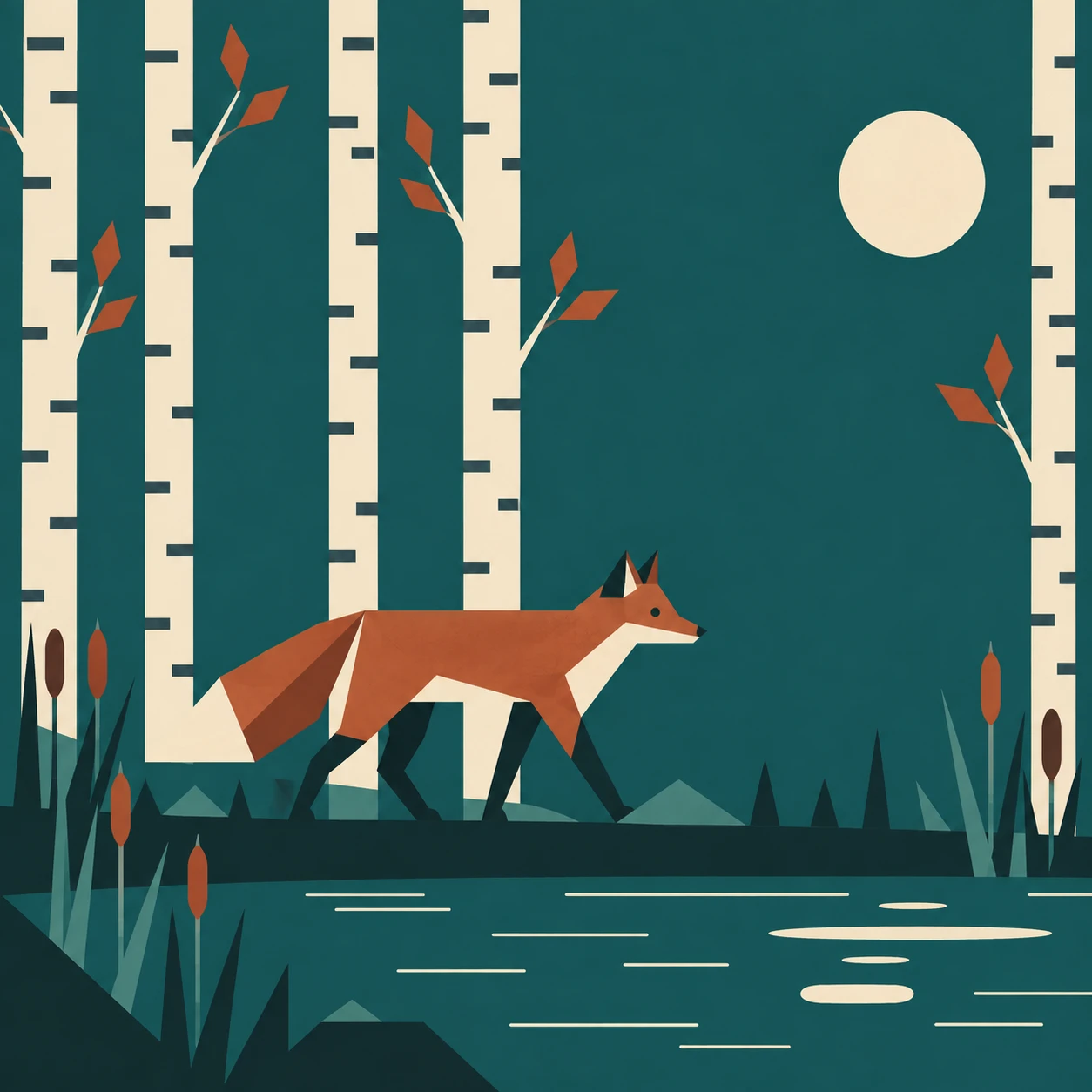
Geometric nature illustration
Fox, moth and seal illustrations built from simple geometry and a limited palette.
Remix this referenceGeometric nature illustration
- Shape & line
- Reduce animals to circles, triangles and a few straight lines while retaining identifying traits.
- Color & light
- Use three to five flat colors such as teal, rust and cream, with no gradients.
- Texture & material
- Use clean flat geometric surfaces rather than individual fur, feathers or realistic 3D texture.
- Composition
- Build rhythm through repeated forms and varied spacing, balanced by asymmetric negative space.
Priority
Preserve the distinctive construction and medium first, readable spatial hierarchy second, subtle surface details third.
What to avoid & what to check
Avoid extra subjects, inconsistent repeated geometry, hidden key details, crowded overlaps, unwanted text and watermarks.
Check each style rule against the finished image: visible shape construction, color and light, material treatment, and composition. Preserve the exact subject count and scene requirements.
Exact prompt for this example
SUBJECT
Illustrate one geometric fox in side profile between repeating birch trunks, low horizontal composition with asymmetric open space. Reduce wildlife to circles, triangles and a few straight lines while retaining identifying traits. Use a flat palette of three to five colors such as teal, rust and cream, without gradients. Use shape sizes and spacing for rhythm rather than individual fur or feathers. Repeat reeds, leaves or ripples and balance them with asymmetric negative space. Reduce realistic fur, 3D rendering and excessive outlines.

Priority: Identifiable geometric forms → repetition and space → limited color
Square image. No lettering, logos or watermark.

COMPOSITION
Square illustration, one side-profile geometric fox between repeating birch trunks, low horizontal composition with asymmetric open space.

STYLE GUIDE
1. Shape & line
Reduce animals to circles, triangles and a few straight lines while retaining identifying traits.

2. Color & light
Use three to five flat colors such as teal, rust and cream, with no gradients.

3. Texture & material
Use clean flat geometric surfaces rather than individual fur, feathers or realistic 3D texture.

4. Composition
Build rhythm through repeated forms and varied spacing, balanced by asymmetric negative space.

PRIORITY
Preserve the requested identity, count, action, composition and output settings. Apply the style rules within those constraints; a style reference must not replace the subject or layout. Within the style: Preserve the distinctive construction and medium first, readable spatial hierarchy second, subtle surface details third.

AVOID
Avoid extra subjects, inconsistent repeated geometry, hidden key details, crowded overlaps, unwanted text and watermarks.

OUTPUT
One opaque square 2D illustration. No lettering, logo, watermark or border.

SELF-CHECK
Check each style rule against the finished image: visible shape construction, color and light, material treatment, and composition. Preserve the exact subject count and scene requirements.
Art direction
Charley Harper ↗- Animals distilled into circles, triangles and lines
- Few colors with clear geometric relationships
- Repeated forms and negative space echoing nature
Model information comes from image provenance. The same prompt may produce a different result.