Text to imageArt stylesStyle guide
Opaque gouache village · Layered depth
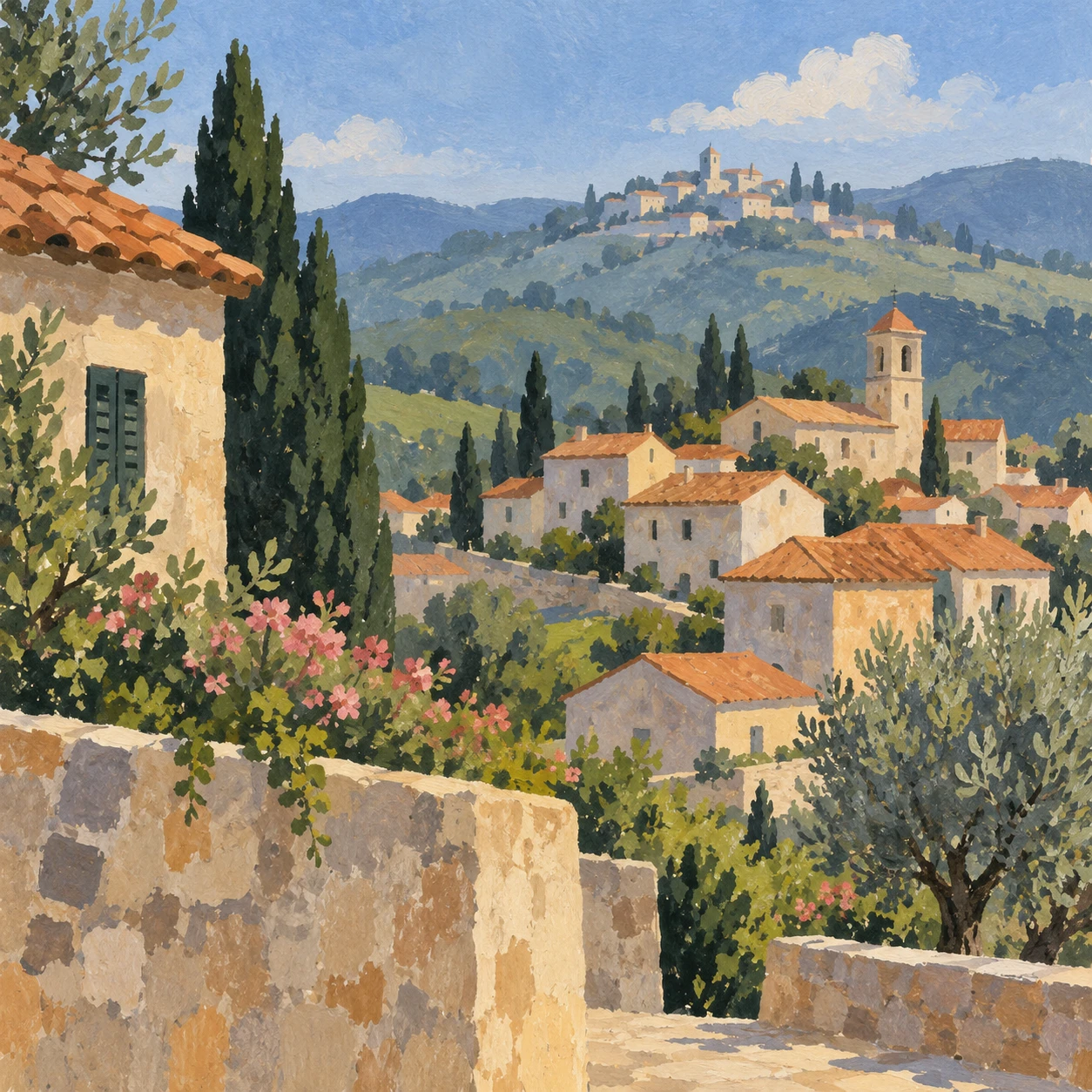
Opaque gouache village with distinct foreground, middle ground and background layers.
Remix this referenceOpaque gouache village · Layered depth
- Shape & line
- Simplify houses, roofs and vegetation into deliberate interlocking blocks of color.
- Color & light
- Use warm terracotta roofs against muted cooler hills with clear depth value changes.
- Texture & material
- Keep opaque matte gouache brush layers and visible paper grain rather than transparent washes.
- Composition
- Separate foreground, middle village and distant hillside through overlapping shapes and scale.
Priority
Preserve the distinctive construction and medium first, readable spatial hierarchy second, subtle surface details third.
What to avoid & what to check
Avoid extra subjects, inconsistent repeated geometry, hidden key details, crowded overlaps, unwanted text and watermarks.
Check each style rule against the finished image: visible shape construction, color and light, material treatment, and composition. Preserve the exact subject count and scene requirements.
Exact prompt for this example
SUBJECT
Create an original reference image of a hillside village with terracotta roofs rendered in opaque gouache, layered matte brushwork, simplified blocks of color and visible paper grain. Composition: distinct foreground, middle ground and background layers. Preserve the specified medium, mark-making and visual language; adapt the composition naturally to the subject. No watermark, logos or extra lettering. Square image.

COMPOSITION
Hillside village in three clear depth bands: large foreground wall and shrubs, middle houses with terracotta roofs, distant pale village hill. Square opaque gouache scene.

STYLE GUIDE
1. Shape & line
Simplify houses, roofs and vegetation into deliberate interlocking blocks of color.

2. Color & light
Use warm terracotta roofs against muted cooler hills with clear depth value changes.

3. Texture & material
Keep opaque matte gouache brush layers and visible paper grain rather than transparent washes.

4. Composition
Separate foreground, middle village and distant hillside through overlapping shapes and scale.

PRIORITY
Preserve the requested identity, count, action, composition and output settings. Apply the style rules within those constraints; a style reference must not replace the subject or layout. Within the style: Preserve the distinctive construction and medium first, readable spatial hierarchy second, subtle surface details third.

AVOID
Avoid extra subjects, inconsistent repeated geometry, hidden key details, crowded overlaps, unwanted text and watermarks.

OUTPUT
One finished square image. Fully opaque background across the entire canvas, no transparent pixels. No lettering, logo, watermark, interface or caption.

SELF-CHECK
Check each style rule against the finished image: visible shape construction, color and light, material treatment, and composition. Preserve the exact subject count and scene requirements.
Model information comes from image provenance. The same prompt may produce a different result.