Text to imageProductStyle guide
Maple Cutting Board · Face–End Grain Contrast
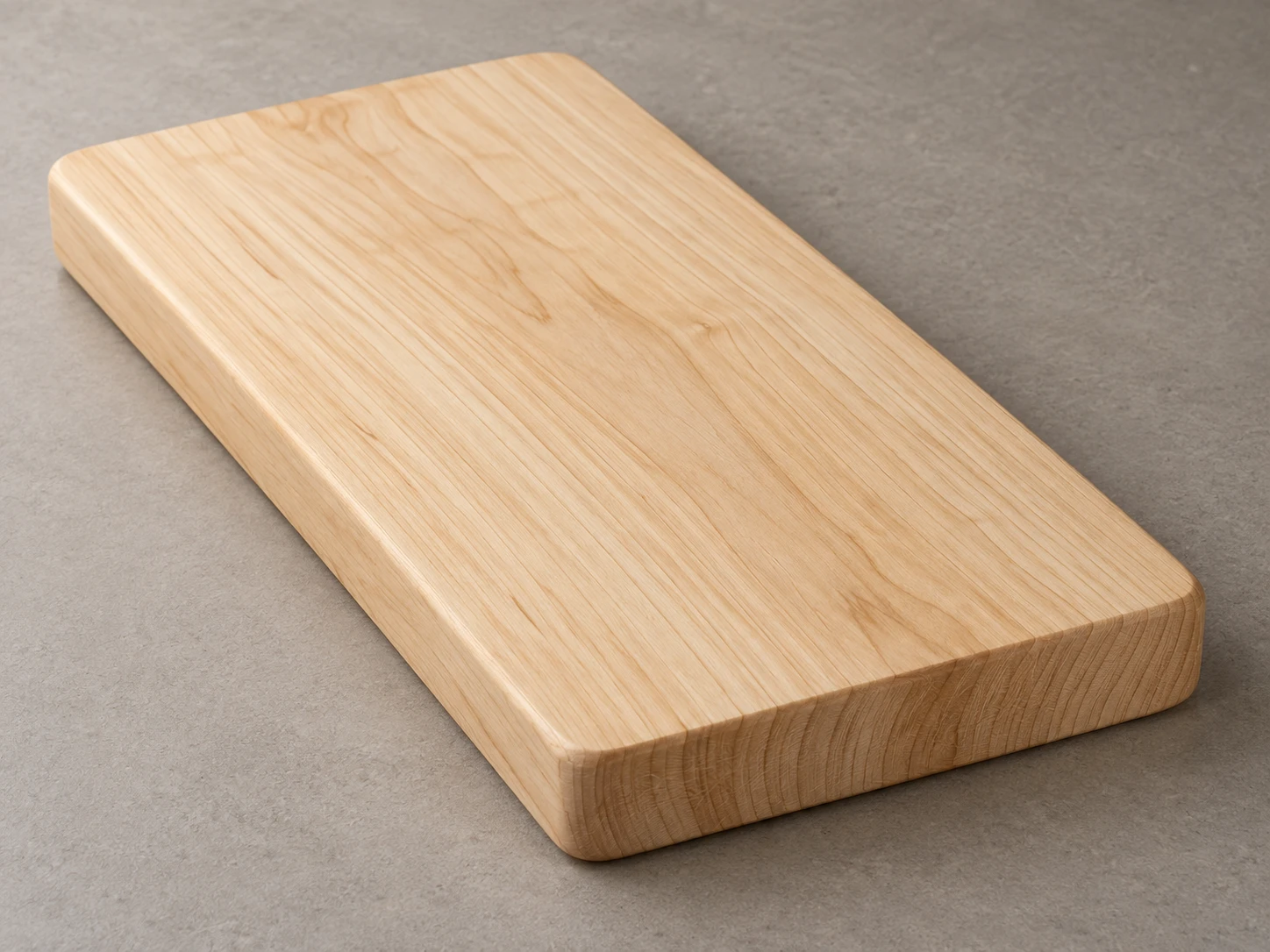
Contrast long grain on a cutting board’s top with interrupted end grain on its short edge to reveal wood direction and thickness.
Maple Cutting Board · Face–End Grain Contrast
- Shape & line
- Construct a thick rectangular slab with gently rounded corners and a small softened edge. Keep the top and visible side planes joined in consistent perspective, making the short end at image lower right broad enough to read as a separate cut surface.
- Color & light
- Use pale honey-colored maple with restrained tan grain. Light from image upper left with a large soft source, keeping the top bright and the near end slightly darker; let a soft contact shadow sit beneath the board and extend toward image lower right.
- Texture & material
- Draw long, gently wavering grain streaks along the top from image upper left toward lower right. On the near short end, replace those streaks with short irregular marks and subtle curved growth-ring segments, aligning their general distribution with the grain arriving at the edge. Keep the wood smooth and matte so the cut-direction contrast remains visible.
- Composition
- Frame the board large enough that both grain treatments remain readable in the same image. Keep the near short end unobstructed, use a quiet seamless tabletop background, and hold the entire board in clear focus so the viewer can compare the top and end directly.
Priority
Prioritize the visible change from longitudinal face grain to interrupted end grain.
What to avoid & what to check
Avoid wrapping the same long grain stripes across the short end or adding glossy reflections that hide the grain.
Check that the near short end reads as cut wood and that both grain directions are clearly visible.
Exact prompt for this example
SUBJECT
One plain solid-maple cutting board with a rectangular body, softly rounded corners, and visible thickness. Its broad top shows longitudinal face grain; the short end facing the viewer shows the cut ends of that grain.

COMPOSITION
Use an elevated three-quarter product view on a warm gray tabletop. Place the board diagonally from image upper left to lower right, with its near short end at image lower right. Show the entire outline, broad top, near short end, and a narrow long side with generous surrounding space.

STYLE GUIDE
1. Shape & line
Construct a thick rectangular slab with gently rounded corners and a small softened edge. Keep the top and visible side planes joined in consistent perspective, making the short end at image lower right broad enough to read as a separate cut surface.

2. Color & light
Use pale honey-colored maple with restrained tan grain. Light from image upper left with a large soft source, keeping the top bright and the near end slightly darker; let a soft contact shadow sit beneath the board and extend toward image lower right.

3. Texture & material
Draw long, gently wavering grain streaks along the top from image upper left toward lower right. On the near short end, replace those streaks with short irregular marks and subtle curved growth-ring segments, aligning their general distribution with the grain arriving at the edge. Keep the wood smooth and matte so the cut-direction contrast remains visible.

4. Composition
Frame the board large enough that both grain treatments remain readable in the same image. Keep the near short end unobstructed, use a quiet seamless tabletop background, and hold the entire board in clear focus so the viewer can compare the top and end directly.

PRIORITY
Preserve the requested identity, count, action, composition and output settings. Apply the style rules within those constraints; a style reference must not replace the subject or layout. Within the style: Prioritize the visible change from longitudinal face grain to interrupted end grain.

AVOID
Avoid wrapping the same long grain stripes across the short end or adding glossy reflections that hide the grain.

OUTPUT
One photorealistic product-reference image in a 4:3 landscape aspect ratio, without text, logos, labels, or watermarks.

SELF-CHECK
Check that the near short end reads as cut wood and that both grain directions are clearly visible.
Model information comes from image provenance. The same prompt may produce a different result.