Text to imageCalligraphyStyle guide
Ripples in a Teaspoon
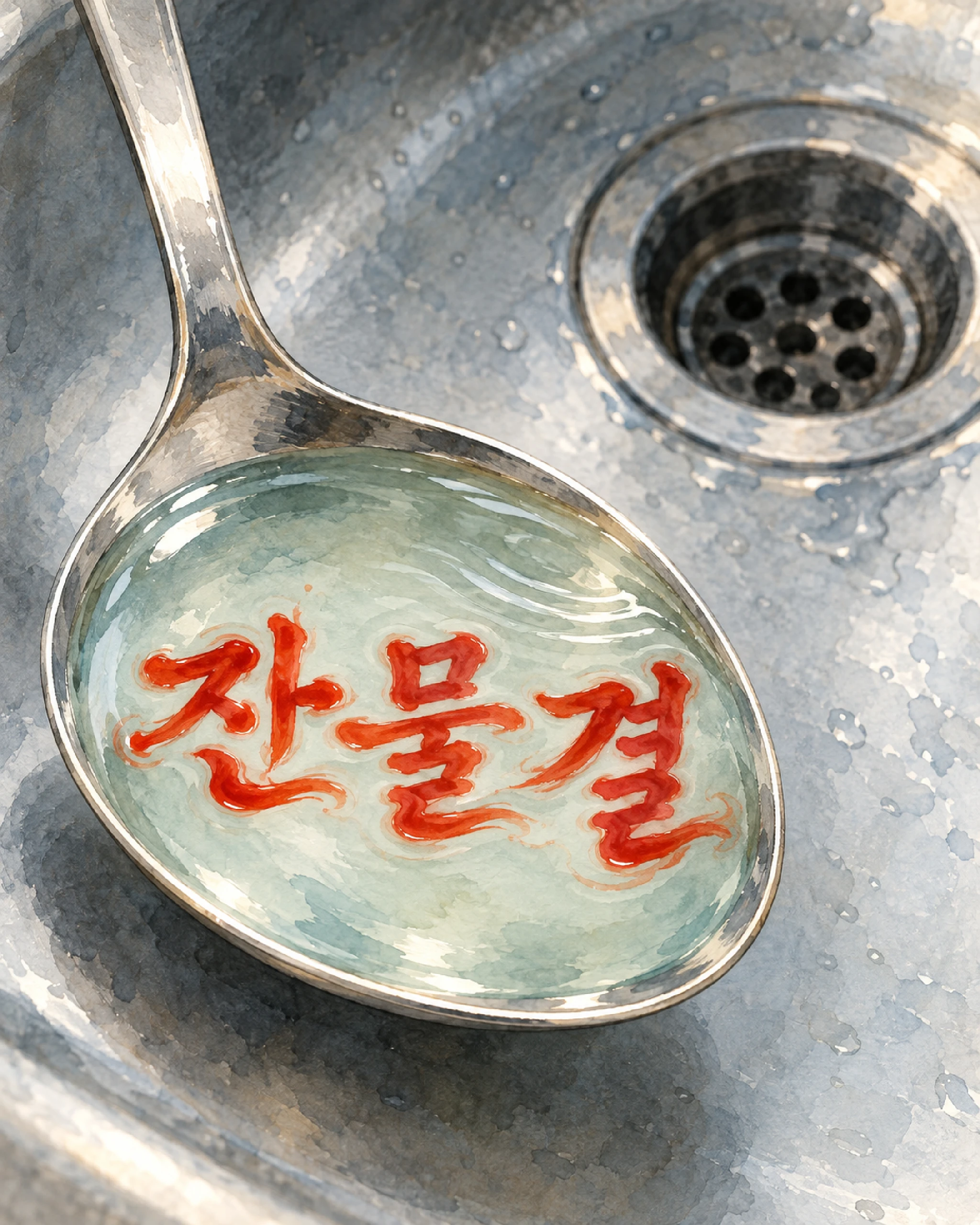
A miniature calligraphic world occupies a teaspoon in a kitchen sink. Broad ribbon strokes float on its water, while the familiar drain reveals their surprising scale.
Remix this referenceRipples in a Teaspoon
- Form language
- Build forms from broad, subtly irregular planes and ribbon bands that narrow into slender transitions.
- Contour
- Use confident broad-nib edges with crisp chisel entries and naturally tapered exits; allow intermittent open contours.
- Mark-making
- Combine decisive sweeping ink passes with sparse, loose wash strokes; let natural stroke variation enliven the thick-thin rhythm.
- Surface rendering
- Pair dense ink interiors with occasional pooled edges; merge translucent washes softly and leave selective paper breaks.
Priority
Keep the broad-nib ribbon rhythm expressive and immediately readable.
What to avoid & what to check
Exact prompt for this example
MODULE OWNERSHIP
subject: Subject count, type, stable proportions and landmarks, resting face geometry, hair shape, physical materials, garment construction and permanent marks. No emotion, movement, color assignment or rendering recipe.
expression: Facial soft-tissue displacement and pupil direction, muscle coordination, regional intensity, asymmetry and onset/peak/release. No head/body pose, stable appearance, skin color or rendering.
gesture: Head/neck/body/limb orientation, joint movement, support, contact and pose-caused occlusion using existing anatomy. No eye/pupil movement, emotion, identity, props inventory or camera.
props: Prop count, type, construction, physical material and scale relative to the subject. Holding/contact belongs to gesture, position to composition, color to palette.
scene: Environment elements, terrain, backdrop/floor presence and structural detail. No canvas positions, camera, lighting, assigned colors or render texture.
camera: Projection, focal-length impression, camera elevation/yaw/roll, viewing distance and crop. No actor pose, world placement, lighting or canvas aspect ratio.
composition: Normalized 0-100% canvas positions, scale in frame, depth/overlap, focal hierarchy and margins. No joint pose, camera projection, rendering, subject/prop inventory or emotion.
palette: Color anchors, hue/saturation/value ranges, colors assigned to parts and approximate color coverage. No illumination direction, shading algorithm, physical material or layout.
lighting: Light-source direction/softness/intensity, ambient illumination, physical shadow direction/length and highlight position. Absence of directional illumination is allowed. No shading technique, palette or material changes.
style: Reusable form abstraction, contour weight/taper/edge quality, medium and mark scale/density/direction, surface rendering and tonal transition technique. No fixed subject proportions, anatomy, identity, expression, pose, palette, light-source direction, camera or layout.
output: Image count, aspect ratio, size, file/alpha requirements and global lettering/logo/watermark restrictions. No background scenery, crop, style, identity or pose.

SUBJECT
inventory: One Hangul lettering group; no human or animal subjects.
geometry: The exact lettering is "잔물결"; preserve three distinct syllable blocks, open counters and their natural reading order.
resting-face: No face or facial geometry applies.
appearance: The lettering consists of liquid pigment resting as a thin film on water, without a separate backing.

PRIORITY


AVOID


CHECK


PROPS
inventory: One teaspoon whose bowl is only slightly larger than the complete lettering group.
construction: A stainless steel spoon with a shallow oval bowl and a slender handle ending in a rounded tip.

PRIORITY


AVOID


CHECK


SCENE
inventory: A domestic kitchen sink with a deep basin, circular drain and rolled rim; water fills the spoon bowl.
structure: The basin floor curves into its sidewall; a single faint ripple crosses the water inside the spoon.

PRIORITY


AVOID


CHECK


CAMERA
projection: Use restrained perspective with a close-focus, normal-lens impression.
viewpoint: Look steeply downward with a slight oblique view and no camera roll.
crop: Keep the complete spoon bowl visible; crop the handle and outer sink rim at the image edges.

PRIORITY


AVOID


CHECK


COMPOSITION
placement: The spoon bowl occupies the lower-left half; its lettering leads, and the drain provides a secondary scale cue.
depth: The handle recedes toward the upper edge; the drain sits farther back across an exposed stretch of basin.
spacing: Give the syllables breathing room inside the bowl and leave generous quiet space between the bowl and drain.

PRIORITY


AVOID


CHECK


PALETTE
colors: Use vermilion, pale celadon, blue-gray and warm ivory, with charcoal reserved for the deepest accents.
assignment: Assign vermilion to lettering, celadon to water, ivory to the spoon and blue-gray to the sink; use charcoal in the drain.
balance: Quiet pale colors dominate; concentrated vermilion supplies the principal saturated passage.

PRIORITY


AVOID


CHECK


LIGHTING
sources: Broad, soft window light enters from the upper left with gentle ambient fill.
shadows: A short, soft shadow falls below and to the right of the spoon.
highlights: A quiet highlight follows the upper-left lip of the bowl and lightly touches the water.

PRIORITY


AVOID


CHECK


STYLE GUIDE
form-language: Build forms from broad, subtly irregular planes and ribbon bands that narrow into slender transitions.
contour: Use confident broad-nib edges with crisp chisel entries and naturally tapered exits; allow intermittent open contours.
mark-making: Combine decisive sweeping ink passes with sparse, loose wash strokes; let natural stroke variation enliven the thick-thin rhythm.
surface-rendering: Pair dense ink interiors with occasional pooled edges; merge translucent washes softly and leave selective paper breaks.

PRIORITY
Keep the broad-nib ribbon rhythm expressive and immediately readable.

AVOID


CHECK


OUTPUT
format: One finished image, portrait 4:5, 2048 by 2560 pixels, opaque PNG.
restrictions: Allow primary lettering; forbid additional text, logos and watermarks.

PRIORITY


AVOID


CHECK


FINAL INTEGRATION
subject + output: Output permits the subject's exact primary lettering "잔물결" as the image's sole lettering.
Model information comes from image provenance. The same prompt may produce a different result.