Text to imagePortraitStyle guide
Shaved-Head Adult · Frontal Split Lighting
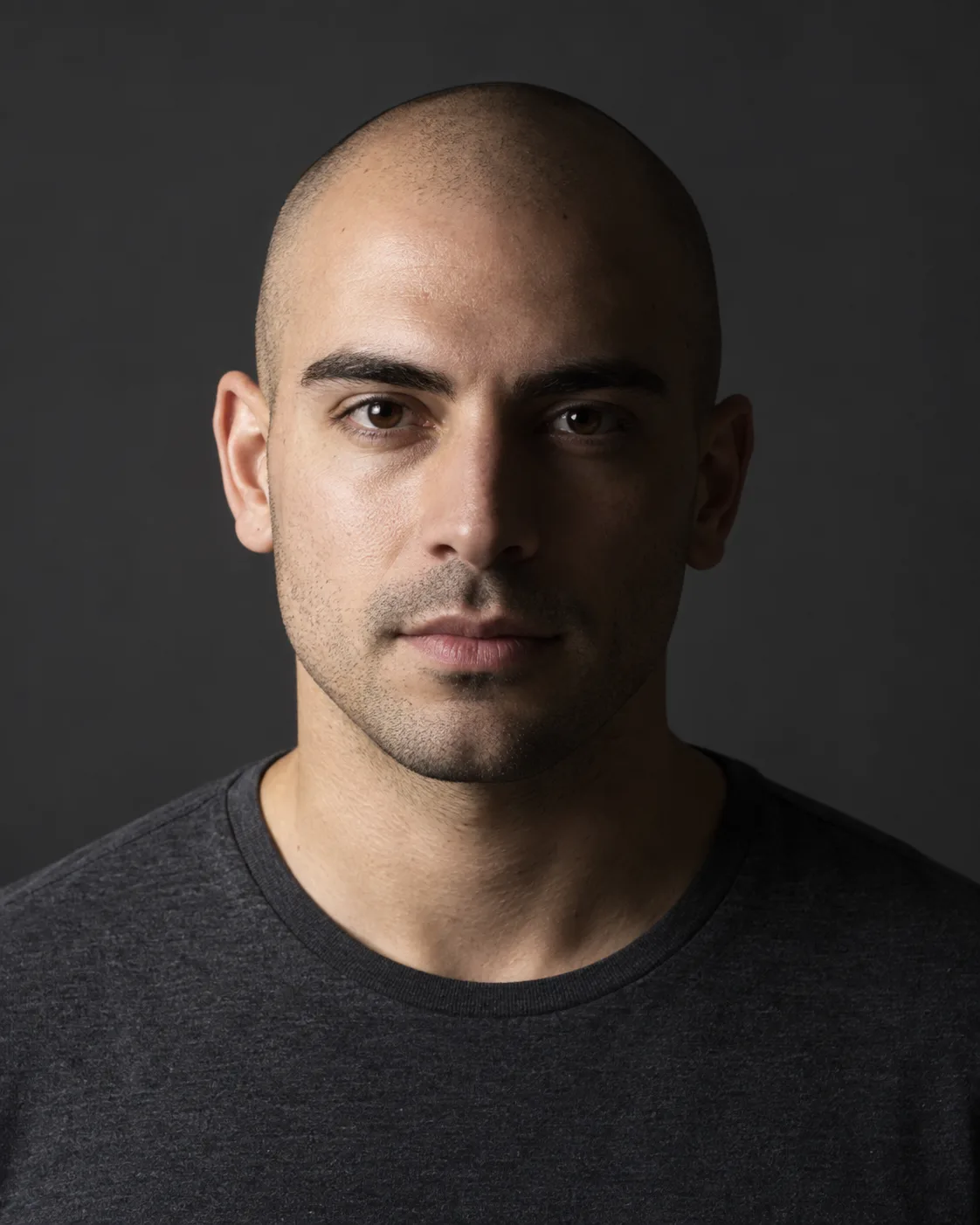
A frontal portrait of a shaved-head adult divides the face into a bright left half and a dark right half, demonstrating how side lighting reveals facial volume.
Shaved-Head Adult · Frontal Split Lighting
- Shape & line
- Keep the face frontal and build its volume with continuous anatomical contours: align the brow, nose, lips, and chin across the centerline, and let the nose interrupt the light boundary naturally instead of drawing a straight black stripe down the face.
- Color & light
- Place a neutral-white key light at face height on image-left, directed across the face from the side. Illuminate the image-left forehead, cheek, and jaw while keeping the image-right half in deep shadow; allow faint fill to retain the right eye and cheek without creating a bright triangle beneath that eye.
- Texture & material
- Render natural skin with soft pores, subtle scalp stubble, and restrained highlights on the lit forehead and cheekbone. Let fine texture fade gradually into the shadow, and keep the shirt matte so its fabric does not compete with the face.
- Composition
- Arrange the portrait around the centered face and balanced shoulders, keeping the background evenly dark gray. Preserve a subtle tonal separation between the shadowed image-right head contour and the background, while making the face's light-to-dark division the strongest contrast in the frame.
Priority
Prioritize a coherent frontal face with clearly readable side-light division.
What to avoid & what to check
Avoid head rotation, colored gels, clipped skin highlights, and a painted central stripe.
Confirm that image-left is illuminated, image-right remains shadowed but readable, and the nose shapes the transition.
Exact prompt for this example
SUBJECT
One adult with a shaved head, dark eyebrows, and a plain charcoal crewneck shirt faces the camera directly with relaxed lips and a steady gaze. Keep the head upright and both shoulders visible; the same face must remain coherent across its illuminated and shadowed halves.

COMPOSITION
Use an eye-level, centered head-and-shoulders portrait. Leave a small margin above the scalp and crop below the collarbones. Keep the nose on the vertical centerline, with both ears similarly visible, against a seamless dark-gray background.

STYLE GUIDE
1. Shape & line
Keep the face frontal and build its volume with continuous anatomical contours: align the brow, nose, lips, and chin across the centerline, and let the nose interrupt the light boundary naturally instead of drawing a straight black stripe down the face.

2. Color & light
Place a neutral-white key light at face height on image-left, directed across the face from the side. Illuminate the image-left forehead, cheek, and jaw while keeping the image-right half in deep shadow; allow faint fill to retain the right eye and cheek without creating a bright triangle beneath that eye.

3. Texture & material
Render natural skin with soft pores, subtle scalp stubble, and restrained highlights on the lit forehead and cheekbone. Let fine texture fade gradually into the shadow, and keep the shirt matte so its fabric does not compete with the face.

4. Composition
Arrange the portrait around the centered face and balanced shoulders, keeping the background evenly dark gray. Preserve a subtle tonal separation between the shadowed image-right head contour and the background, while making the face's light-to-dark division the strongest contrast in the frame.

PRIORITY
Preserve the requested identity, count, action, composition and output settings. Apply the style rules within those constraints; a style reference must not replace the subject or layout. Within the style: Prioritize a coherent frontal face with clearly readable side-light division.

AVOID
Avoid head rotation, colored gels, clipped skin highlights, and a painted central stripe.

OUTPUT
Create one photographic portrait in a vertical 4:5 aspect ratio, with no lettering, captions, logos, or watermark.

SELF-CHECK
Confirm that image-left is illuminated, image-right remains shadowed but readable, and the nose shapes the transition.
Model information comes from image provenance. The same prompt may produce a different result.