Text to imagePortraitStyle guide
Bob-Haired Adult · Eye Volume Through Lid Overlap
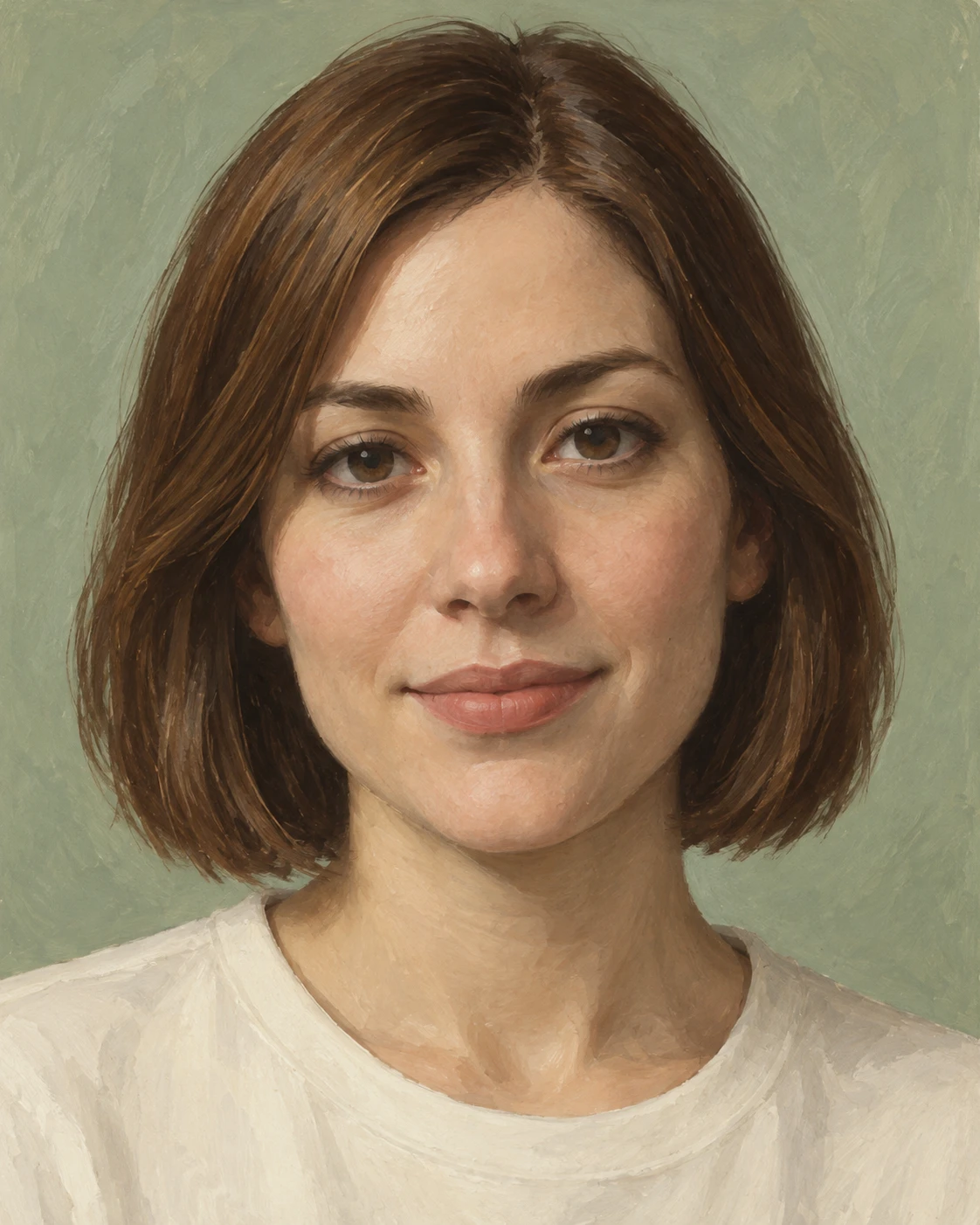
A frontal portrait that seats the eyes naturally in the face through eyelid overlap and narrow shadows across the irises.
Bob-Haired Adult · Eye Volume Through Lid Overlap
- Shape & line
- Shape each eye as a curved opening around a rounded eyeball: let the upper lid cover the top of the iris and the lower lid meet or slightly cover its bottom. Thicken the upper lid contour gently, and taper the lower contour toward the inner corner so the eyes feel relaxed and seated within the face.
- Color & light
- Use a broad soft light from the upper image-left. Place a narrow shadow immediately beneath each upper lid across the iris and nearby eye white, then lighten the exposed lower iris. Keep the eye whites a muted warm gray and place a small soft catchlight toward the upper image-left of each iris.
- Texture & material
- Render in opaque gouache with matte skin passages and restrained visible brushwork. Keep the eyelid margins crisp enough to show overlap, soften the eye-socket transitions into the cheeks, and group the hair into broad painted locks so surface detail supports the eye structure.
- Composition
- Set the shoulders against a flat pale sage background, leaving a modest margin above the hair and balanced space beside the head. Reserve the strongest small-scale contrast for the upper eyelids and pupils; keep the shirt and background quieter so the viewer first notices how the lids wrap around the eyes.
Priority
Prioritize readable eyelid overlap and the narrow upper-lid shadows that establish eye volume.
What to avoid & what to check
Avoid fully exposed circular irises, bright white eye whites, and heavy outlines around the entire eyes.
Check that both upper lids cover the irises and their shadows sit directly beneath the overlapping edges.
Exact prompt for this example
SUBJECT
One adult with a straight chestnut bob, brown eyes, and a plain cream shirt, looking directly at the viewer with a relaxed expression. Both eyelids visibly overlap the irises and follow the curved eyeballs.

COMPOSITION
Use an eye-level frontal head-and-shoulders view in a vertical frame. Keep the entire hair silhouette visible, place the eyes slightly above the frame center, and make the face large enough for the eyelid overlaps to read clearly.

STYLE GUIDE
1. Shape & line
Shape each eye as a curved opening around a rounded eyeball: let the upper lid cover the top of the iris and the lower lid meet or slightly cover its bottom. Thicken the upper lid contour gently, and taper the lower contour toward the inner corner so the eyes feel relaxed and seated within the face.

2. Color & light
Use a broad soft light from the upper image-left. Place a narrow shadow immediately beneath each upper lid across the iris and nearby eye white, then lighten the exposed lower iris. Keep the eye whites a muted warm gray and place a small soft catchlight toward the upper image-left of each iris.

3. Texture & material
Render in opaque gouache with matte skin passages and restrained visible brushwork. Keep the eyelid margins crisp enough to show overlap, soften the eye-socket transitions into the cheeks, and group the hair into broad painted locks so surface detail supports the eye structure.

4. Composition
Set the shoulders against a flat pale sage background, leaving a modest margin above the hair and balanced space beside the head. Reserve the strongest small-scale contrast for the upper eyelids and pupils; keep the shirt and background quieter so the viewer first notices how the lids wrap around the eyes.

PRIORITY
Preserve the requested identity, count, action, composition and output settings. Apply the style rules within those constraints; a style reference must not replace the subject or layout. Within the style: Prioritize readable eyelid overlap and the narrow upper-lid shadows that establish eye volume.

AVOID
Avoid fully exposed circular irises, bright white eye whites, and heavy outlines around the entire eyes.

OUTPUT
Create one portrait image in a 4:5 aspect ratio, without lettering, captions, logos, or watermarks.

SELF-CHECK
Check that both upper lids cover the irises and their shadows sit directly beneath the overlapping edges.
Model information comes from image provenance. The same prompt may produce a different result.