Text to imageLandscapeStyle guide
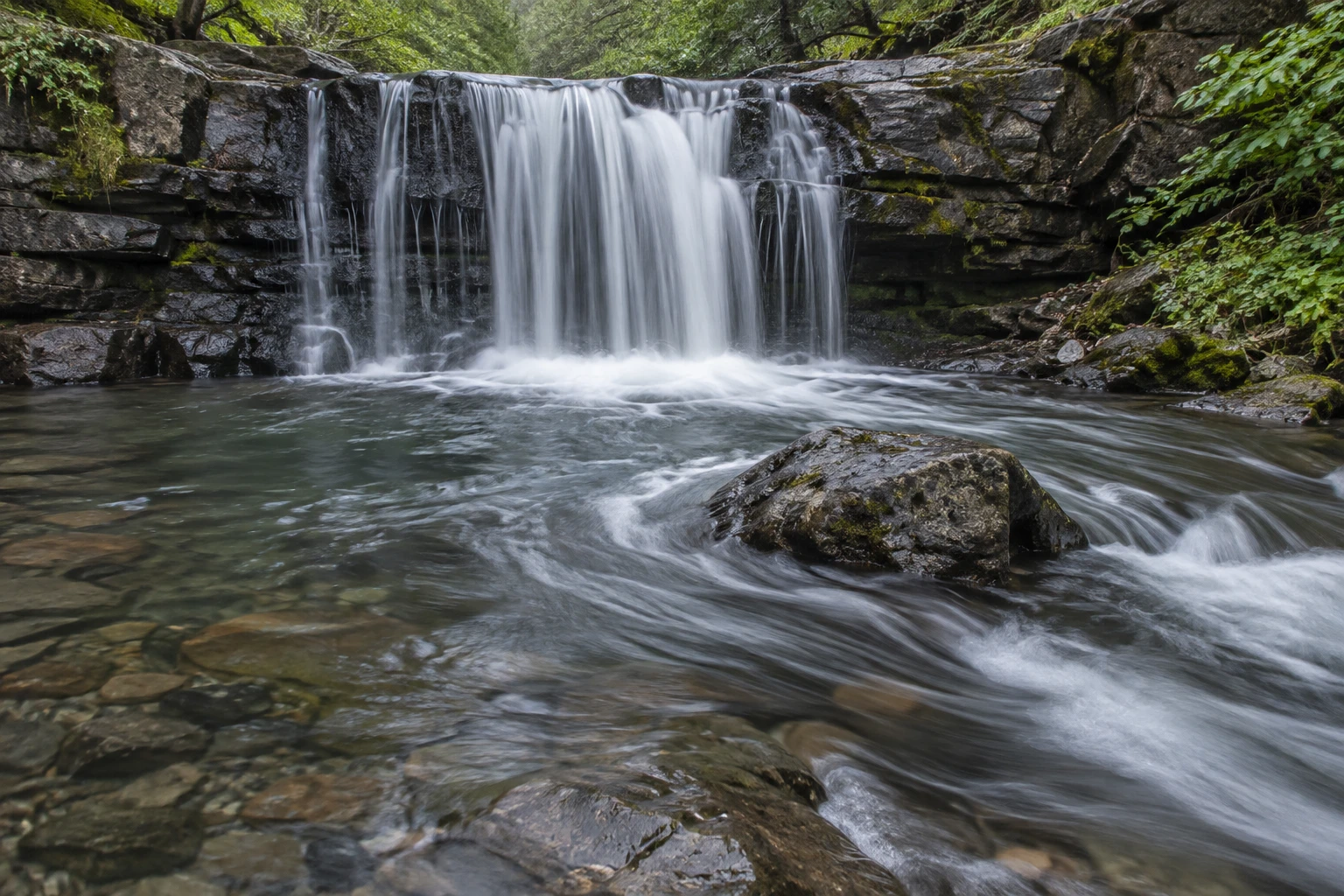
Small Waterfall · Flow-Directed Motion Blur
A landscape that reveals a small waterfall’s movement through flowing water streaks against sharply resolved rocks.
Small Waterfall · Flow-Directed Motion Blur
- Shape & line
- Keep the ledge and exposed rock contours crisp while stretching the falling water into mostly vertical streaks; bend the pool streaks around the rock’s image-left edge and continue them toward the lower-right corner.
- Color & light
- Use soft overcast light, charcoal-gray rocks, muted green banks, and cool gray water. Keep the falling streaks pale but retain gray gaps between them, so the waterfall has layered depth rather than becoming a solid white strip.
- Texture & material
- Render wet rock faces with readable cracks and restrained glossy patches. Give moving water smooth, elongated streaks with a few separated foam trails; preserve dark translucent openings in the pool where its shallow stone bed remains visible.
- Composition
- Build the visual route from the upper-center lip down the waterfall and across the pool to the lower right. Use the still exposed rock as a clear pause within that route, keeping its silhouette separated from the bank by visible moving water.
Priority
Make the contrast between stationary rock detail and directionally blurred water immediately readable.
What to avoid & what to check
Avoid blurring the rocks or turning the entire pool into opaque white mist.
Check that vertical falling streaks visibly turn into downstream trails around the crisp exposed rock.
Exact prompt for this example
SUBJECT
One small waterfall drops over a low rock ledge into one shallow pool. Water falls vertically at image center, then spreads toward the lower-right foreground around one exposed rock.

COMPOSITION
Use a landscape frame viewed from the downstream bank, with the full ledge in the upper third and the pool occupying the lower half. Keep the exposed rock right of center and leave enough visible water around it to read the change in flow direction.

STYLE GUIDE
1. Shape & line
Keep the ledge and exposed rock contours crisp while stretching the falling water into mostly vertical streaks; bend the pool streaks around the rock’s image-left edge and continue them toward the lower-right corner.

2. Color & light
Use soft overcast light, charcoal-gray rocks, muted green banks, and cool gray water. Keep the falling streaks pale but retain gray gaps between them, so the waterfall has layered depth rather than becoming a solid white strip.

3. Texture & material
Render wet rock faces with readable cracks and restrained glossy patches. Give moving water smooth, elongated streaks with a few separated foam trails; preserve dark translucent openings in the pool where its shallow stone bed remains visible.

4. Composition
Build the visual route from the upper-center lip down the waterfall and across the pool to the lower right. Use the still exposed rock as a clear pause within that route, keeping its silhouette separated from the bank by visible moving water.

PRIORITY
Preserve the requested identity, count, action, composition and output settings. Apply the style rules within those constraints; a style reference must not replace the subject or layout. Within the style: Make the contrast between stationary rock detail and directionally blurred water immediately readable.

AVOID
Avoid blurring the rocks or turning the entire pool into opaque white mist.

OUTPUT
One photographic landscape image, 3:2 aspect ratio, with no text, labels, borders, or watermark.

SELF-CHECK
Check that vertical falling streaks visibly turn into downstream trails around the crisp exposed rock.
Model information comes from image provenance. The same prompt may produce a different result.