Text to imageSpace & architectureStyle guide
Small Attic · Sectional Cutaway
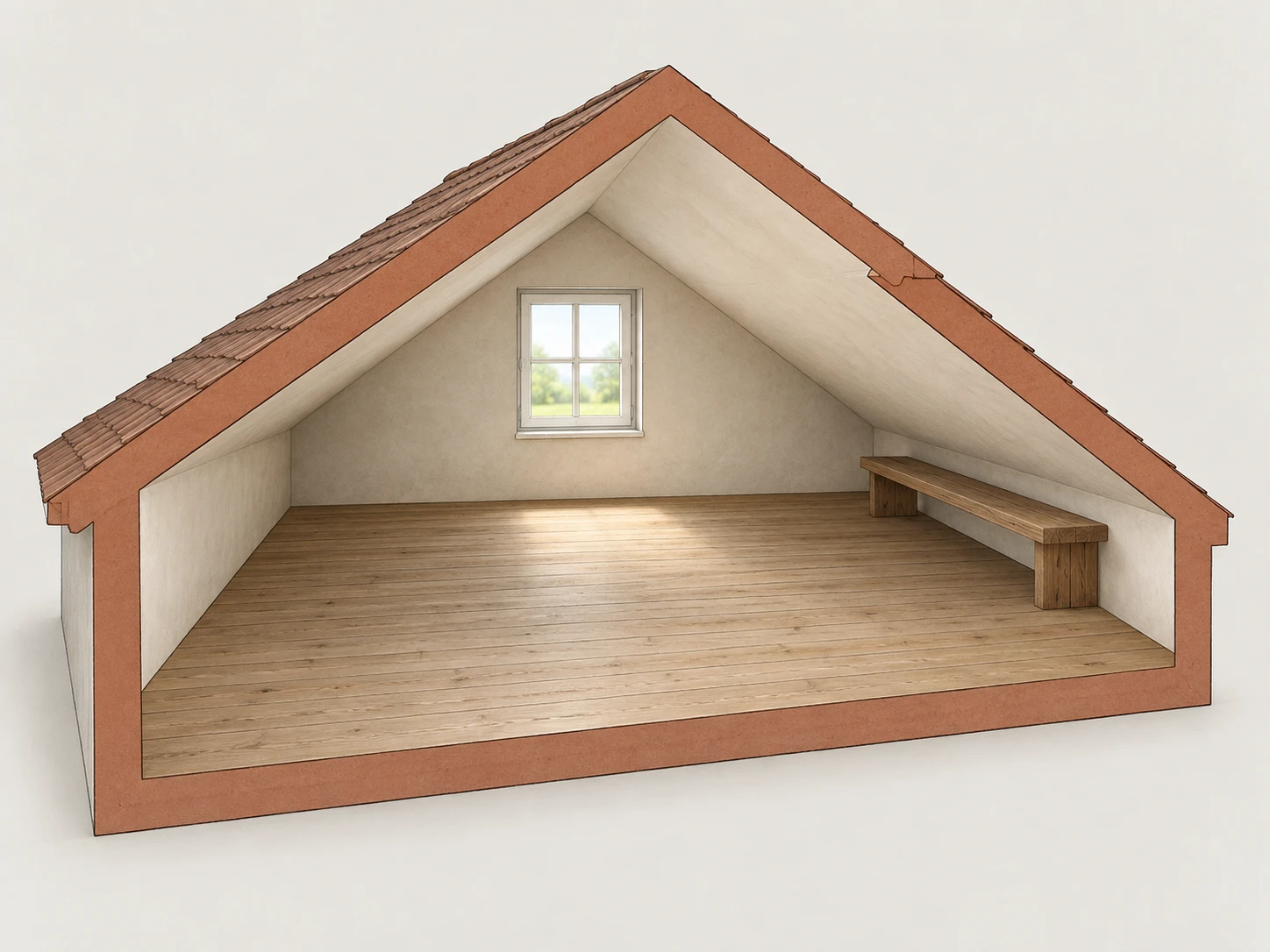
A spatial reference that cuts away the front wall and part of the roof to reveal an attic’s sloping ceiling and interior height.
Small Attic · Sectional Cutaway
- Shape & line
- Draw the exposed front section as one continuous, visibly thick edge across the floor, side walls, and pitched roof; use a heavier contour on these cut surfaces and thinner lines on intact interior edges so the removed shell reads clearly.
- Color & light
- Use warm off-white interior planes and muted clay-colored cut surfaces; let soft daylight from the rear window brighten the nearby floor and fade toward the open front, while the low ceiling corners remain gently darker.
- Texture & material
- Keep the plaster matte with a faint broad grain, show a few long wood-grain strokes along the bench, and render cut surfaces as flat opaque fills; keep texture subdued enough that the section edge remains the strongest detail.
- Composition
- Keep the central floor area open and place the bench entirely beneath the image-right descending ceiling; preserve a visible gap above its seat and show the roof rising toward the central ridge so the contrast between usable central height and low side space is immediately readable.
Priority
Make the continuous cut edge and the changing ceiling height readable first.
What to avoid & what to check
Avoid disconnected floating roof pieces and texture that obscures the section.
Check that the retained roof slopes connect to the rear wall and the bench fits beneath the image-right slope.
Exact prompt for this example
SUBJECT
One small attic with a single pitched roof, one rectangular window in the rear wall, and one low wooden bench beneath the image-right roof slope. Remove the front wall and the front portion of the roof to expose the interior; retain the rear wall, floor, and both sloping roof surfaces.

COMPOSITION
Use an elevated three-quarter view looking through the cutaway front. Show the entire attic with a small margin around it against a pale neutral background. Place the roof ridge near the upper center, the window on the rear wall, and the bench at image-right. Keep the floor and the low edges of both ceiling slopes visible.

STYLE GUIDE
1. Shape & line
Draw the exposed front section as one continuous, visibly thick edge across the floor, side walls, and pitched roof; use a heavier contour on these cut surfaces and thinner lines on intact interior edges so the removed shell reads clearly.

2. Color & light
Use warm off-white interior planes and muted clay-colored cut surfaces; let soft daylight from the rear window brighten the nearby floor and fade toward the open front, while the low ceiling corners remain gently darker.

3. Texture & material
Keep the plaster matte with a faint broad grain, show a few long wood-grain strokes along the bench, and render cut surfaces as flat opaque fills; keep texture subdued enough that the section edge remains the strongest detail.

4. Composition
Keep the central floor area open and place the bench entirely beneath the image-right descending ceiling; preserve a visible gap above its seat and show the roof rising toward the central ridge so the contrast between usable central height and low side space is immediately readable.

PRIORITY
Preserve the requested identity, count, action, composition and output settings. Apply the style rules within those constraints; a style reference must not replace the subject or layout. Within the style: Make the continuous cut edge and the changing ceiling height readable first.

AVOID
Avoid disconnected floating roof pieces and texture that obscures the section.

OUTPUT
One architectural illustration in a 4:3 landscape aspect ratio, without text, labels, dimension marks, or a watermark.

SELF-CHECK
Check that the retained roof slopes connect to the rear wall and the bench fits beneath the image-right slope.
Model information comes from image provenance. The same prompt may produce a different result.