Text to imageCharacterStyle guide
Sleepy Mushroom Friend · Upper-Lid Occlusion
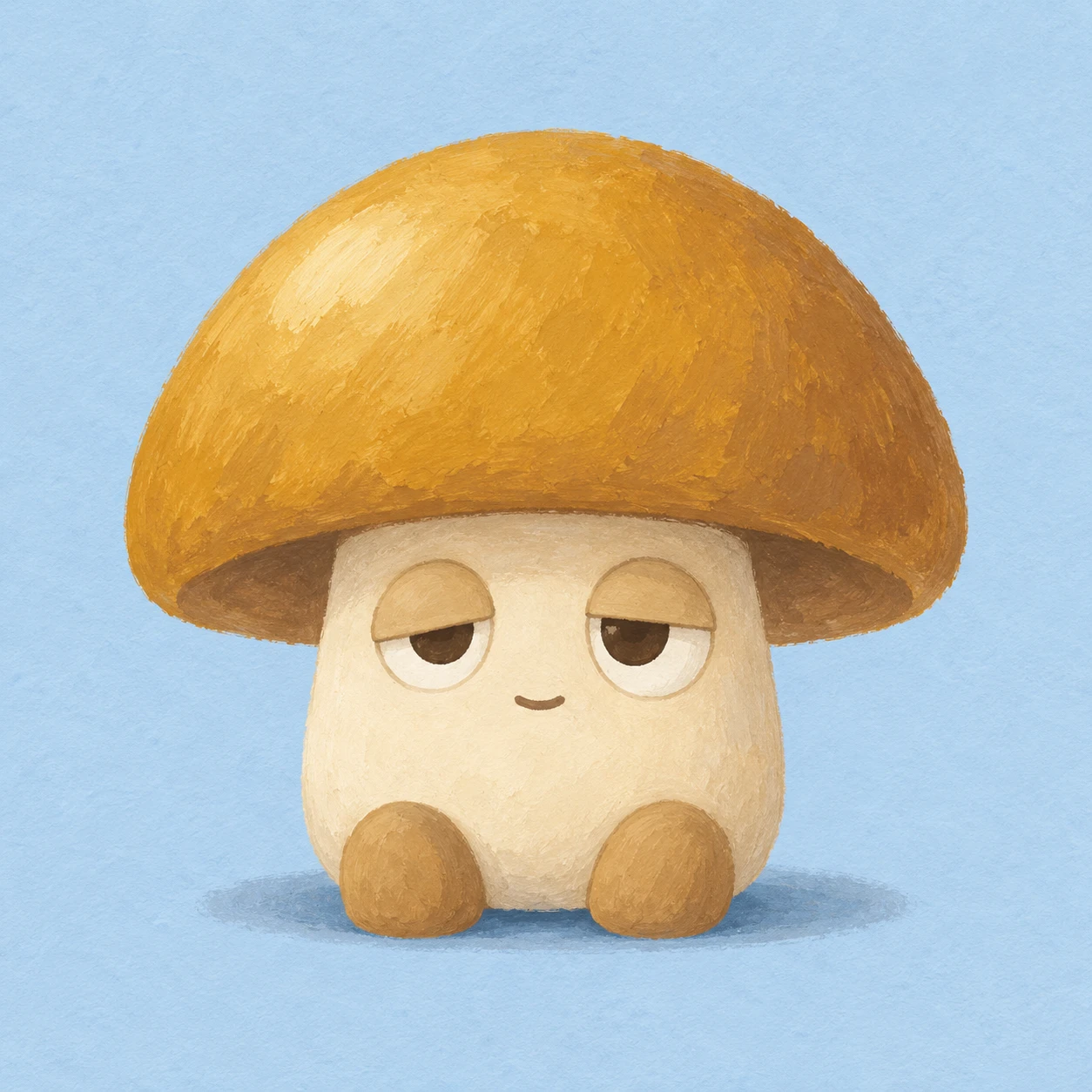
A small mushroom character whose drooping upper lids cover the tops of its pupils to convey sleepiness.
Sleepy Mushroom Friend · Upper-Lid Occlusion
- Shape & line
- Build the cap as a broad rounded dome and the stem as a softly tapered upright shape. Draw each upper eyelid as a shallow downward arc crossing the eye opening, with the dark pupil visibly cut off beneath that arc; keep the lower lids gently curved and the mouth small and relaxed.
- Color & light
- Use an ochre cap, a warm cream stem, and muted brown facial lines against pale blue. Light from the upper image-left, placing a broad soft highlight on the cap's image-left crown and a subdued shadow beneath its rim; keep the eye openings light enough for the overlapping lids and pupils to remain distinct.
- Texture & material
- Render the mushroom with opaque matte gouache fills and restrained paper grain. Let broad brush marks gently vary the cap surface, but keep the eyelid edges crisp and uninterrupted so the sleepy expression comes from visible overlap rather than blurred facial features.
- Composition
- Place the two eyes evenly across the upper stem, leaving a clear cream strip between them and the cap rim. Lower both upper lids to leave shallow eye openings, with one opening slightly smaller than the other; keep the body upright and the feet resting on a short soft ground shadow so the face carries the drowsiness.
Priority
Make the upper lids visibly overlap the pupils before adding surface detail.
What to avoid & what to check
Avoid fully closed eyes, angry inward-slanting brows, and a cap that hides the face.
Confirm that both pupils remain partly visible beneath clearly defined upper lids.
Exact prompt for this example
SUBJECT
One original sleepy mushroom character with a rounded ochre cap, a short cream stem bearing two eyes and a small mouth, and two stubby feet. Its upper eyelids overlap the upper portions of both dark pupils; its cap remains separate from the eyes and does not obscure them.

COMPOSITION
Show the entire character seated in a front-facing view at eye level, centered on a plain pale blue background. Keep both eyes large enough to read the lid overlap, with the feet visible beneath the stem and generous space around the cap.

STYLE GUIDE
1. Shape & line
Build the cap as a broad rounded dome and the stem as a softly tapered upright shape. Draw each upper eyelid as a shallow downward arc crossing the eye opening, with the dark pupil visibly cut off beneath that arc; keep the lower lids gently curved and the mouth small and relaxed.

2. Color & light
Use an ochre cap, a warm cream stem, and muted brown facial lines against pale blue. Light from the upper image-left, placing a broad soft highlight on the cap's image-left crown and a subdued shadow beneath its rim; keep the eye openings light enough for the overlapping lids and pupils to remain distinct.

3. Texture & material
Render the mushroom with opaque matte gouache fills and restrained paper grain. Let broad brush marks gently vary the cap surface, but keep the eyelid edges crisp and uninterrupted so the sleepy expression comes from visible overlap rather than blurred facial features.

4. Composition
Place the two eyes evenly across the upper stem, leaving a clear cream strip between them and the cap rim. Lower both upper lids to leave shallow eye openings, with one opening slightly smaller than the other; keep the body upright and the feet resting on a short soft ground shadow so the face carries the drowsiness.

PRIORITY
Preserve the requested identity, count, action, composition and output settings. Apply the style rules within those constraints; a style reference must not replace the subject or layout. Within the style: Make the upper lids visibly overlap the pupils before adding surface detail.

AVOID
Avoid fully closed eyes, angry inward-slanting brows, and a cap that hides the face.

OUTPUT
One square image in a soft gouache illustration medium, with no lettering, captions, logos, or watermark.

SELF-CHECK
Confirm that both pupils remain partly visible beneath clearly defined upper lids.
Model information comes from image provenance. The same prompt may produce a different result.