Text to imageLandscapeStyle guide
Small Sandy Cove · Depth-Based Water Color
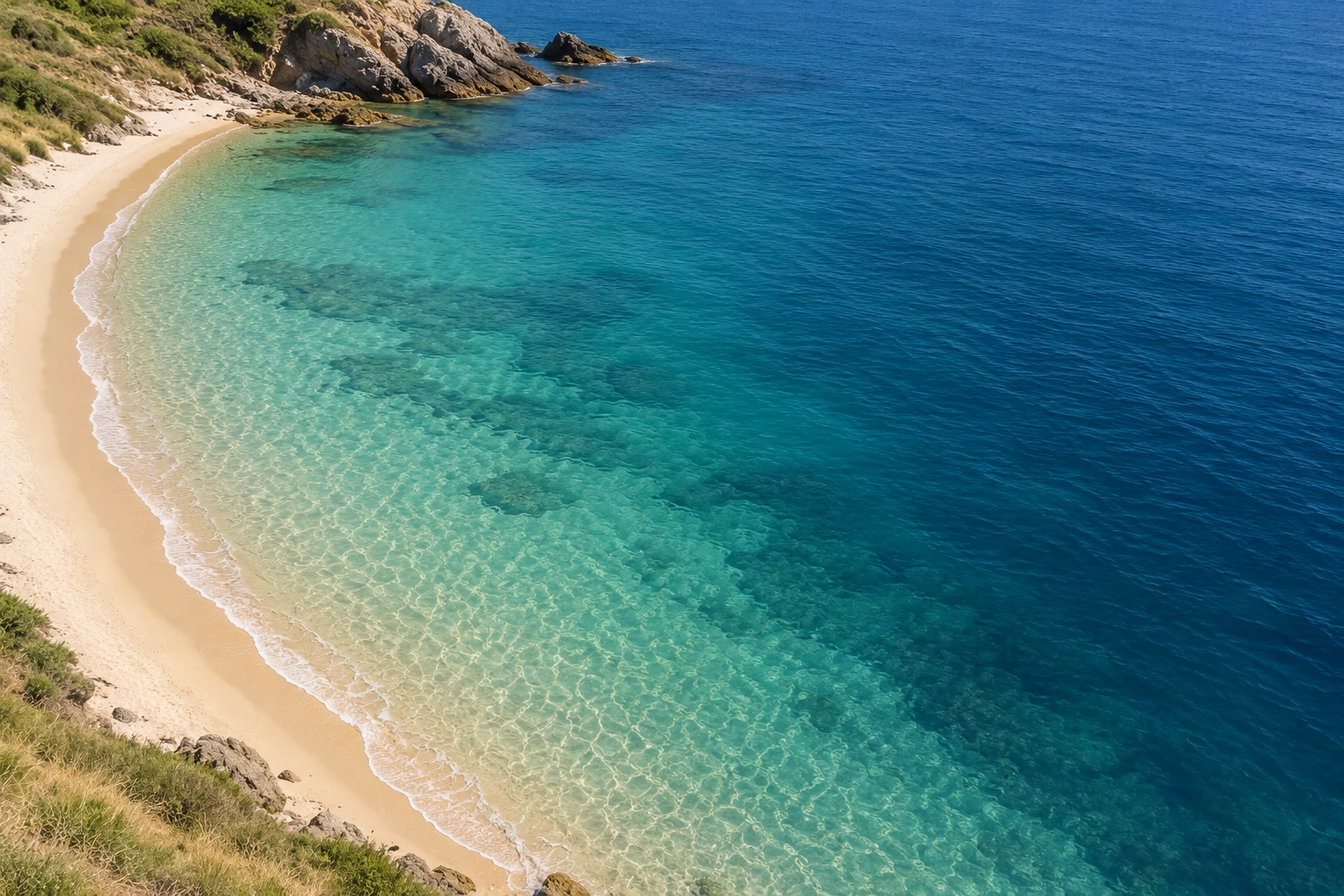
A coastal scene that reveals water depth through pale turquoise shallows, deep blue offshore water, and changing visibility of submerged sand.
Small Sandy Cove · Depth-Based Water Color
- Shape & line
- Draw the shoreline as one gently curving boundary, and use broad, irregular seabed shapes that continue beneath the shallow water; soften and lose their edges as they extend toward image-right.
- Color & light
- Under even daylight, let the warm sand show through pale turquoise water beside the image-left beach, then blend into cooler blue and finally deep blue toward image-right; make this transition follow the descending seabed rather than a straight vertical stripe.
- Texture & material
- Render the exposed sand with restrained matte grain and the water with sparse, fine surface ripples; beneath those ripples, reduce the contrast and clarity of sandy patches with increasing depth until the deep water reads as a unified color mass.
- Composition
- Keep the beach-to-open-water progression unobstructed across the frame, and give the translucent shallows enough width to compare visible sand on image-left with concealed seabed on image-right; use the beach curve to guide the eye through that change.
Priority
Prioritize the connection between deeper water, darker color, and reduced seabed visibility.
What to avoid & what to check
Avoid abrupt color stripes or strong reflections that conceal the depth transition.
Check that sand remains visible in the left shallows and disappears gradually into the deeper blue water on the right.
Exact prompt for this example
SUBJECT
One small sandy cove with a curved beach on image-left and a continuous seabed descending toward deeper open water on image-right. The submerged sand is clearly visible beside the beach and gradually disappears toward the deeper water.

COMPOSITION
Use an elevated oblique view in a horizontal frame. Place the curved beach along the left third and let the water occupy the remaining frame, with the shallow-to-deep transition readable across the image. Keep a narrow strip of quiet coastal grass above the sand.

STYLE GUIDE
1. Shape & line
Draw the shoreline as one gently curving boundary, and use broad, irregular seabed shapes that continue beneath the shallow water; soften and lose their edges as they extend toward image-right.

2. Color & light
Under even daylight, let the warm sand show through pale turquoise water beside the image-left beach, then blend into cooler blue and finally deep blue toward image-right; make this transition follow the descending seabed rather than a straight vertical stripe.

3. Texture & material
Render the exposed sand with restrained matte grain and the water with sparse, fine surface ripples; beneath those ripples, reduce the contrast and clarity of sandy patches with increasing depth until the deep water reads as a unified color mass.

4. Composition
Keep the beach-to-open-water progression unobstructed across the frame, and give the translucent shallows enough width to compare visible sand on image-left with concealed seabed on image-right; use the beach curve to guide the eye through that change.

PRIORITY
Preserve the requested identity, count, action, composition and output settings. Apply the style rules within those constraints; a style reference must not replace the subject or layout. Within the style: Prioritize the connection between deeper water, darker color, and reduced seabed visibility.

AVOID
Avoid abrupt color stripes or strong reflections that conceal the depth transition.

OUTPUT
Create one landscape image in a 3:2 aspect ratio, with no text, labels, borders, or watermark.

SELF-CHECK
Check that sand remains visible in the left shallows and disappears gradually into the deeper blue water on the right.
Model information comes from image provenance. The same prompt may produce a different result.