Text to imageCharacterStyle guide
Duckling in Boots · Overlap-Based Foreshortening
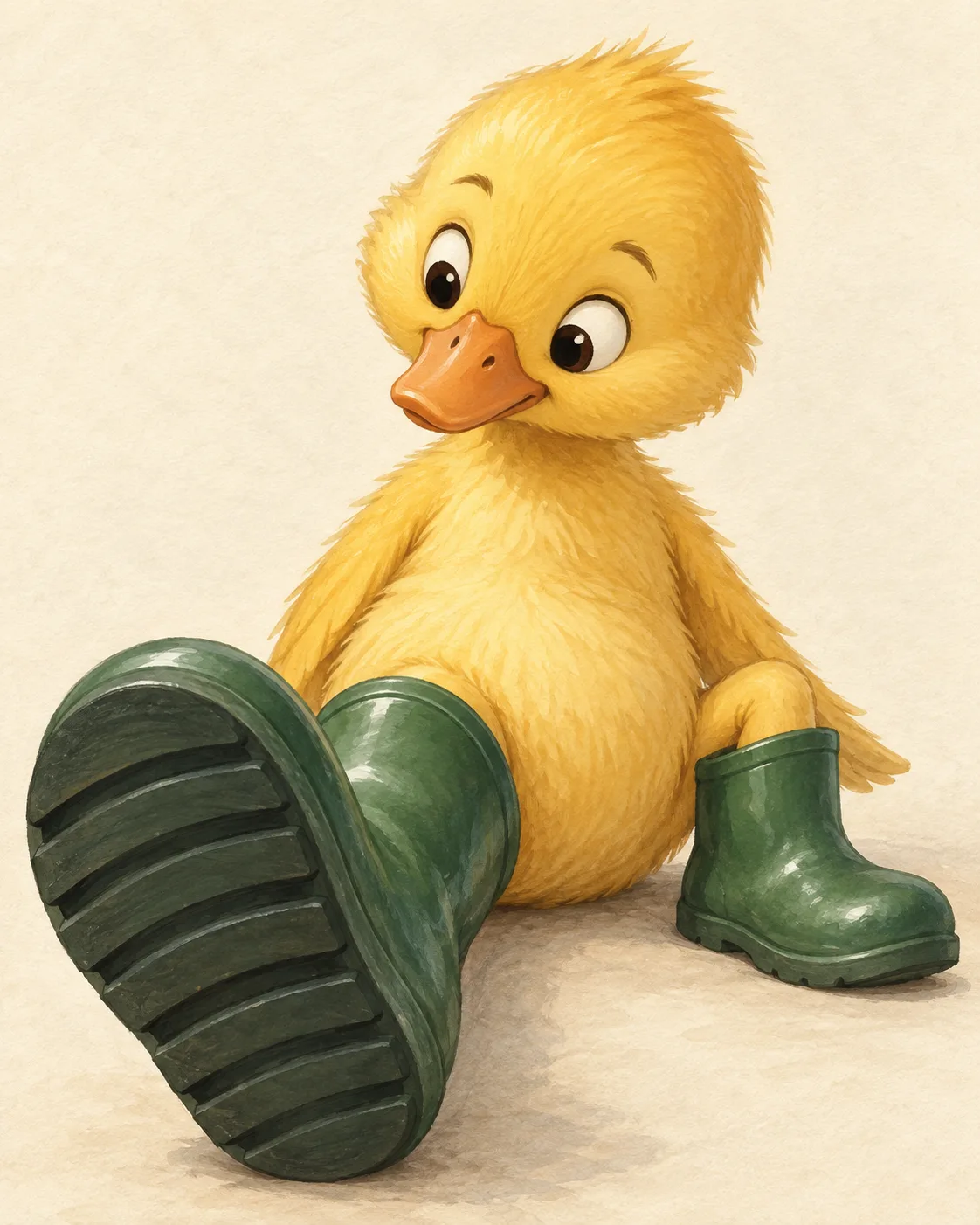
A seated duckling extends one boot toward the viewer, demonstrating limb depth through size changes and overlap.
Duckling in Boots · Overlap-Based Foreshortening
- Shape & line
- Construct the duckling from a rounded head, pear-shaped torso, and short tapered wings. Draw the near boot sole as a broad rounded trapezoid, with its shaft narrowing back toward the body; interrupt the rear contours wherever the sole, shaft, and belly overlap so the extended leg reads in depth.
- Color & light
- Use warm yellow plumage, a muted orange bill, and deep green boots against a pale cream background. Light from upper image-left, placing soft highlights on the head and boot uppers while keeping the viewer-facing sole darker; add soft contact shadows beneath the seated body and bent boot.
- Texture & material
- Render with opaque gouache-like fills and slight paper grain. Suggest down with a few soft feather marks along the cheeks and belly, give rubber broad smooth highlights, and place a few thick curved tread grooves on the near sole that follow its perspective.
- Composition
- Make the lower-left sole visibly larger than the bent boot on image-right, while keeping the head unobstructed above the overlap chain. Direct the bill and pupils toward the near boot, and leave a cream-colored gap between the bent boot and belly so their separate shapes remain readable.
Priority
Prioritize the continuous sole-to-shaft-to-body overlap that makes the extended leg readable.
What to avoid & what to check
Avoid equal-sized boots, transparent overlapping contours, and a sole that appears detached from its shaft.
Check that the larger lower-left sole connects visibly to the body and that both boots remain distinguishable at thumbnail size.
Exact prompt for this example
SUBJECT
One original anthropomorphic duckling wearing two oversized green rubber boots, seated on the ground. Its right leg extends toward the viewer into the lower-left of the image, presenting the boot sole; its left leg bends beside its body on image-right. Both wings rest beside its hips, and its head tilts toward the extended boot with a curious expression.

COMPOSITION
Use a low three-quarter view in a vertical frame, keeping the entire duckling and both boots visible. The near sole occupies the lower-left foreground and overlaps its boot shaft, which overlaps the lower body. The smaller bent boot sits on image-right beside the body. Leave clear background around the head and enough ground beneath both boots to read their positions.

STYLE GUIDE
1. Shape & line
Construct the duckling from a rounded head, pear-shaped torso, and short tapered wings. Draw the near boot sole as a broad rounded trapezoid, with its shaft narrowing back toward the body; interrupt the rear contours wherever the sole, shaft, and belly overlap so the extended leg reads in depth.

2. Color & light
Use warm yellow plumage, a muted orange bill, and deep green boots against a pale cream background. Light from upper image-left, placing soft highlights on the head and boot uppers while keeping the viewer-facing sole darker; add soft contact shadows beneath the seated body and bent boot.

3. Texture & material
Render with opaque gouache-like fills and slight paper grain. Suggest down with a few soft feather marks along the cheeks and belly, give rubber broad smooth highlights, and place a few thick curved tread grooves on the near sole that follow its perspective.

4. Composition
Make the lower-left sole visibly larger than the bent boot on image-right, while keeping the head unobstructed above the overlap chain. Direct the bill and pupils toward the near boot, and leave a cream-colored gap between the bent boot and belly so their separate shapes remain readable.

PRIORITY
Preserve the requested identity, count, action, composition and output settings. Apply the style rules within those constraints; a style reference must not replace the subject or layout. Within the style: Prioritize the continuous sole-to-shaft-to-body overlap that makes the extended leg readable.

AVOID
Avoid equal-sized boots, transparent overlapping contours, and a sole that appears detached from its shaft.

OUTPUT
One finished character illustration, 4:5 portrait aspect ratio, with no lettering, captions, logos, or watermark.

SELF-CHECK
Check that the larger lower-left sole connects visibly to the body and that both boots remain distinguishable at thumbnail size.
Model information comes from image provenance. The same prompt may produce a different result.