Text to imageCafe & brandStyle guide
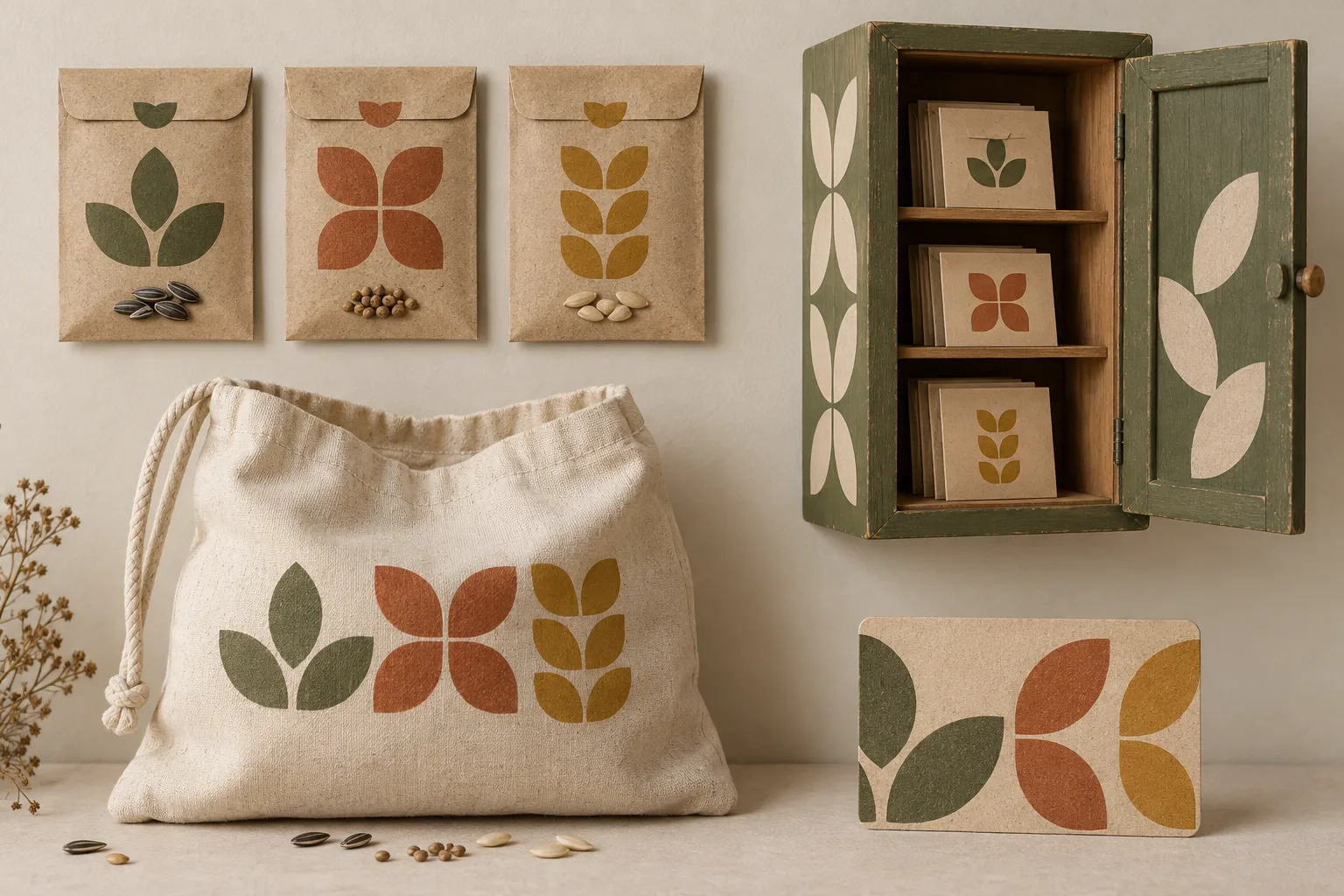
Urban Seed Exchange · Modular Visual System
Apply one reusable shape system across several brand touchpoints.
Urban Seed Exchange · Modular Visual System
Change the subject; keep the visual rules.
- 1
- Derive every graphic motif from one consistent seed-pod module.
- 2
- Apply the same module at different scales across all four touchpoints.
- 3
- Use three repeatable shape arrangements to distinguish seed categories.
- 4
- Render paper, canvas, and painted wood with distinct tactile finishes.
Priority
Preserve the four style rules when changing subject or composition.
What to avoid & what to check
Avoid unwanted lettering, logos and watermarks.
Check silhouette and composition at thumbnail size.
Apply to your subject
Derive every graphic motif from one consistent seed-pod module.
Apply the same module at different scales across all four touchpoints.
Use three repeatable shape arrangements to distinguish seed categories.
Render paper, canvas, and painted wood with distinct tactile finishes.
Subject: [subject]. Choose a clear composition appropriate to this subject.

Priority: Preserve the four style rules when changing subject or composition.Exact prompt for this example
Exact prompt · Original
Design a coherent visual identity presentation for an original urban seed exchange. Show exactly four touchpoints in one orderly editorial composition: a set of three seed envelopes, a reusable canvas collection bag, a small wall-mounted exchange cabinet, and a rectangular membership card. Build the identity from one modular seed-pod shape that can repeat, crop, and interlock; apply it at different scales while keeping its geometry consistent. Use earthy uncoated paper, canvas, and painted wood with visible material behavior. Distinguish seed categories through three simple shape arrangements and restrained color coding, without words or numerical labels. Make the system recognizable across all four objects and leave clean space between them. No lettering, logos, signatures, or watermarks.
Model information comes from image provenance. The same prompt may produce a different result.