Text to imageArt stylesStyle guide
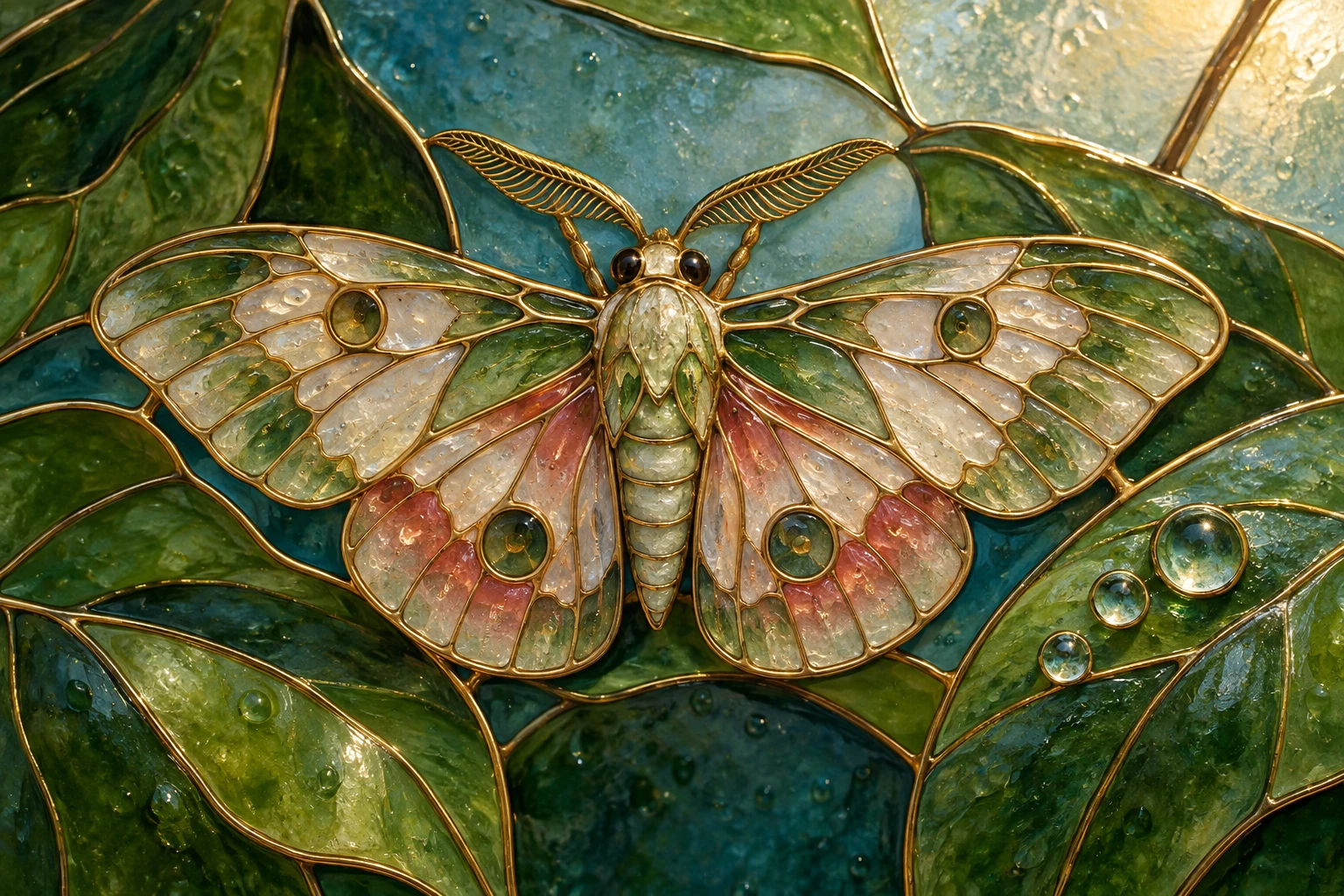
Greenhouse Moth · Cloisonné Boundaries
Use metal partitions and enamel depth to build a reusable cloisonné rendering style.
Remix this referenceGreenhouse Moth · Cloisonné Boundaries
- Shape & line
- Construct all main shapes from enclosed compartments separated by thin raised brass wires; keep metal boundaries crisp and continuous.
- Color & light
- Use translucent enamel colors of varied depth with subtle grazing light catching brass ridges and deeper pigment pooled inside cells.
- Texture & material
- Show tiny bubbles and natural pooled pigment inside glossy enamel while raised brass remains a distinct tactile boundary.
- Composition
- Use a near-frontal decorative-object composition with detailed focal wings balanced by larger quiet surrounding cells.
Priority
Preserve the distinctive construction and medium first, readable spatial hierarchy second, subtle surface details third.
What to avoid & what to check
Avoid extra subjects, inconsistent repeated geometry, hidden key details, crowded overlaps, unwanted text and watermarks.
Check each style rule against the finished image: visible shape construction, color and light, material treatment, and composition. Preserve the exact subject count and scene requirements.
Exact prompt for this example
SUBJECT
Illustrate one original greenhouse moth resting among broad leaves as a handcrafted cloisonné enamel panel. Construct the moth, leaves, and a small cluster of glasshouse condensation drops from enclosed shapes divided by thin raised brass wires. Fill each compartment with translucent enamel of varied depth; let tiny bubbles and pooled pigment collect naturally inside the cells while the metal boundaries remain crisp. Use a nearly frontal composition that reads as both a living scene and a finished decorative object. Reserve a few larger quiet enamel fields around the intricate wings so the detail can breathe. Show subtle grazing light catching the raised wire. No lettering, logos, or watermarks.

COMPOSITION
Nearly frontal handcrafted enamel panel with one greenhouse moth among broad leaves and a small cluster of condensation drops. Leave a few large quiet enamel fields around intricate wings.

STYLE GUIDE
1. Shape & line
Construct all main shapes from enclosed compartments separated by thin raised brass wires; keep metal boundaries crisp and continuous.

2. Color & light
Use translucent enamel colors of varied depth with subtle grazing light catching brass ridges and deeper pigment pooled inside cells.

3. Texture & material
Show tiny bubbles and natural pooled pigment inside glossy enamel while raised brass remains a distinct tactile boundary.

4. Composition
Use a near-frontal decorative-object composition with detailed focal wings balanced by larger quiet surrounding cells.

PRIORITY
Preserve the requested identity, count, action, composition and output settings. Apply the style rules within those constraints; a style reference must not replace the subject or layout. Within the style: Preserve the distinctive construction and medium first, readable spatial hierarchy second, subtle surface details third.

AVOID
Avoid extra subjects, inconsistent repeated geometry, hidden key details, crowded overlaps, unwanted text and watermarks.

OUTPUT
One finished landscape image, aspect ratio 3:2. No lettering, captions, dimensions, unrelated logos, watermark, border or interface.

SELF-CHECK
Check each style rule against the finished image: visible shape construction, color and light, material treatment, and composition. Preserve the exact subject count and scene requirements.
Model information comes from image provenance. The same prompt may produce a different result.