Text to imageProductStyle guide
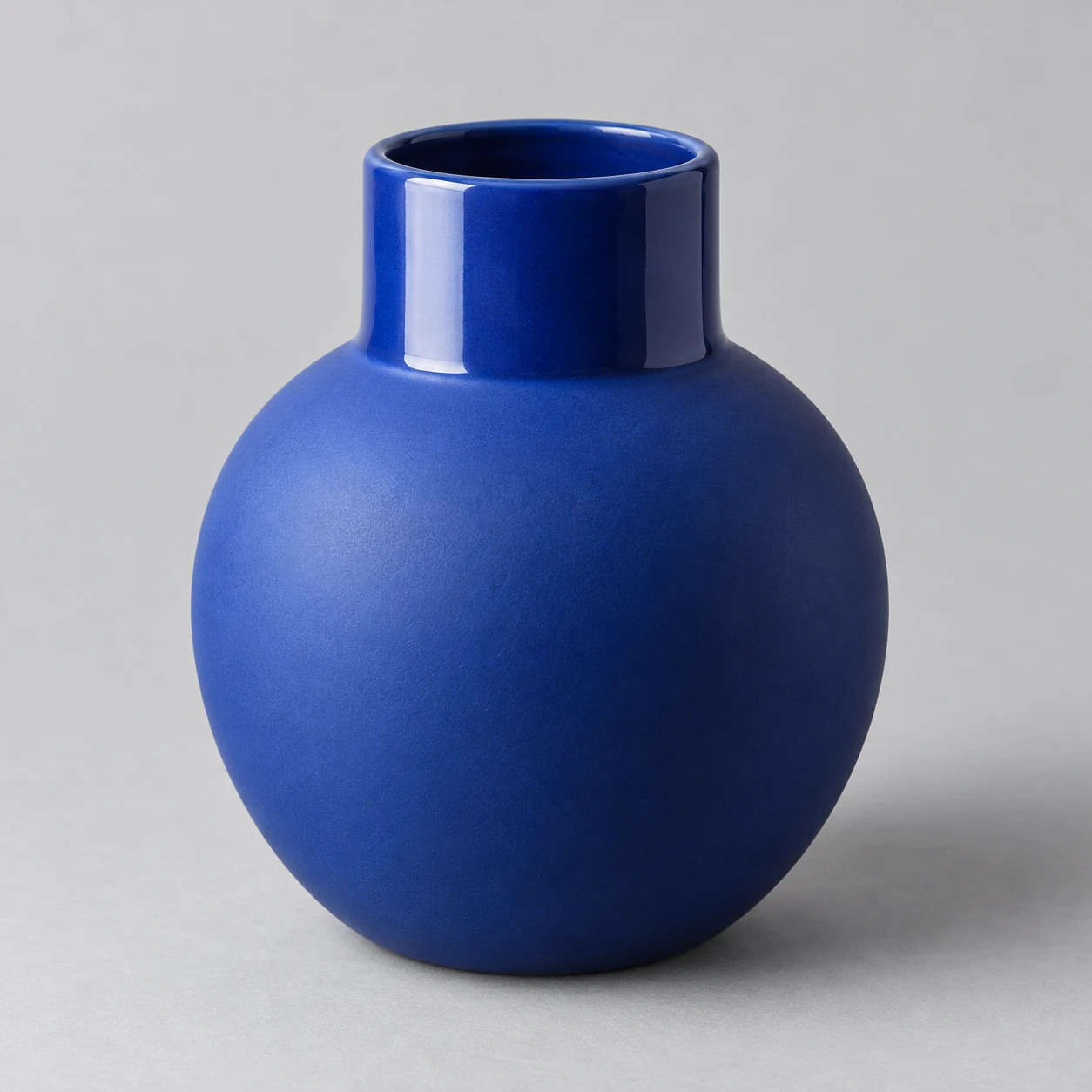
Blue Ceramic Vase · Matte–Gloss Contrast
A product image that distinguishes a matte body from a glossy neck through different reflection shapes on the same blue ceramic vase.
Blue Ceramic Vase · Matte–Gloss Contrast
- Shape & line
- Build a broad rounded body beneath a short straight-sided neck, and show the opening as a shallow ellipse with a visible ceramic rim. Keep the silhouette continuous at the shoulder; indicate the finish boundary through reflection behavior rather than a raised seam or drawn outline.
- Color & light
- Light the vase from image-left with a tall rectangular softbox. Put a bright elongated reflection on the image-left portion of the glossy neck, bending it gently around the cylinder, while the matte body receives a broad soft blue gradient. Let both sections darken toward image-right without changing their underlying hue.
- Texture & material
- Give the body a fine, even matte ceramic surface that spreads the light without preserving the softbox's rectangular shape. Keep the neck smooth and glazed, with a recognizable softbox reflection and a restrained bright rim accent. Make the finish transition clean and circular, without adding speckles or decorative patterns.
- Composition
- Frame the vase large enough to compare the glossy neck and matte shoulder at a glance, while leaving clear space above the opening and around the base. Use a quiet pale gray background and a soft grounding shadow extending toward image-right so the two surface finishes remain the visual focus.
Priority
Prioritize the distinct reflection shapes of two finishes sharing one blue color.
What to avoid & what to check
Avoid making the matte body shiny or separating the finishes with different paint colors.
Confirm that the softbox shape appears on the glossy neck and dissolves into a broad gradient on the matte body.
Exact prompt for this example
SUBJECT
One empty cobalt-blue ceramic vase with a rounded matte body and a short glossy cylindrical neck. Both sections share the same underlying blue color; their finish boundary follows the circular shoulder where the neck meets the body.

COMPOSITION
Show the entire vase centered in a slightly elevated three-quarter view, with its opening and shoulder visible. Place it on a pale gray seamless surface with generous surrounding space. A tall rectangular softbox stands off-frame on image-left, producing an observable reflection on the left-facing side of the glossy neck.

STYLE GUIDE
1. Shape & line
Build a broad rounded body beneath a short straight-sided neck, and show the opening as a shallow ellipse with a visible ceramic rim. Keep the silhouette continuous at the shoulder; indicate the finish boundary through reflection behavior rather than a raised seam or drawn outline.

2. Color & light
Light the vase from image-left with a tall rectangular softbox. Put a bright elongated reflection on the image-left portion of the glossy neck, bending it gently around the cylinder, while the matte body receives a broad soft blue gradient. Let both sections darken toward image-right without changing their underlying hue.

3. Texture & material
Give the body a fine, even matte ceramic surface that spreads the light without preserving the softbox's rectangular shape. Keep the neck smooth and glazed, with a recognizable softbox reflection and a restrained bright rim accent. Make the finish transition clean and circular, without adding speckles or decorative patterns.

4. Composition
Frame the vase large enough to compare the glossy neck and matte shoulder at a glance, while leaving clear space above the opening and around the base. Use a quiet pale gray background and a soft grounding shadow extending toward image-right so the two surface finishes remain the visual focus.

PRIORITY
Preserve the requested identity, count, action, composition and output settings. Apply the style rules within those constraints; a style reference must not replace the subject or layout. Within the style: Prioritize the distinct reflection shapes of two finishes sharing one blue color.

AVOID
Avoid making the matte body shiny or separating the finishes with different paint colors.

OUTPUT
One square 1:1 studio product photograph, with no lettering, logos, captions, or watermark.

SELF-CHECK
Confirm that the softbox shape appears on the glossy neck and dissolves into a broad gradient on the matte body.
Model information comes from image provenance. The same prompt may produce a different result.