Text to imageArt stylesStyle guide
One Poppy · Translucent Tissue-Paper Overlap
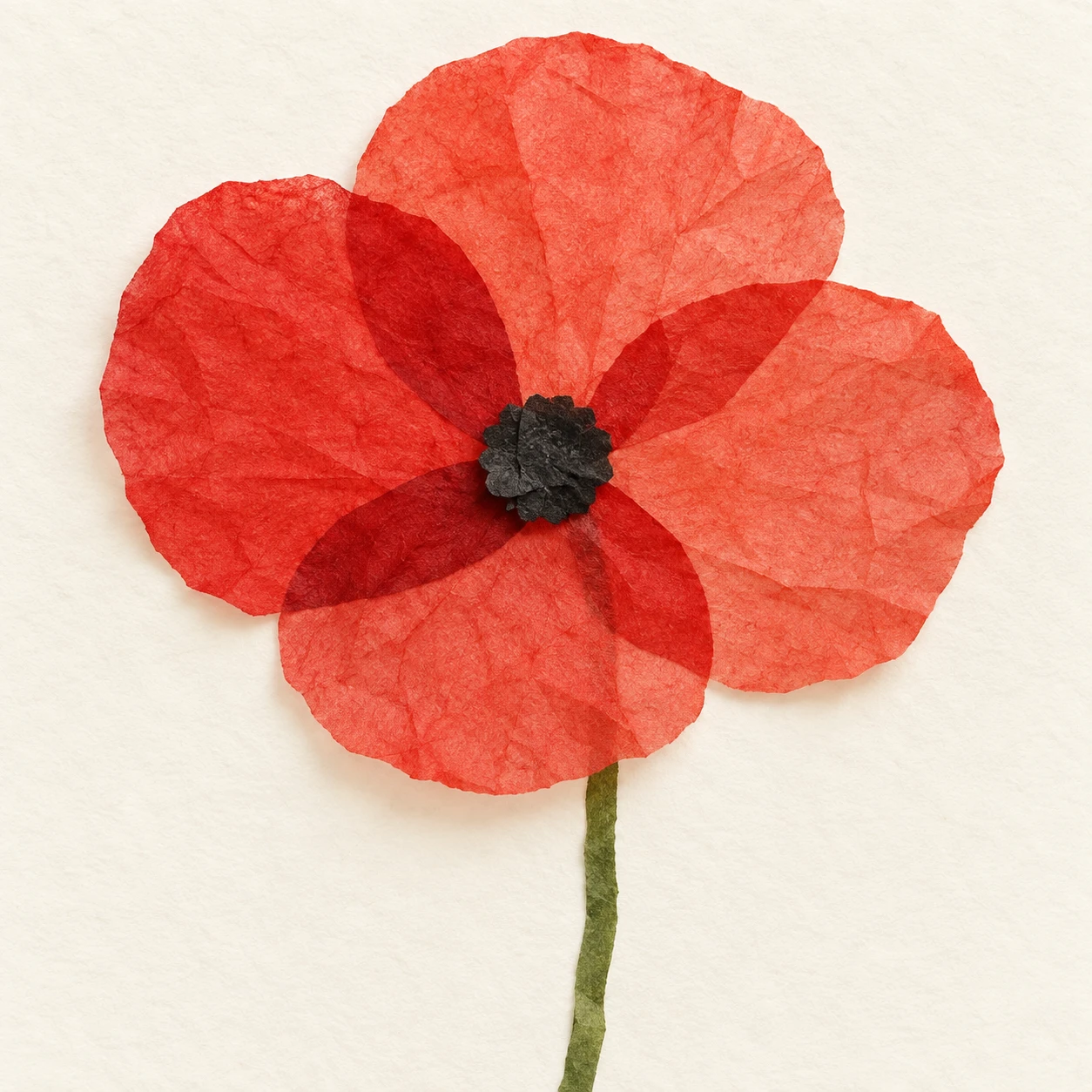
A collage of thin red tissue paper that reveals translucent petals and darker zones where layers overlap.
One Poppy · Translucent Tissue-Paper Overlap
- Shape & line
- Build the bloom from four individually cut, rounded tissue-paper petals with gently irregular edges; keep each petal's outer contour readable and use a small uneven charcoal paper disk to gather them at the center.
- Color & light
- Use pale scarlet for single-layer petal areas and deeper crimson wherever two petals overlap. Let the image-left petal cross over the lower petal in a broad curved strip so their shared area visibly darkens while the ivory backing remains faintly visible through each single layer.
- Texture & material
- Preserve fine paper fibers, shallow wrinkles, and slight variations in pigment density within the tissue. Show the layers pressed mostly flat onto matte backing, with only a few softly lifted edges casting faint close shadows; keep the translucent color changes more prominent than those shadows.
- Composition
- Arrange the petals in an open, slightly asymmetric circle rather than a dense stack, leaving broad single-layer areas beside clearly exposed overlap bands. Keep the dark center compact and the green stem narrow so the petal layering remains the main visual event.
Priority
Make the darker overlap bands and translucent single-layer petals immediately distinguishable.
What to avoid & what to check
Avoid opaque painted petals, glasslike shine, and heavy shadows that conceal the paper layering.
Confirm that four readable petals form one poppy and that their shared regions darken through visible layering.
Exact prompt for this example
SUBJECT
One open red poppy made from translucent tissue paper, with four broad overlapping petals surrounding one small charcoal-colored center and one slender green paper stem extending downward.

COMPOSITION
Show the flower nearly face-on against warm ivory paper in a square frame. Place the bloom slightly above center and let its stem descend toward the lower edge, leaving generous clear margins around the petals.

STYLE GUIDE
1. Shape & line
Build the bloom from four individually cut, rounded tissue-paper petals with gently irregular edges; keep each petal's outer contour readable and use a small uneven charcoal paper disk to gather them at the center.

2. Color & light
Use pale scarlet for single-layer petal areas and deeper crimson wherever two petals overlap. Let the image-left petal cross over the lower petal in a broad curved strip so their shared area visibly darkens while the ivory backing remains faintly visible through each single layer.

3. Texture & material
Preserve fine paper fibers, shallow wrinkles, and slight variations in pigment density within the tissue. Show the layers pressed mostly flat onto matte backing, with only a few softly lifted edges casting faint close shadows; keep the translucent color changes more prominent than those shadows.

4. Composition
Arrange the petals in an open, slightly asymmetric circle rather than a dense stack, leaving broad single-layer areas beside clearly exposed overlap bands. Keep the dark center compact and the green stem narrow so the petal layering remains the main visual event.

PRIORITY
Preserve the requested identity, count, action, composition and output settings. Apply the style rules within those constraints; a style reference must not replace the subject or layout. Within the style: Make the darker overlap bands and translucent single-layer petals immediately distinguishable.

AVOID
Avoid opaque painted petals, glasslike shine, and heavy shadows that conceal the paper layering.

OUTPUT
Create one square image of a handmade tissue-paper collage, with no lettering, captions, logos, or watermark.

SELF-CHECK
Confirm that four readable petals form one poppy and that their shared regions darken through visible layering.
Model information comes from image provenance. The same prompt may produce a different result.