Text to imageIllustrationStyle guide
Windmill Grain Lift · Cause-and-Effect Puzzle Illustration
Illustrate a game puzzle so the mechanism, player action, and resulting passage read at a glance.
Remix this referenceWindmill Grain Lift · Cause-and-Effect Puzzle Illustration
- Shape & line
- Keep interactive silhouettes distinct and connect sack, two pulleys and hinged bridge with one continuous taut rope.
- Color & light
- Use a warm daylight shaft to highlight the mechanism against quieter mill beams.
- Texture & material
- Render wood, rope fibers and grain sacks with restrained painterly game-environment detail.
- Composition
- Make the sack-to-pulley-to-bridge cause and effect readable in one side-view scene with one worker.
Priority
Preserve the distinctive construction and medium first, readable spatial hierarchy second, subtle surface details third.
What to avoid & what to check
Avoid extra subjects, inconsistent repeated geometry, hidden key details, crowded overlaps, unwanted text and watermarks.
Check each style rule against the finished image: visible shape construction, color and light, material treatment, and composition. Preserve the exact subject count and scene requirements.
Exact prompt for this example
SUBJECT
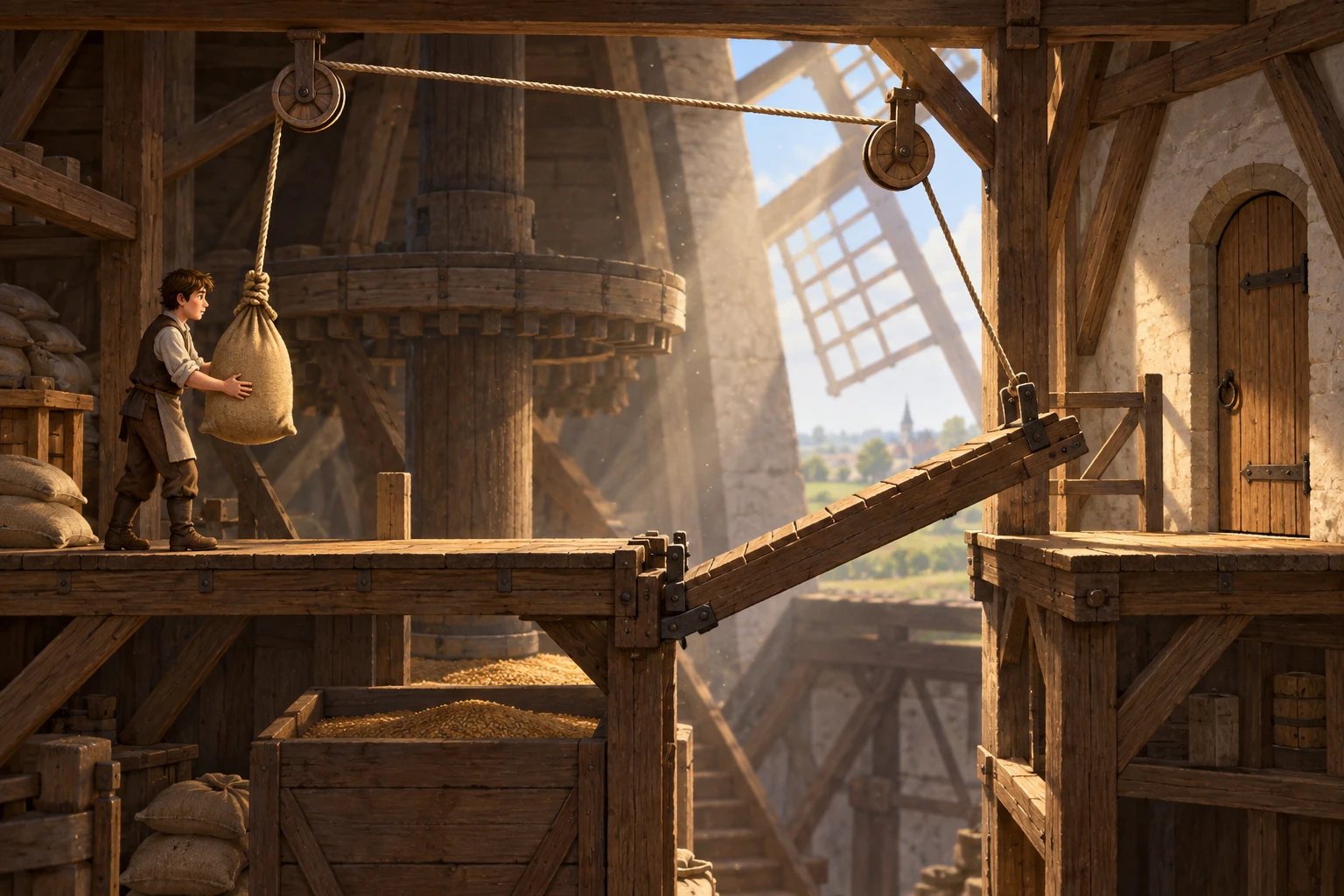
Illustrate an original side-view game puzzle inside a working windmill. One young mill worker stands beside a suspended grain sack; a rope runs from the sack over two exposed pulleys to a wooden footbridge that can rise across a narrow gap. Show the moment just before the worker releases the sack, with the rope visibly taut and the bridge partially lifted. Arrange the sack, pulley path, gap, and destination door so a viewer can infer the intended action without arrows or interface graphics. Use a readable silhouette for every interactive object, quieter detail on the surrounding beams and grain bins, and a warm shaft of daylight that picks out the mechanism. Maintain believable weight, rope tension, and hinge geometry. This is a polished environment illustration for a game scene, with no map overlay, text, symbols, logos, or watermarks.

COMPOSITION
Side view, one worker beside suspended sack; trace one taut rope over two exposed pulleys to partially raised bridge across gap and destination door. Show mechanically coherent path without arrows.

STYLE GUIDE
1. Shape & line
Keep interactive silhouettes distinct and connect sack, two pulleys and hinged bridge with one continuous taut rope.

2. Color & light
Use a warm daylight shaft to highlight the mechanism against quieter mill beams.

3. Texture & material
Render wood, rope fibers and grain sacks with restrained painterly game-environment detail.

4. Composition
Make the sack-to-pulley-to-bridge cause and effect readable in one side-view scene with one worker.

PRIORITY
Preserve the requested identity, count, action, composition and output settings. Apply the style rules within those constraints; a style reference must not replace the subject or layout. Within the style: Preserve the distinctive construction and medium first, readable spatial hierarchy second, subtle surface details third.

AVOID
Avoid extra subjects, inconsistent repeated geometry, hidden key details, crowded overlaps, unwanted text and watermarks.

OUTPUT
One finished landscape image, aspect ratio 3:2. No lettering, captions, dimensions, unrelated logos, watermark, border or interface.

SELF-CHECK
Check each style rule against the finished image: visible shape construction, color and light, material treatment, and composition. Preserve the exact subject count and scene requirements.
Model information comes from image provenance. The same prompt may produce a different result.