Text to imagePortraitStyle guide
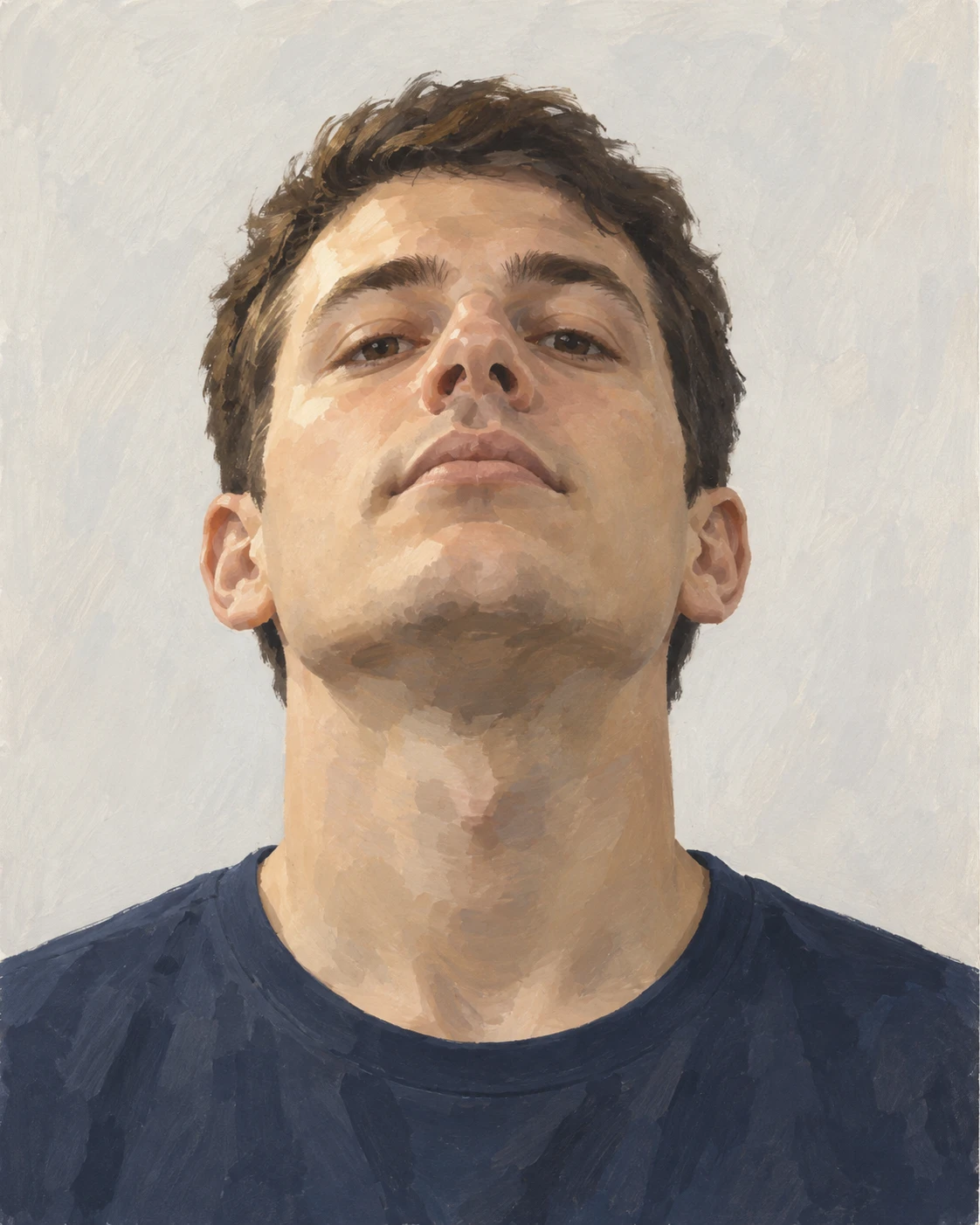
Adult with a Raised Chin · Underside Foreshortening
Show the depth of a backward head tilt through shortened frontal features and visible nose and chin undersides.
Adult with a Raised Chin · Underside Foreshortening
- Shape & line
- Construct the backward tilt by shortening the visible frontal distance from the nose base to the chin and exposing the planes beneath the nose and jaw. Draw the nostril openings as shallow, paired dark shapes on the nose underside, and let the rounded chin overlap the upper neck without stretching the mouth into a wide arc.
- Color & light
- Place a broad soft light above image-left: brighten the forehead and image-left cheek, then use a connected muted shadow beneath the nose and chin to separate their undersides from the frontal skin. Keep enough reflected light in the chin shadow for its rounded volume to remain visible.
- Texture & material
- Paint skin with matte, overlapping gouache patches that follow the forehead, cheek, and jaw planes; soften their joins while retaining a few broad brush edges. Use compact darker strokes for the hair and a flatter paint field for the shirt so surface detail does not obscure the head tilt.
- Composition
- Keep the face centered over level shoulders against a quiet pale background, with the entire chin-to-neck junction inside the crop. Leave visible space between the jaw corners and the shirt neckline so the exposed underside reads as a distinct plane rather than merging into the clothing.
Priority
Prioritize a convincing backward head tilt through visible underside planes and shortened frontal proportions.
What to avoid & what to check
Avoid an extreme nostril view, an elongated lower face, or a chin shadow that erases the neck connection.
Check that the shoulders remain level while the nose underside and overlapping chin clearly establish the head tilt.
Exact prompt for this example
SUBJECT
One adult with short hair and a plain crew-neck shirt, facing the viewer with the head tilted gently backward and the chin raised. Keep the shoulders level and the mouth relaxed; the tilt belongs to the head rather than the whole torso.

COMPOSITION
A centered head-and-shoulders portrait viewed from the adult's shoulder height, with both ears visible and generous space above the hair. Make the exposed nose underside, chin underside, and connection to the neck clearly readable.

STYLE GUIDE
1. Shape & line
Construct the backward tilt by shortening the visible frontal distance from the nose base to the chin and exposing the planes beneath the nose and jaw. Draw the nostril openings as shallow, paired dark shapes on the nose underside, and let the rounded chin overlap the upper neck without stretching the mouth into a wide arc.

2. Color & light
Place a broad soft light above image-left: brighten the forehead and image-left cheek, then use a connected muted shadow beneath the nose and chin to separate their undersides from the frontal skin. Keep enough reflected light in the chin shadow for its rounded volume to remain visible.

3. Texture & material
Paint skin with matte, overlapping gouache patches that follow the forehead, cheek, and jaw planes; soften their joins while retaining a few broad brush edges. Use compact darker strokes for the hair and a flatter paint field for the shirt so surface detail does not obscure the head tilt.

4. Composition
Keep the face centered over level shoulders against a quiet pale background, with the entire chin-to-neck junction inside the crop. Leave visible space between the jaw corners and the shirt neckline so the exposed underside reads as a distinct plane rather than merging into the clothing.

PRIORITY
Preserve the requested identity, count, action, composition and output settings. Apply the style rules within those constraints; a style reference must not replace the subject or layout. Within the style: Prioritize a convincing backward head tilt through visible underside planes and shortened frontal proportions.

AVOID
Avoid an extreme nostril view, an elongated lower face, or a chin shadow that erases the neck connection.

OUTPUT
One portrait-format 4:5 image, rendered as a restrained opaque-gouache study on paper, with no lettering, captions, logos, or watermarks.

SELF-CHECK
Check that the shoulders remain level while the nose underside and overlapping chin clearly establish the head tilt.
Model information comes from image provenance. The same prompt may produce a different result.