Text to imagePortraitStyle guide
Short-Haired Adult · Neck Form Through Chin Shadow
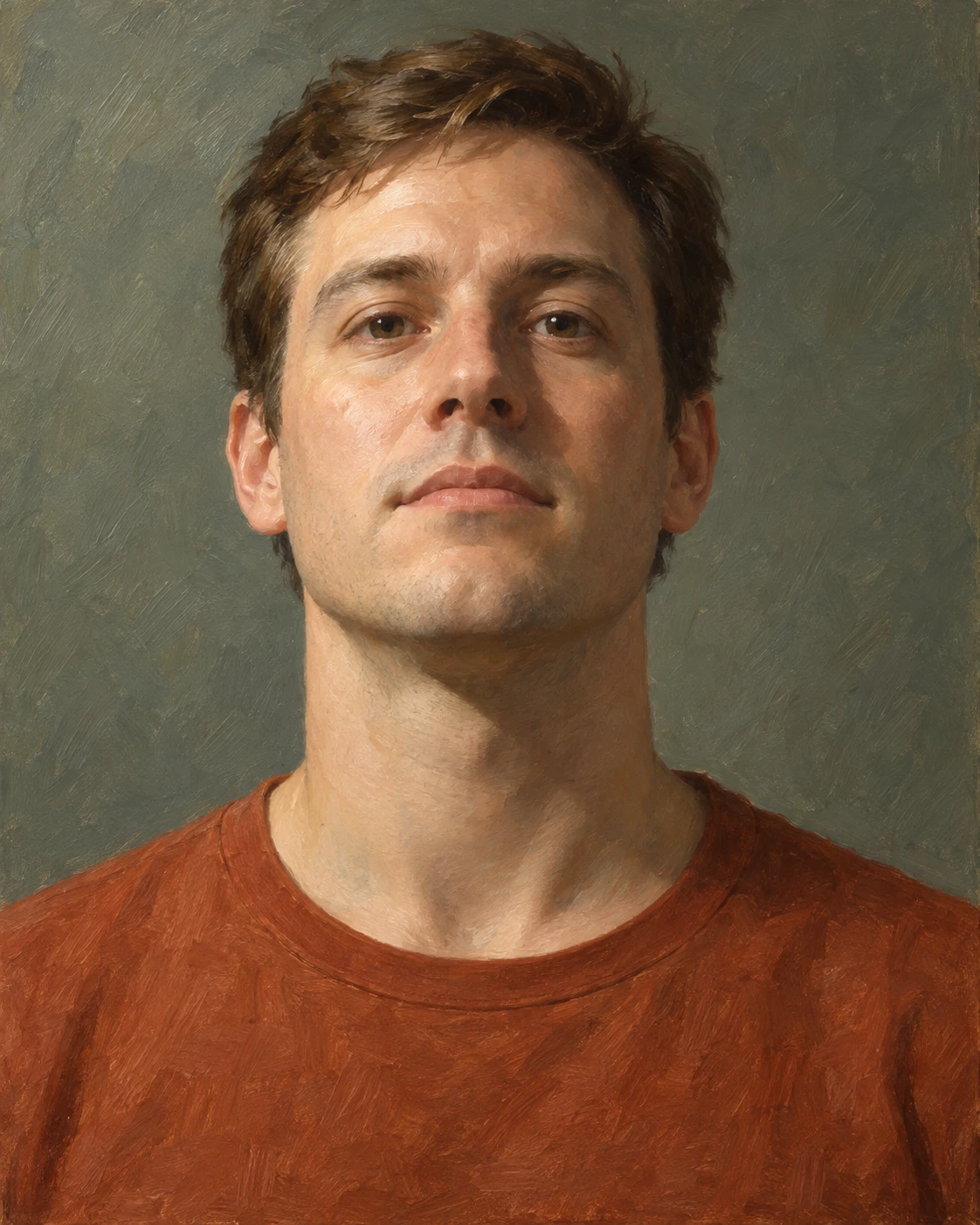
An oil portrait using the edge and direction of the chin’s cast shadow to reveal the depth between face and neck.
Short-Haired Adult · Neck Form Through Chin Shadow
- Shape & line
- Build the jaw as a rounded form with a clear underside, and let the neck widen gently toward the shoulders. Describe the chin edge with a restrained change of value instead of outlining the entire jaw in a dark line.
- Color & light
- Place a broad key light above and to image-left. Illuminate the image-left forehead, cheek, and upper chin; cast the chin’s shadow downward toward image-right across the upper neck. Keep this shadow darker than the surrounding neck, with its edge clearer just beneath the chin and softer farther down the neck.
- Texture & material
- Render skin with thin, blended oil-paint layers and a few broad, visible brush marks on the cheeks. Keep the shadowed neck matte and softly varied, while giving the shirt a denser, softly brushed surface that remains subordinate to the skin.
- Composition
- Place the shirt neckline below the full chin-shadow shape, leaving an uninterrupted area of visible neck between jaw and clothing. Use a muted gray-green background and quiet shoulder shapes to direct attention to the illuminated chin and the shadow crossing the neck.
Priority
Make the chin’s cast shadow the clearest cue separating the jaw from the neck.
What to avoid & what to check
Avoid a uniform dark stripe beneath the jaw or a shadow disconnected from the chin.
Confirm that the upper-left light produces a connected chin shadow extending toward image-right across the visible neck.
Exact prompt for this example
SUBJECT
One adult with short brown hair, a relaxed closed mouth, and a plain rust-colored crewneck shirt. The face looks forward with the chin slightly raised, exposing enough neck to clearly show the shadow cast by the chin.

COMPOSITION
Use an eye-level, frontal head-and-shoulders view in a vertical frame. Center the head with modest space above the hair; include the entire exposed neck and shirt neckline. Keep the background plain so the chin-to-neck relationship is immediately readable.

STYLE GUIDE
1. Shape & line
Build the jaw as a rounded form with a clear underside, and let the neck widen gently toward the shoulders. Describe the chin edge with a restrained change of value instead of outlining the entire jaw in a dark line.

2. Color & light
Place a broad key light above and to image-left. Illuminate the image-left forehead, cheek, and upper chin; cast the chin’s shadow downward toward image-right across the upper neck. Keep this shadow darker than the surrounding neck, with its edge clearer just beneath the chin and softer farther down the neck.

3. Texture & material
Render skin with thin, blended oil-paint layers and a few broad, visible brush marks on the cheeks. Keep the shadowed neck matte and softly varied, while giving the shirt a denser, softly brushed surface that remains subordinate to the skin.

4. Composition
Place the shirt neckline below the full chin-shadow shape, leaving an uninterrupted area of visible neck between jaw and clothing. Use a muted gray-green background and quiet shoulder shapes to direct attention to the illuminated chin and the shadow crossing the neck.

PRIORITY
Preserve the requested identity, count, action, composition and output settings. Apply the style rules within those constraints; a style reference must not replace the subject or layout. Within the style: Make the chin’s cast shadow the clearest cue separating the jaw from the neck.

AVOID
Avoid a uniform dark stripe beneath the jaw or a shadow disconnected from the chin.

OUTPUT
Create one vertical 4:5 oil-painted portrait image, with no lettering, captions, logos, or watermark.

SELF-CHECK
Confirm that the upper-left light produces a connected chin shadow extending toward image-right across the visible neck.
Model information comes from image provenance. The same prompt may produce a different result.