Text to imageArt stylesStyle guide
One Red Pepper · Transparent Oil Glazing
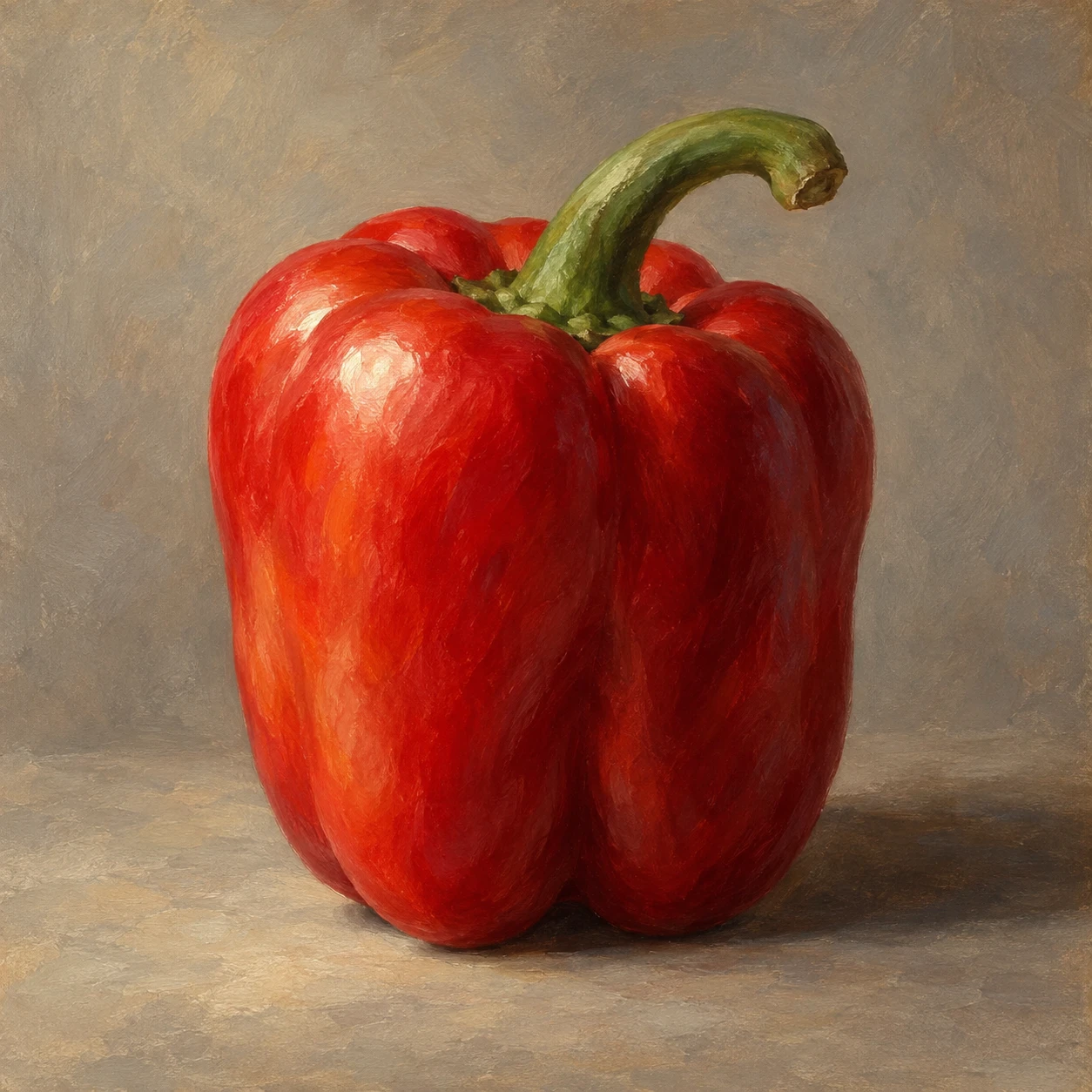
Build a pepper’s rounded volume with thin red color layers that reveal a light underpainting and deepen into transparent shadows.
One Red Pepper · Transparent Oil Glazing
- Shape & line
- Construct the pepper from three broad, rounded lobes joined by shallow grooves, and bend the stem toward image-right. Define the silhouette with clean painted edges while letting internal divisions emerge from value changes rather than dark outlines.
- Color & light
- Let a pale warm underpainting shine through translucent scarlet layers on the image-left lobes. Deepen the image-right side and recessed grooves with clear crimson and burgundy layers; place the key light at upper image-left, a restrained cream highlight on the left shoulder, and a soft cast shadow extending rightward from the base.
- Texture & material
- Render the red body with smooth, thin oil glazes whose overlapping color remains luminous and whose underlying brushwork is faintly visible. Keep the darkest passages translucent rather than chalky, reserve slightly thicker opaque paint for the small highlight, and give the green stem a quieter matte finish.
- Composition
- Keep the background and supporting surface broad and subdued, with their boundary softly merged behind the pepper. Leave open space above the curved stem and around the silhouette, and concentrate the strongest color depth and edge clarity on the pepper so the glazed volume reads immediately.
Priority
Prioritize luminous red layers over a visible light underpainting.
What to avoid & what to check
Avoid uniformly opaque red paint, heavy impasto, and black contour lines.
Check that the left lobes glow through thin color and the right shadows remain deep but translucent.
Exact prompt for this example
SUBJECT
One whole red bell pepper with one attached curved green stem, standing upright on a plain warm-gray surface; its three rounded lobes belong to one continuous body.

COMPOSITION
Use a close three-quarter view in a square frame, with the pepper slightly below center and occupying roughly two-thirds of the image height. Show the stem, the full body, and a small area of surface around its base.

STYLE GUIDE
1. Shape & line
Construct the pepper from three broad, rounded lobes joined by shallow grooves, and bend the stem toward image-right. Define the silhouette with clean painted edges while letting internal divisions emerge from value changes rather than dark outlines.

2. Color & light
Let a pale warm underpainting shine through translucent scarlet layers on the image-left lobes. Deepen the image-right side and recessed grooves with clear crimson and burgundy layers; place the key light at upper image-left, a restrained cream highlight on the left shoulder, and a soft cast shadow extending rightward from the base.

3. Texture & material
Render the red body with smooth, thin oil glazes whose overlapping color remains luminous and whose underlying brushwork is faintly visible. Keep the darkest passages translucent rather than chalky, reserve slightly thicker opaque paint for the small highlight, and give the green stem a quieter matte finish.

4. Composition
Keep the background and supporting surface broad and subdued, with their boundary softly merged behind the pepper. Leave open space above the curved stem and around the silhouette, and concentrate the strongest color depth and edge clarity on the pepper so the glazed volume reads immediately.

PRIORITY
Preserve the requested identity, count, action, composition and output settings. Apply the style rules within those constraints; a style reference must not replace the subject or layout. Within the style: Prioritize luminous red layers over a visible light underpainting.

AVOID
Avoid uniformly opaque red paint, heavy impasto, and black contour lines.

OUTPUT
One square image showing a finished oil painting, with no text, labels, signature, border, or watermark.

SELF-CHECK
Check that the left lobes glow through thin color and the right shadows remain deep but translucent.
Model information comes from image provenance. The same prompt may produce a different result.