Text to imageProductStyle guide
One Blue Storage Box · Bevel-Light Mapping
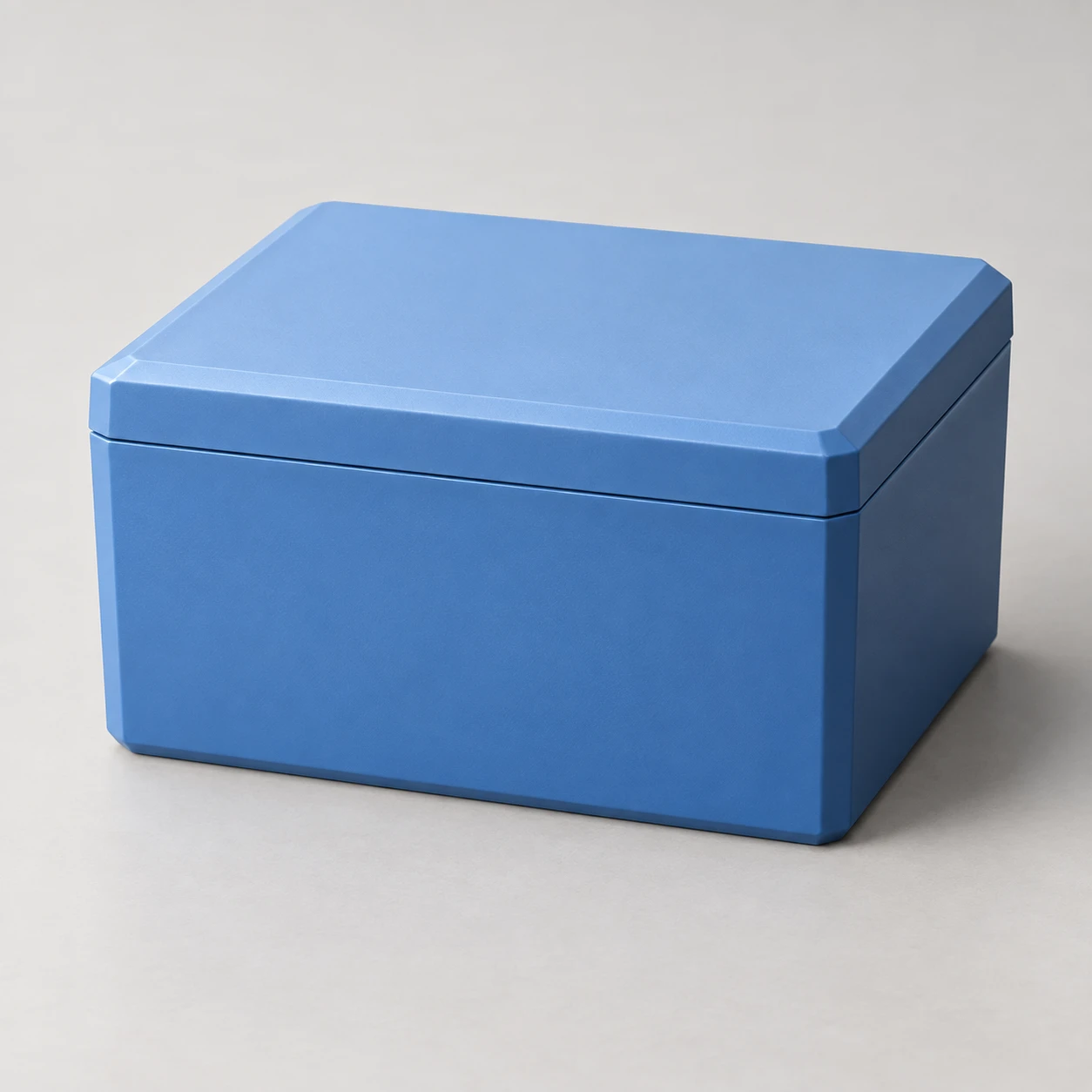
A product image using brightness changes across narrow bevels to reveal the thickness and volume of a matte storage box.
One Blue Storage Box · Bevel-Light Mapping
- Shape & line
- Build the box from broad flat planes joined by narrow, flat bevel strips; show each bevel with two readable boundaries, and keep the lid seam distinct from these strips so the edge treatment reads as a change in surface angle.
- Color & light
- Place a large soft key light above image-left. Make the lid light blue, the front medium blue and the image-right side darker blue; give the upper image-left bevel a slim pale highlight, while bevels turning away from the light become progressively dimmer.
- Texture & material
- Render matte molded plastic with smooth, restrained surface shading and softly bounded highlights. Keep the bevel highlights narrower than the broad face transitions, preserving their planar shape without making the edges look metallic or glossy.
- Composition
- Keep the entire box and its bevels sharply readable at the same viewing distance. Leave clear background around every outer edge and place a soft cast shadow toward image-right and slightly downward, darkest where the base touches the tabletop.
Priority
Prioritize readable bevel planes and a consistent image-left light direction.
What to avoid & what to check
Avoid glowing outlines, inflated rounded edges and mirrorlike reflections.
Check that narrow bevels change brightness with their orientation and remain separate from the lid seam.
Exact prompt for this example
SUBJECT
One closed, unbranded blue plastic storage box with a rectangular body, gently beveled edges and a fitted lid. The lid sits directly on the body, separated by one narrow continuous seam.

COMPOSITION
Use an elevated three-quarter view showing the lid, front and image-right side. Center the complete box on a pale warm-gray tabletop with generous empty space; keep the front edge nearly horizontal.

STYLE GUIDE
1. Shape & line
Build the box from broad flat planes joined by narrow, flat bevel strips; show each bevel with two readable boundaries, and keep the lid seam distinct from these strips so the edge treatment reads as a change in surface angle.

2. Color & light
Place a large soft key light above image-left. Make the lid light blue, the front medium blue and the image-right side darker blue; give the upper image-left bevel a slim pale highlight, while bevels turning away from the light become progressively dimmer.

3. Texture & material
Render matte molded plastic with smooth, restrained surface shading and softly bounded highlights. Keep the bevel highlights narrower than the broad face transitions, preserving their planar shape without making the edges look metallic or glossy.

4. Composition
Keep the entire box and its bevels sharply readable at the same viewing distance. Leave clear background around every outer edge and place a soft cast shadow toward image-right and slightly downward, darkest where the base touches the tabletop.

PRIORITY
Preserve the requested identity, count, action, composition and output settings. Apply the style rules within those constraints; a style reference must not replace the subject or layout. Within the style: Prioritize readable bevel planes and a consistent image-left light direction.

AVOID
Avoid glowing outlines, inflated rounded edges and mirrorlike reflections.

OUTPUT
Create one square photorealistic studio product image, with no text, logos, labels or watermark.

SELF-CHECK
Check that narrow bevels change brightness with their orientation and remain separate from the lid seam.
Model information comes from image provenance. The same prompt may produce a different result.