Text to imageArt stylesStyle guide
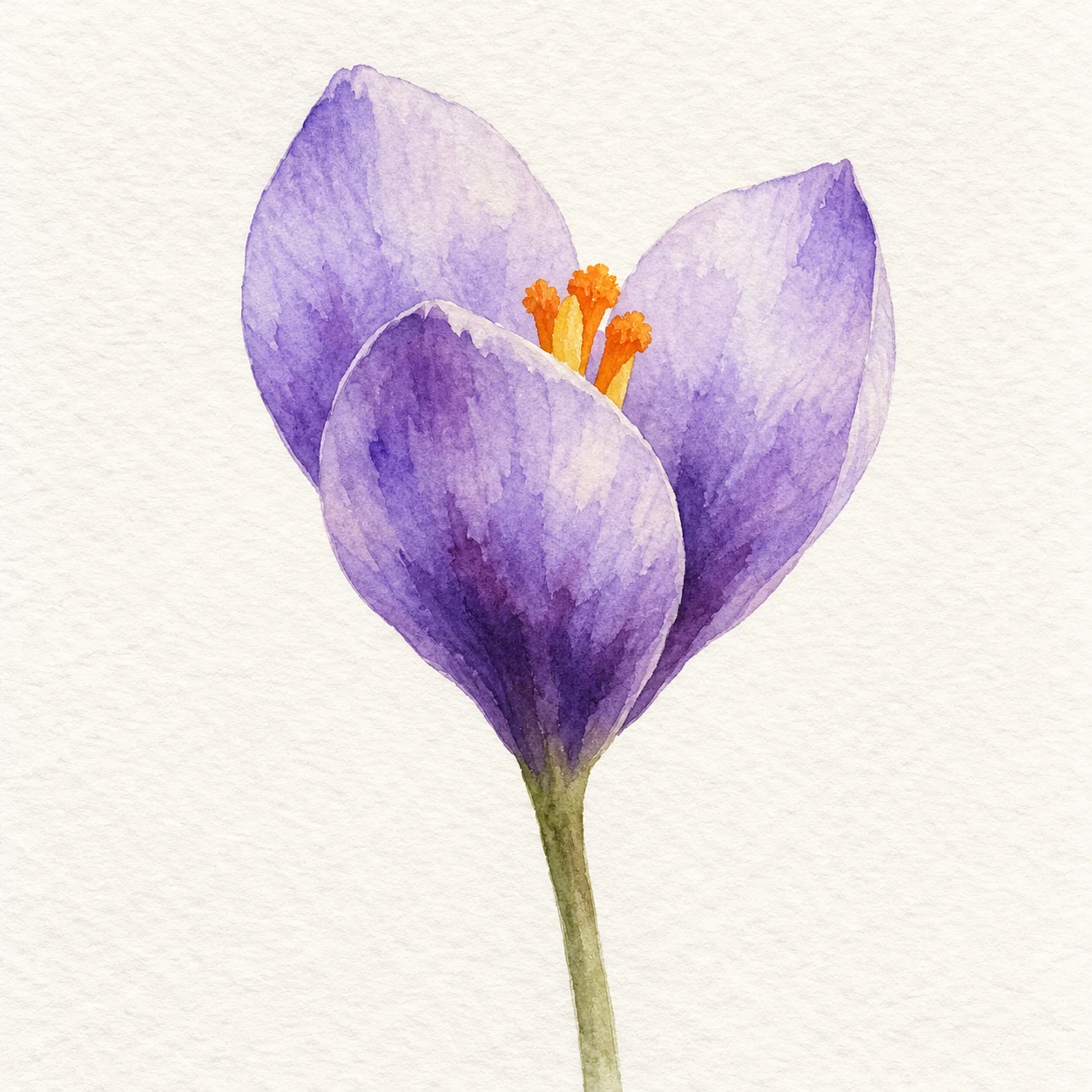
One Violet Crocus · Wet-on-Wet Watercolor Diffusion
Violet pigment spreads softly within damp petals, contrasting readable outer silhouettes with diffused interior color boundaries.
One Violet Crocus · Wet-on-Wet Watercolor Diffusion
- Shape & line
- Build each petal from a broad curved wash silhouette that narrows into its base; let the front petal overlap the lower portions of the two rear petals. Keep the exposed tips and overlap boundaries readable without outlining the flower in ink.
- Color & light
- Lay pale lavender into damp petal shapes, then introduce deeper violet at their bases while the washes remain wet. Let violet feather upward into lavender in irregular soft transitions, preserving pale paper-lit areas near the tips; add the orange stamens after the surrounding wash has dried.
- Texture & material
- Show transparent pigment settling unevenly into lightly textured watercolor paper. Make the interior diffusion appear as soft branching fringes and pooled color near petal bases, with paper grain visible through lighter washes; keep these marks inside the flower rather than spreading a uniform texture across the background.
- Composition
- Keep the blossom large enough for its internal wash transitions to be visible, with the pale rear petals framing the darker front petal base. Place the small orange stamen cluster in the opening between them, and use the thin stem and untouched surrounding paper to keep attention on the diffused violet.
Priority
Prioritize soft pigment diffusion inside clearly readable petal shapes.
What to avoid & what to check
Avoid airbrushed gradients, opaque paint buildup, and hard interior color stripes.
Check that violet visibly feathers into lavender while the petal tips and overlaps remain distinct.
Exact prompt for this example
SUBJECT
Show one violet crocus flower with three overlapping cup-shaped petals, a small cluster of orange stamens inside the cup, and one slender green stem connecting directly to the flower base.

COMPOSITION
Use a close, front three-quarter view with the flower cup above the center and the stem descending toward the lower edge. Separate the three petal tips clearly against bare paper, and leave generous space around the blossom.

STYLE GUIDE
1. Shape & line
Build each petal from a broad curved wash silhouette that narrows into its base; let the front petal overlap the lower portions of the two rear petals. Keep the exposed tips and overlap boundaries readable without outlining the flower in ink.

2. Color & light
Lay pale lavender into damp petal shapes, then introduce deeper violet at their bases while the washes remain wet. Let violet feather upward into lavender in irregular soft transitions, preserving pale paper-lit areas near the tips; add the orange stamens after the surrounding wash has dried.

3. Texture & material
Show transparent pigment settling unevenly into lightly textured watercolor paper. Make the interior diffusion appear as soft branching fringes and pooled color near petal bases, with paper grain visible through lighter washes; keep these marks inside the flower rather than spreading a uniform texture across the background.

4. Composition
Keep the blossom large enough for its internal wash transitions to be visible, with the pale rear petals framing the darker front petal base. Place the small orange stamen cluster in the opening between them, and use the thin stem and untouched surrounding paper to keep attention on the diffused violet.

PRIORITY
Preserve the requested identity, count, action, composition and output settings. Apply the style rules within those constraints; a style reference must not replace the subject or layout. Within the style: Prioritize soft pigment diffusion inside clearly readable petal shapes.

AVOID
Avoid airbrushed gradients, opaque paint buildup, and hard interior color stripes.

OUTPUT
Create one square image of a watercolor painting on off-white paper, with no lettering, labels, signature, or watermark.

SELF-CHECK
Check that violet visibly feathers into lavender while the petal tips and overlaps remain distinct.
Model information comes from image provenance. The same prompt may produce a different result.