Text to imageCharacterStyle guide
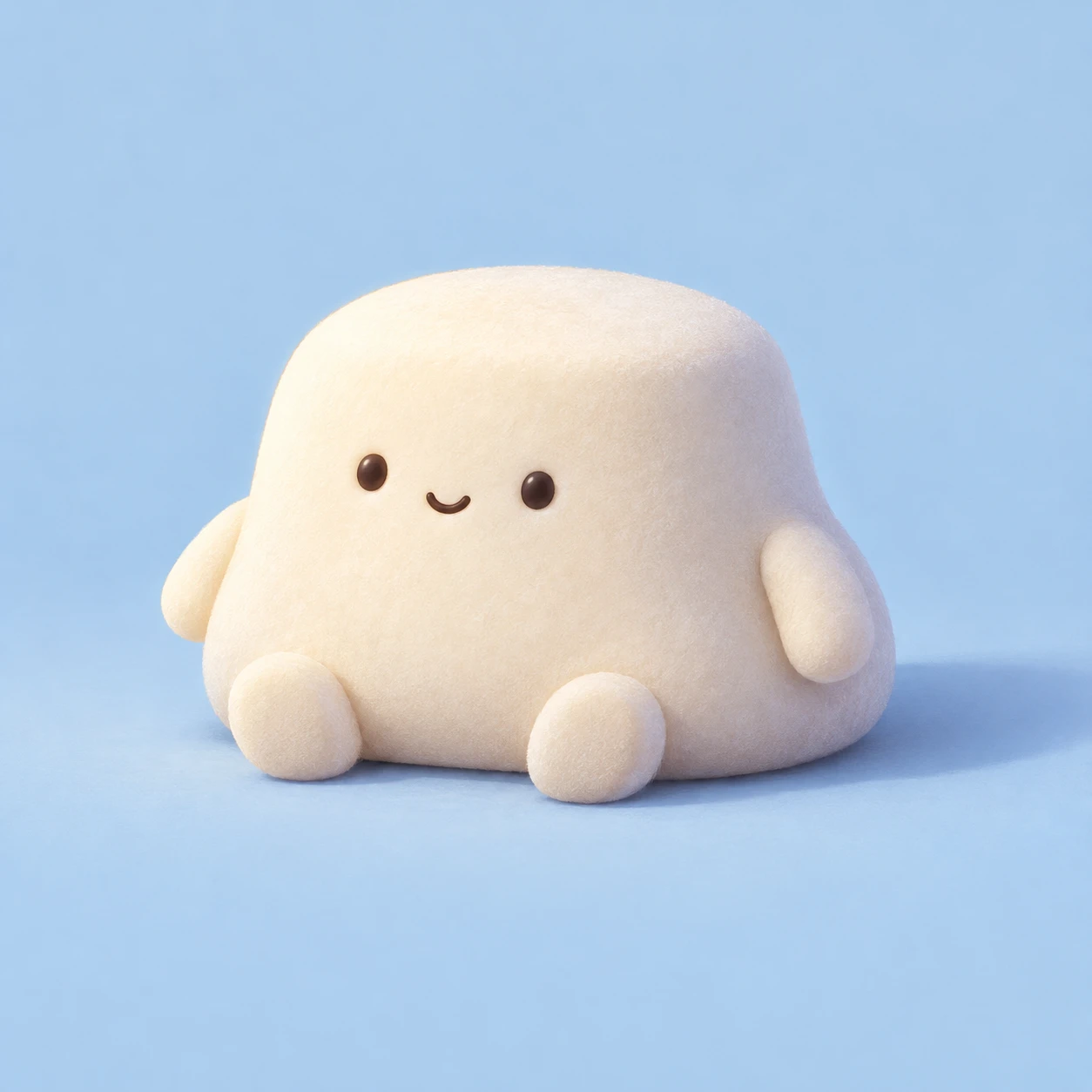
Seated Marshmallow Friend · Weight-Driven Squash
Flatten the base against the floor and broaden the sides to show the weight of a soft character.
Seated Marshmallow Friend · Weight-Driven Squash
- Shape & line
- Draw the body as a rounded cushion with a gently domed top, outward-bulging lower sides and a broad flattened base meeting the floor. Make the seated body visibly wider than it is tall, and connect the bulges to the base with smooth curves so the squash reads as displaced soft volume.
- Color & light
- Use warm ivory for the body against a muted pale blue floor and background. Light from the upper image-left, leaving a soft lavender-gray shadow on the image-right side; place the darkest narrow shadow directly beneath the flattened base, with a softer cast shadow extending toward image-right.
- Texture & material
- Render the marshmallow with a matte, softly powdery surface using restrained fine grain and broad blended shading. Keep the compressed lower edge smooth and gently rounded, and use diffuse highlights across the upper dome to preserve a yielding, pillowy material.
- Composition
- Place the floor contact below the center of the image and keep the face on the upper half of the body. Separate the small feet from each other with a clear background gap, and keep the arms outside the side contours so the broad compressed silhouette remains readable at thumbnail size.
Priority
Make the broad floor contact and sideways bulging the clearest signs of weight.
What to avoid & what to check
Avoid a hovering base, rigid cylindrical sides or glossy plastic highlights.
Check that the flattened base meets its contact shadow and the widened body still looks soft.
Exact prompt for this example
SUBJECT
One original marshmallow character with two small eyes, a tiny smile, two short arms and two stubby feet, sitting directly on a flat floor. Its soft body bears its weight through a visibly compressed base; the feet extend forward and the arms rest beside the body.

COMPOSITION
Show the entire character from a low three-quarter view, centered with generous empty space. Reveal the front and image-right side of the body, including the flattened floor contact and both forward-pointing feet.

STYLE GUIDE
1. Shape & line
Draw the body as a rounded cushion with a gently domed top, outward-bulging lower sides and a broad flattened base meeting the floor. Make the seated body visibly wider than it is tall, and connect the bulges to the base with smooth curves so the squash reads as displaced soft volume.

2. Color & light
Use warm ivory for the body against a muted pale blue floor and background. Light from the upper image-left, leaving a soft lavender-gray shadow on the image-right side; place the darkest narrow shadow directly beneath the flattened base, with a softer cast shadow extending toward image-right.

3. Texture & material
Render the marshmallow with a matte, softly powdery surface using restrained fine grain and broad blended shading. Keep the compressed lower edge smooth and gently rounded, and use diffuse highlights across the upper dome to preserve a yielding, pillowy material.

4. Composition
Place the floor contact below the center of the image and keep the face on the upper half of the body. Separate the small feet from each other with a clear background gap, and keep the arms outside the side contours so the broad compressed silhouette remains readable at thumbnail size.

PRIORITY
Preserve the requested identity, count, action, composition and output settings. Apply the style rules within those constraints; a style reference must not replace the subject or layout. Within the style: Make the broad floor contact and sideways bulging the clearest signs of weight.

AVOID
Avoid a hovering base, rigid cylindrical sides or glossy plastic highlights.

OUTPUT
Create one square image as a clean painted character illustration, with no lettering, captions or watermark.

SELF-CHECK
Check that the flattened base meets its contact shadow and the widened body still looks soft.
Model information comes from image provenance. The same prompt may produce a different result.