Text to imageSpace & architectureStyle guide
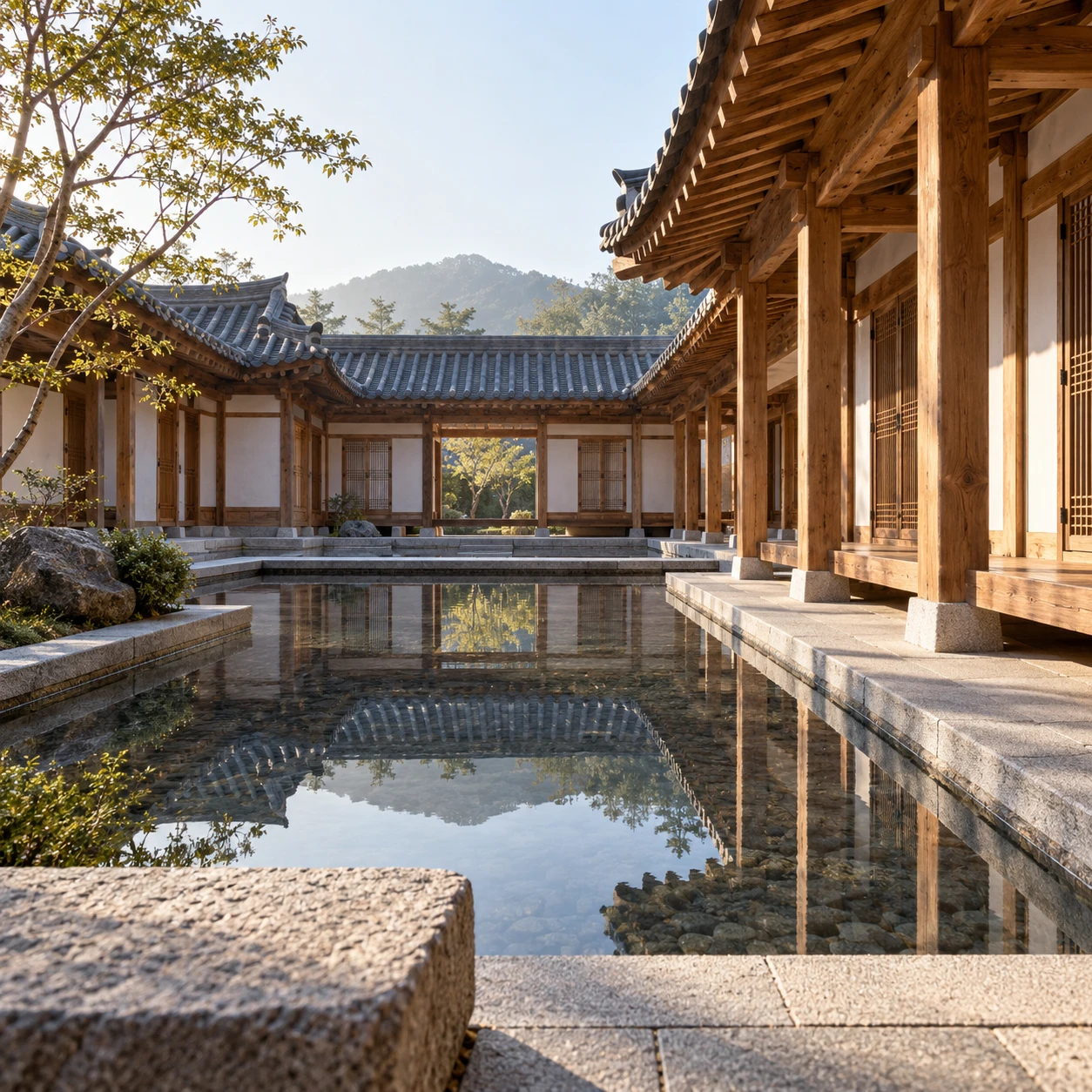
Contemporary hanok courtyard · Layered depth
Contemporary hanok courtyard with distinct foreground, middle ground and background layers.
Remix this referenceContemporary hanok courtyard · Layered depth
- Shape & line
- Keep timber beams, roof lines and columns in precise coherent architectural perspective.
- Color & light
- Use natural morning light with coherent long shadows and subdued warm timber tones.
- Texture & material
- Distinguish timber grain, stone paving and shallow water reflections with photographic material detail.
- Composition
- Build clear foreground pool-edge, middle courtyard and distant building layers without blocked circulation.
Priority
Preserve the distinctive construction and medium first, readable spatial hierarchy second, subtle surface details third.
What to avoid & what to check
Avoid extra subjects, inconsistent repeated geometry, hidden key details, crowded overlaps, unwanted text and watermarks.
Check each style rule against the finished image: visible shape construction, color and light, material treatment, and composition. Preserve the exact subject count and scene requirements.
Exact prompt for this example
SUBJECT
Create an original reference image of a contemporary hanok courtyard with timber beams and a shallow reflecting pool, architectural photography, precise perspective and morning light. Composition: distinct foreground, middle ground and background layers. Preserve the specified medium, mark-making and visual language; adapt the composition naturally to the subject. No watermark, logos or extra lettering. Square image.

COMPOSITION
Contemporary hanok courtyard with foreground stone and pool edge, middle reflecting pool and timber colonnade, distant courtyard wing. Straight architecture and morning shadows.

STYLE GUIDE
1. Shape & line
Keep timber beams, roof lines and columns in precise coherent architectural perspective.

2. Color & light
Use natural morning light with coherent long shadows and subdued warm timber tones.

3. Texture & material
Distinguish timber grain, stone paving and shallow water reflections with photographic material detail.

4. Composition
Build clear foreground pool-edge, middle courtyard and distant building layers without blocked circulation.

PRIORITY
Preserve the requested identity, count, action, composition and output settings. Apply the style rules within those constraints; a style reference must not replace the subject or layout. Within the style: Preserve the distinctive construction and medium first, readable spatial hierarchy second, subtle surface details third.

AVOID
Avoid extra subjects, inconsistent repeated geometry, hidden key details, crowded overlaps, unwanted text and watermarks.

OUTPUT
One finished square image. Fully opaque background across the entire canvas, no transparent pixels. No lettering, logo, watermark, interface or caption.

SELF-CHECK
Check each style rule against the finished image: visible shape construction, color and light, material treatment, and composition. Preserve the exact subject count and scene requirements.
Model information comes from image provenance. The same prompt may produce a different result.