Text to imageArt stylesStyle guide
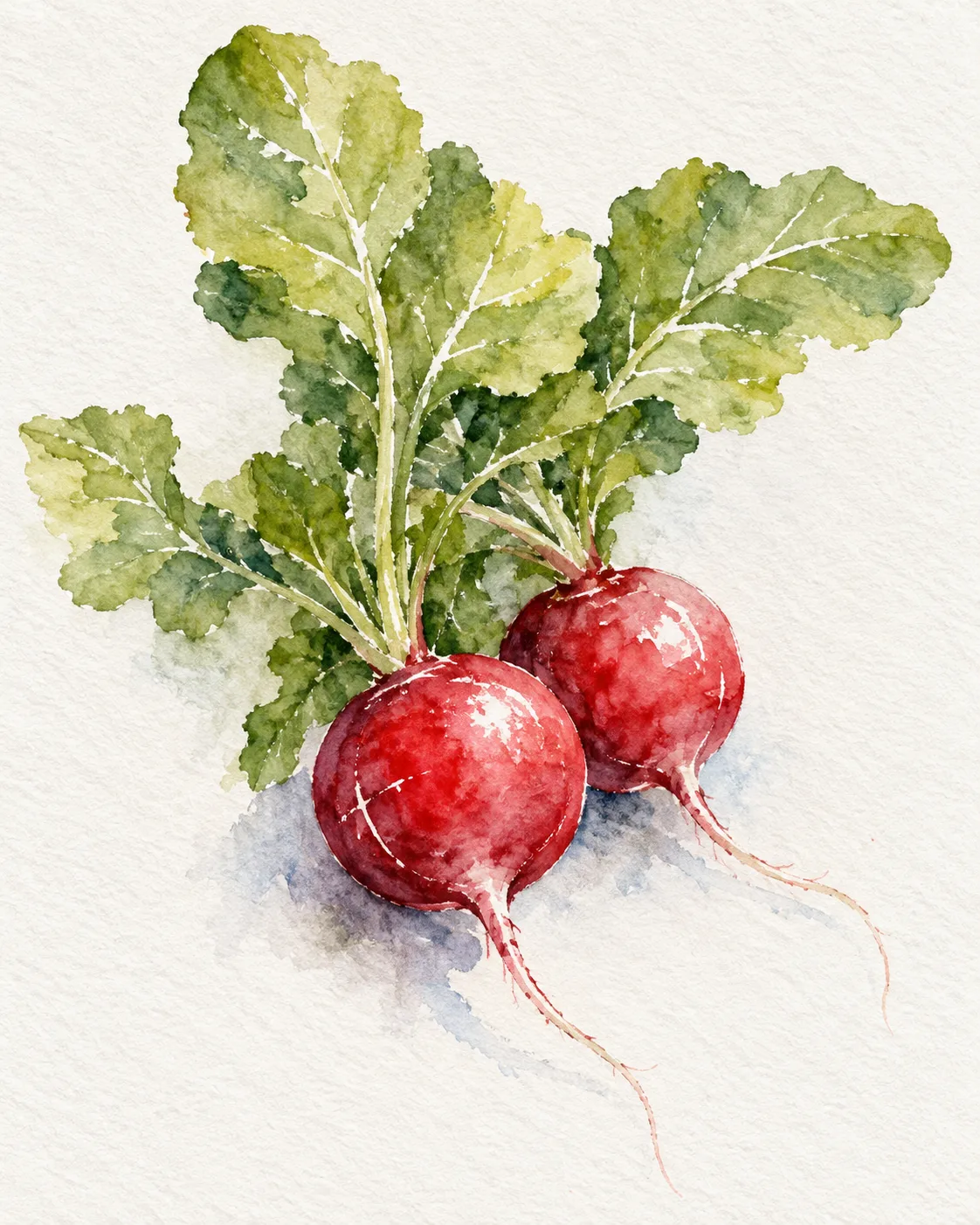
Two Radishes · Wax-Resist Watercolor
A small still life using transparent watercolor to reveal leaf veins and root highlights reserved with white wax.
Two Radishes · Wax-Resist Watercolor
- Shape & line
- Build the bulbs from rounded wash shapes and the leaves from broad tapered strokes. Reserve broken white wax lines along selected leaf veins and short curved marks on the lit sides of the bulbs; let these marks describe the forms without enclosing every edge.
- Color & light
- Float transparent crimson over the bulbs and muted yellow-green over the leaves, pooling deeper red and olive in their lower folds. Suggest soft light from the upper left through pale exposed paper and a diluted cool shadow beneath the cluster; keep the reserved wax marks paper-white.
- Texture & material
- Show the tooth of cold-pressed watercolor paper through translucent washes. Make the wax reservations slightly grainy and interrupted, with pigment collecting beside them; allow a few soft wash blooms in the leaves while keeping the main bulb shapes clear.
- Composition
- Arrange the two bulbs as an offset pair beneath a loose fan of leaves. Concentrate the brightest reserved marks where bulb and foliage meet, then reduce their frequency toward the outer leaves so the eye moves from the roots upward into open paper.
Priority
Prioritize a readable pair of radishes and visible white wax reservations beneath transparent color.
What to avoid & what to check
Avoid continuous white outlines, opaque paint coverage, and glossy digital surfaces.
Check that both bulbs remain distinct and the white marks look like resisted pigment on textured paper.
Exact prompt for this example
SUBJECT
Exactly two red radishes with leafy tops and slender root tails rest on pale paper. One round bulb sits slightly in front of the other; their leaves overlap loosely above them, while both bulbs and root tails remain recognizable.

COMPOSITION
Use a gently elevated close view in a vertical frame. Place the bulbs below center and let the leafy tops spread diagonally upward, leaving generous unpainted paper around the small cluster.

STYLE GUIDE
1. Shape & line
Build the bulbs from rounded wash shapes and the leaves from broad tapered strokes. Reserve broken white wax lines along selected leaf veins and short curved marks on the lit sides of the bulbs; let these marks describe the forms without enclosing every edge.

2. Color & light
Float transparent crimson over the bulbs and muted yellow-green over the leaves, pooling deeper red and olive in their lower folds. Suggest soft light from the upper left through pale exposed paper and a diluted cool shadow beneath the cluster; keep the reserved wax marks paper-white.

3. Texture & material
Show the tooth of cold-pressed watercolor paper through translucent washes. Make the wax reservations slightly grainy and interrupted, with pigment collecting beside them; allow a few soft wash blooms in the leaves while keeping the main bulb shapes clear.

4. Composition
Arrange the two bulbs as an offset pair beneath a loose fan of leaves. Concentrate the brightest reserved marks where bulb and foliage meet, then reduce their frequency toward the outer leaves so the eye moves from the roots upward into open paper.

PRIORITY
Preserve the requested identity, count, action, composition and output settings. Apply the style rules within those constraints; a style reference must not replace the subject or layout. Within the style: Prioritize a readable pair of radishes and visible white wax reservations beneath transparent color.

AVOID
Avoid continuous white outlines, opaque paint coverage, and glossy digital surfaces.

OUTPUT
One finished watercolor image, portrait 4:5 aspect ratio, with no lettering, captions, signatures, or watermark.

SELF-CHECK
Check that both bulbs remain distinct and the white marks look like resisted pigment on textured paper.
Model information comes from image provenance. The same prompt may produce a different result.