Text to imageIllustrationStyle guide
Closed Padlock · Stippled Tone
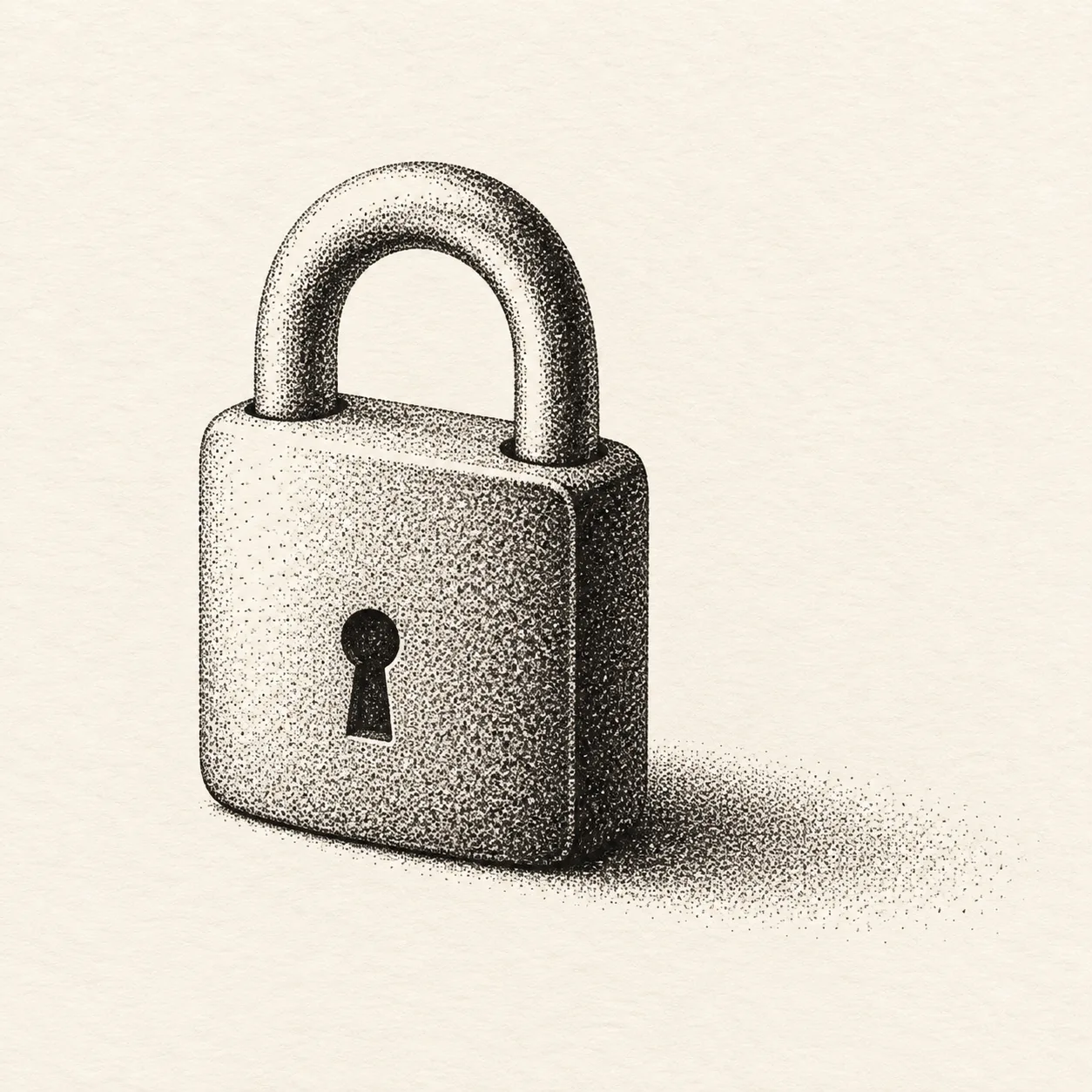
A pen illustration using dot density and open paper to describe a closed padlock’s rounded volume and cast shadow.
Closed Padlock · Stippled Tone
- Shape & line
- Draw the body and shackle with clean, gently rounded contours and restrained line weight. Keep the keyhole a simple dark opening, and separate the front from the right side with a fine seam that remains lighter than the outer silhouette.
- Color & light
- Use black ink on warm ivory paper, with light arriving from the upper left. Leave the upper-left surfaces mostly open, build a middle tone across the front, and reserve the darkest values for the right side, beneath the shackle, and the ground contact.
- Texture & material
- Build every shaded surface from small hand-placed dots, moving from widely spaced marks in light areas to close clusters in shadow. Let the dots follow the shackle’s curvature and the body’s rounded edges; preserve visible paper between marks except at the deepest contact shadow.
- Composition
- Keep the shackle opening clearly readable against untouched paper. Shape the cast shadow as a low, tapering mass that begins densely beneath the body and disperses into sparse dots toward its far edge, leaving the surrounding background clear.
Priority
Prioritize readable volume through changing dot density and preserved paper highlights.
What to avoid & what to check
Avoid crosshatching, smooth digital gradients, and glossy photographic reflections.
Check that the closed shackle reads clearly and the dotted shading follows one consistent light direction.
Exact prompt for this example
SUBJECT
One closed padlock with a rounded rectangular body, a curved shackle seated in both upper corners, and one small keyhole on its front. The padlock stands upright on a plain surface, with its cast shadow extending to the lower right.

COMPOSITION
Use a close three-quarter view that reveals the front, a narrow right side, and the full shackle opening. Place the padlock slightly left of center, occupying roughly half the image height, with generous paper space around its silhouette and room for the shadow.

STYLE GUIDE
1. Shape & line
Draw the body and shackle with clean, gently rounded contours and restrained line weight. Keep the keyhole a simple dark opening, and separate the front from the right side with a fine seam that remains lighter than the outer silhouette.

2. Color & light
Use black ink on warm ivory paper, with light arriving from the upper left. Leave the upper-left surfaces mostly open, build a middle tone across the front, and reserve the darkest values for the right side, beneath the shackle, and the ground contact.

3. Texture & material
Build every shaded surface from small hand-placed dots, moving from widely spaced marks in light areas to close clusters in shadow. Let the dots follow the shackle’s curvature and the body’s rounded edges; preserve visible paper between marks except at the deepest contact shadow.

4. Composition
Keep the shackle opening clearly readable against untouched paper. Shape the cast shadow as a low, tapering mass that begins densely beneath the body and disperses into sparse dots toward its far edge, leaving the surrounding background clear.

PRIORITY
Preserve the requested identity, count, action, composition and output settings. Apply the style rules within those constraints; a style reference must not replace the subject or layout. Within the style: Prioritize readable volume through changing dot density and preserved paper highlights.

AVOID
Avoid crosshatching, smooth digital gradients, and glossy photographic reflections.

OUTPUT
Create one finished pen-and-ink illustration in a square aspect ratio, without lettering, labels, borders, or watermarks.

SELF-CHECK
Check that the closed shackle reads clearly and the dotted shading follows one consistent light direction.
Model information comes from image provenance. The same prompt may produce a different result.