Text to imageCharacterStyle guide
Sleeping Bat · Gravity-Aligned Drape
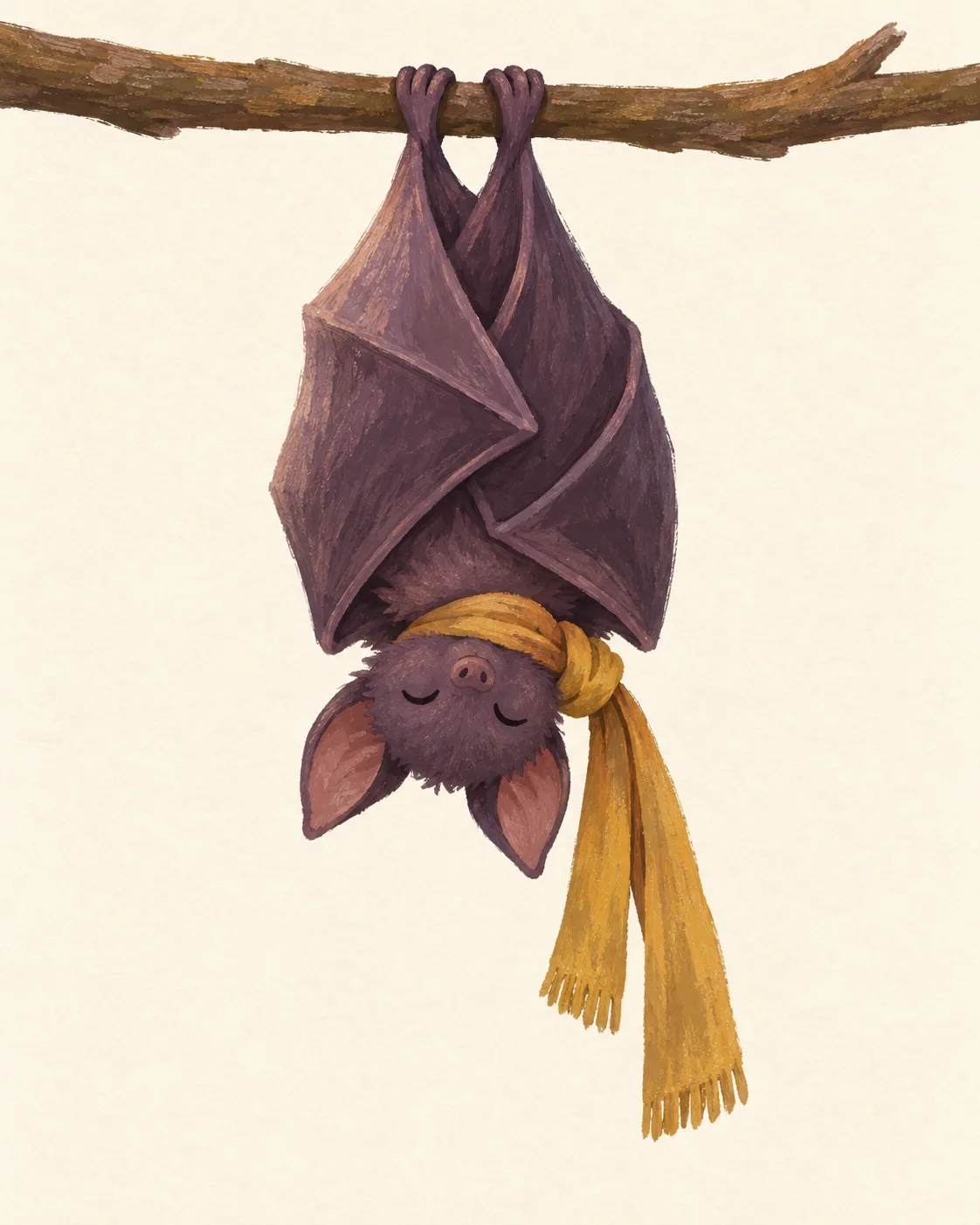
A character reference contrasting an upside-down bat with a downward-hanging scarf to make pose and gravity clearly readable.
Sleeping Bat · Gravity-Aligned Drape
- Shape & line
- Build the bat from a pear-shaped torso, a small rounded head, and two broad folded wing shapes; draw the scarf turning around the neck before its free ends bend downward, using long vertical contours and a few folds that gather beneath the knot.
- Color & light
- Paint the body in muted plum and the scarf in mustard yellow; light them softly from the upper image-left, placing pale accents on image-left-facing surfaces and deeper plum or ochre shadows inside wing overlaps and beneath the scarf knot.
- Texture & material
- Use matte, opaque gouache patches with lightly broken brush edges; give the wings broad smooth paint areas and give the scarf sparse dry-brush streaks along its hanging length so the cloth feels soft without obscuring its folds.
- Composition
- Keep the inverted body centered beneath the branch and leave open ivory space below the scarf tips; stage both free ends on image-right with one ending slightly lower, preserving a visible background gap between the cloth and the face so their downward fall reads immediately.
Priority
Make the scarf's downward fall clearly contrast with the bat's inverted body.
What to avoid & what to check
Avoid floating scarf ends or folds that suggest an upward breeze.
Confirm that both feet grip the branch and both scarf ends hang below the neck with clear separation from the face.
Exact prompt for this example
SUBJECT
One original small bat character sleeping upside down, with both feet gripping a single horizontal branch. Its wings loosely wrap its torso, its head hangs below its body, and a loosely knotted mustard scarf around its neck has two free ends hanging toward the image bottom.

COMPOSITION
Show the entire bat and both scarf ends in a front three-quarter view on a portrait canvas. Place the branch across the upper quarter, the feet directly beneath it, and the inverted head below the torso. Let the scarf ends descend beside the image-right side of the head, visibly separated from the face and folded wings.

STYLE GUIDE
1. Shape & line
Build the bat from a pear-shaped torso, a small rounded head, and two broad folded wing shapes; draw the scarf turning around the neck before its free ends bend downward, using long vertical contours and a few folds that gather beneath the knot.

2. Color & light
Paint the body in muted plum and the scarf in mustard yellow; light them softly from the upper image-left, placing pale accents on image-left-facing surfaces and deeper plum or ochre shadows inside wing overlaps and beneath the scarf knot.

3. Texture & material
Use matte, opaque gouache patches with lightly broken brush edges; give the wings broad smooth paint areas and give the scarf sparse dry-brush streaks along its hanging length so the cloth feels soft without obscuring its folds.

4. Composition
Keep the inverted body centered beneath the branch and leave open ivory space below the scarf tips; stage both free ends on image-right with one ending slightly lower, preserving a visible background gap between the cloth and the face so their downward fall reads immediately.

PRIORITY
Preserve the requested identity, count, action, composition and output settings. Apply the style rules within those constraints; a style reference must not replace the subject or layout. Within the style: Make the scarf's downward fall clearly contrast with the bat's inverted body.

AVOID
Avoid floating scarf ends or folds that suggest an upward breeze.

OUTPUT
One portrait image in a 4:5 aspect ratio, rendered as an opaque gouache character illustration on a plain warm ivory background, with no lettering, captions, logos, or watermark.

SELF-CHECK
Confirm that both feet grip the branch and both scarf ends hang below the neck with clear separation from the face.
Model information comes from image provenance. The same prompt may produce a different result.